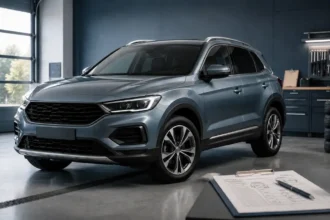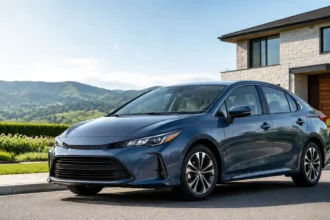


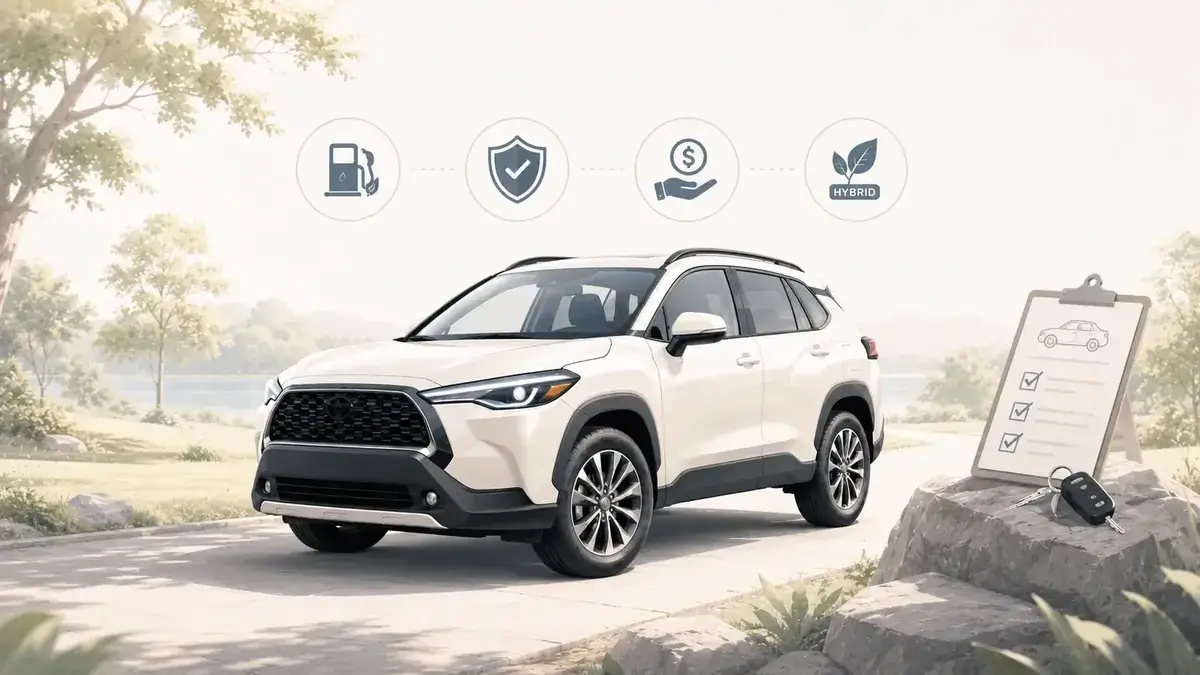
Toyota Corolla Cross reliability is one of the main reasons used buyers consider this compact SUV. It has the right basic formula for low-stress ownership: modest power, practical size, good fuel economy, and Toyota’s conservative small-car roots.
That does not make every used Corolla Cross a safe buy. Toyota announced the 2022 Corolla Cross for the U.S. market in June 2021, so the model has less long-term high-mileage history than older Toyota nameplates like the Corolla sedan, Camry, RAV4, or Prius. The better question is not just “Is the Toyota Corolla Cross reliable?” It is: “Is this specific used Corolla Cross reliable enough, affordable enough to own, and clean enough to buy?”
Toyota Corolla Cross Reliability: Quick Verdict
The Toyota Corolla Cross is a sensible used compact SUV if you want low-drama transportation, good fuel economy, easy daily usability, and manageable ownership risk. It is not the best choice if you want strong acceleration, a premium cabin, large cargo space, or the lowest possible purchase price.
The gas Corolla Cross is the simpler used buy. The Corolla Cross Hybrid can be the better long-term choice for higher-mileage drivers, but only if the price premium is reasonable and the VIN, recall history, and hybrid-system behavior check out.
| Buyer question | Practical answer |
|---|---|
| Is the Corolla Cross generally reliable? | It looks like a lower-risk choice, but the model is still young in the U.S. market. Do not treat Toyota reputation as a substitute for service records. |
| Is it cheap to own? | It can be, especially if bought at the right price and maintained properly. Fuel, depreciation, insurance, maintenance, and repair assumptions change the total. |
| Gas or hybrid? | Gas is simpler. Hybrid makes more sense if you drive enough miles to benefit from fuel savings and the recall/VIN check is clean. |
| Biggest used-buy risk | Paying too much for the Toyota badge, ignoring open recalls, or buying a poorly maintained example. |
| Best buyer | Practical commuter, small-family buyer, or budget-conscious SUV shopper who values low ownership drama over excitement. |
| Buyer who should skip it | Someone needing RAV4-level space, stronger acceleration, or a more refined cabin. |
Buy the Corolla Cross for practical ownership, not excitement. A clean gas model is the safer default. A clean hybrid can be the smarter fuel-cost play if the price premium and recall status make sense.
Toyota Corolla Cross Cost to Own: What to Budget For
The Toyota Corolla Cross cost to own is not one number. It depends on model year, trim, gas or hybrid drivetrain, mileage, location, insurance profile, fuel prices, depreciation, financing, and service history.
Edmunds estimates 2025 gas Corolla Cross 5-year True Cost to Own from about $31,505 to $36,644 across the listed trims and drivetrain configurations. That range is useful for planning, but it should not be treated as your exact ownership cost. These estimates depend on source methodology, model year, trim, drivetrain, mileage, location, fuel price, insurance profile, depreciation method, and financing assumptions. Separate mechanical ownership cost from loan cost when you compare vehicles.
| Cost category | What it means for used buyers | What to check before buying |
|---|---|---|
| Fuel | Usually one of the Corolla Cross’s stronger ownership points, especially with the hybrid. | Compare gas vs hybrid MPG, your annual miles, and local fuel prices. |
| Maintenance | Predictable service is not the same as repair risk. | Ask for oil changes, tire rotations, brake service, fluid records, and Toyota dealer or independent-shop receipts. |
| Repairs | Planning tools can make repair risk look manageable, but the specific car still matters. | Check accident history, warning lights, suspension noise, brake feel, and hybrid alerts. |
| Insurance | Can vary more than buyers expect. | Get a real quote before purchase, especially for newer hybrid trims. |
| Depreciation | A strong Toyota badge helps, but it does not erase depreciation. | Compare local used listings against similar HR-V, CX-30, Crosstrek, and RAV4 listings. |
| Financing | Some ownership estimates include financing assumptions. | Compare vehicle cost and financing cost separately. |
CarEdge estimates the Corolla Cross at about $5,831 for maintenance and repairs during the first 10 years, with a listed 16.61% chance of requiring a major repair during that period. That is a broad planning estimate, not a promise for a specific used vehicle.
Cost estimates change. Verify current figures, local listings, insurance quotes, fuel prices, and the condition of the specific vehicle before buying.
Why Cost Estimates Vary So Much
Ownership-cost tools do not all measure the same thing the same way. Some include depreciation, fuel, insurance, repairs, maintenance, taxes, fees, and financing. Others focus more narrowly on repair and maintenance.
That matters because a used buyer does not pay “average ownership cost.” You pay for the exact car in front of you.
A Corolla Cross with clean records, normal mileage, no accident history, and completed recall work can be a smart low-risk buy. A neglected one with cheap tires, worn brakes, overdue fluids, and vague service history can erase the Toyota advantage quickly.
Use published cost estimates as a filter. Use the inspection, VIN history, and local market price as the decision.
Is the Toyota Corolla Cross Reliable Enough Used?
The Corolla Cross has a strong case as a low-risk used compact SUV, but not because every example is automatically safe. Its case comes from a practical setup: simple daily usability, Toyota small-vehicle engineering, good fuel economy, and generally manageable maintenance expectations.
The limit is data depth. The Corolla Cross is newer than older Toyota models with decades of used-market history. That means buyers should rely less on broad reputation and more on records, recalls, inspection results, and condition.
NHTSA Ownership-Risk Evidence Snapshot: Toyota Corolla Cross
| Evidence Signal | NHTSA Figure | Scope | What This Helps Check |
|---|---|---|---|
| Owner complaints | 294 | 2022-2026 Gen 1 | Use as inspection context, not a defect rate. |
| Unique recall campaigns | 8 | 2022-2026 Gen 1 | Run the VIN through Toyota and NHTSA before negotiating. |
| NHTSA investigations | 0 | 2022-2026 Gen 1 | No investigation count appears in the NHTSA records. |
| Manufacturer communications | 315 | 2022-2026 Gen 1 | Ask whether relevant service updates, notices, or dealer checks were handled. |
| Crash-flag complaints | 20 | 2022-2026 Gen 1 | Treat as a reason for careful test-drive and safety-system checks. |
| Fire-flag complaints | 2 | 2022-2026 Gen 1 | Inspect for warning lights, engine/hybrid alerts, and repair history. |
| Injury-flag complaints | 13 | 2022-2026 Gen 1 | Review accident history, restraint-system recalls, and inspection results. |
| Death-flag complaints | 0 | 2022-2026 Gen 1 | No death-flag complaints appear in the NHTSA records. |
Table note: NHTSA complaint counts are owner-filed reports, not defect rates. Manufacturer communications are service or technical notices, not recalls. Use this table as an inspection and VIN-check trigger, not as a reliability score.
A good used Corolla Cross should have:
- Consistent maintenance records
- No unresolved recall or campaign work
- No accident-title concern
- No warning lights
- Smooth braking and steering feel
- Even tire wear
- Clean hybrid operation if buying the hybrid
- A price that makes sense versus similar HR-V, CX-30, Crosstrek, and RAV4 listings
A weak used Corolla Cross usually shows the opposite: poor records, unclear history, noisy suspension, mismatched tires, worn brakes, warning lights, or a seller who cannot explain recall status.
Gas vs Hybrid: Which Costs Less Long Term?
The gas Corolla Cross is the simpler ownership choice. It has fewer hybrid-specific inspection points, and it is easier to evaluate for buyers who want basic Toyota transportation.
The hybrid is more efficient and usually more appealing for higher-mileage drivers. Toyota lists an EPA-estimated combined 32 mpg rating for the gas Corolla Cross and a 42 combined EPA-estimated mpg rating for the Corolla Cross Hybrid. Real-world mileage still depends on driving conditions, weather, maintenance, tire condition, and how the vehicle is driven.
| Factor | Gas Corolla Cross | Corolla Cross Hybrid |
|---|---|---|
| Ownership simplicity | Stronger | More complex, but still Toyota-style hybrid ownership |
| Fuel economy | Good | Better |
| Used price | Usually lower | Usually higher |
| Inspection needs | Standard used-car checks | Standard checks plus hybrid-system and recall checks |
| Best fit | Lower-mileage buyers, simpler ownership | Higher-mileage commuters, fuel-cost-focused buyers |
| Main caution | Slower performance and basic feel | Price premium and recall verification |
The hybrid is not automatically the cheaper choice. It becomes stronger when the fuel savings, resale value, and driving experience justify the extra purchase price.
If the hybrid costs thousands more than a similar gas model, calculate your annual fuel savings before paying the premium. If you drive low miles, the gas model may be the cleaner financial choice.
Maintenance and Repair Cost Expectations
ToyotaCare covers normal factory scheduled maintenance for 2 years or 25,000 miles on eligible new Toyota vehicles, whichever comes first. That helps early ownership, but many used Corolla Cross examples may already be outside that window.
A used buyer should separate normal maintenance from repair risk.
Normal maintenance is expected. It includes oil changes, filters, tire rotations, brake inspections, tires, wipers, fluids, and wear items. Repair risk is different. That includes unexpected parts failure, accident-related issues, neglected service damage, hybrid system warnings, suspension noise, or electrical faults.
| Item to review | Normal or risky? | Why it matters |
|---|---|---|
| Oil and filter records | Normal maintenance | Missing records weaken the reliability case. |
| Tire condition | Normal wear item | Uneven wear can point to alignment, suspension, or AWD-use issues. |
| Brake feel | Wear item plus safety check | Pulsation, grinding, or a hard pedal needs inspection before purchase. |
| Suspension noise | Risk signal | Clunks or rattles can point to wear, damage, or abuse. |
| Battery condition | Normal check | Important for gas models and especially relevant for hybrids. |
| Hybrid alerts | Risk signal | Any warning message should be diagnosed before purchase. |
| Recall completion | Hard requirement | Open safety recalls should be handled before you commit. |
Do not reject a Corolla Cross just because it needs tires or routine service. Do reduce your offer, or walk away, if the seller cannot explain maintenance history or if the inspection finds unresolved safety or drivetrain concerns.
Common Problems and Recall Checks
Toyota Corolla Cross common problems should be handled carefully. Owner forums and videos can reveal useful anxieties, but they are not proof that every car has the same issue.
For used buyers, recall checks matter more than random complaint lists. NHTSA’s recall tool can show whether a specific vehicle needs recall repair when searched by VIN or license plate, and Toyota also provides a recall lookup for Toyota vehicles.
NHTSA campaign 24V708 covers certain 2023 to 2024 Corolla Cross Hybrid vehicles and involves a skid-control ECU software issue that may result in loss of power brake assist when turning a corner. Toyota also announced a recall for certain 2023 to 2025 Corolla Cross Hybrid vehicles because the pedestrian alert sound may be quieter than intended in reverse.
| Risk area | What to verify | Buy, pause, or skip? |
|---|---|---|
| Open recall | Run VIN through NHTSA and Toyota recall tools. | Pause until status is clear. |
| Hybrid brake-related recall | Confirm dealer repair was completed where applicable. | Pause if incomplete. |
| Pedestrian alert recall | Confirm whether the VIN is affected and whether repair is complete. | Pause if unresolved. |
| Owner complaints | Look for repeated patterns, not one-off comments. | Use as inspection prompts, not proof. |
| Warning lights | Scan and diagnose before buying. | Skip if seller refuses diagnosis. |
| Brake or steering issues | Test-drive and inspect professionally. | Pause or skip depending on severity. |
A recall does not automatically make the Corolla Cross a bad vehicle. It does mean the VIN check is not optional.
Used Model-Year Risk: What Buyers Should Watch
The Corolla Cross is not old enough in the U.S. to make sweeping year-by-year reliability claims with the same confidence as older Toyota models. This page should not pretend to be a full “best years and years to avoid” guide.
Still, buyers can use a simple risk filter.
| Used Corolla Cross type | Main risk filter | Best action |
|---|---|---|
| Early gas models | Condition, records, tires, brakes, suspension, and accident history | Buy only if records and inspection are clean. |
| Early hybrid models | Recall status, hybrid alerts, braking feel, and VIN history | Run VIN checks before negotiating. |
| Higher-mileage examples | Service history matters more than trim badge | Ask for records and pay for inspection. |
| Low-mileage but expensive examples | Price premium may erase value | Compare against RAV4, HR-V, CX-30, and Crosstrek listings. |
| Any rebuilt or salvage title | Unknown repair quality | Usually skip unless priced deeply below market and inspected carefully. |
The safest Corolla Cross is not automatically the newest or highest trim. It is the one with the cleanest paper trail, best condition, and fair price.
Minimum Acceptable Used Corolla Cross
A used Corolla Cross should clear a basic minimum standard before you treat it as a smart buy.
It should have a clean title, completed recall work, consistent service history, no warning lights, even tire wear, normal braking, no rough suspension noise, and a price that does not sit too close to a better-fitting alternative.
If a seller cannot provide records, refuses inspection, or dismisses an open recall, do not rationalize it because of the Toyota badge. That is exactly how a low-risk model becomes a high-risk purchase.
Used Toyota Corolla Cross Inspection Checklist
A Corolla Cross can be a good used buy, but the inspection has to match the ownership question. You are not only checking if the car starts. You are checking whether it protects the low-cost ownership case.
The best inspection is specific. It should connect every check to a buying consequence: buy, pause, renegotiate, or walk away.
| Check | What good looks like | Red flag |
|---|---|---|
| VIN recall search | No open safety recall, or documented completed repair | Seller says “probably done” but has no proof |
| Service records | Consistent maintenance pattern | Long gaps, vague receipts, no records |
| Tires | Matching quality tires with even wear | Uneven wear, cheap mismatched tires |
| Brakes | Smooth pedal feel, no grinding or warning lights | Pulsation, hard pedal, warning message |
| Suspension | Quiet over bumps, straight tracking | Clunks, wandering, uneven stance |
| Accident history | Clean title and consistent body-panel gaps | Rebuilt title, paint mismatch, poor panel alignment |
| Hybrid operation | Smooth transitions, no warning lights | Hybrid warning, rough behavior, seller avoids questions |
| Test drive | Normal acceleration, steering, braking, and cabin electronics | Seller refuses highway drive or inspection |
Do not skip the pre-purchase inspection because it is a Toyota. Toyota reliability helps most when the vehicle has been maintained properly.
Who Should Buy or Skip the Corolla Cross?
The Corolla Cross makes sense for buyers who want practical ownership more than personality. It is not a vehicle you buy because it feels exciting. You buy it because it is easy to live with.
The key trade-off is simple: modest performance and basic feel in exchange for practical size, efficiency, Toyota familiarity, and manageable ownership.
| Buyer type | Recommendation | Why |
|---|---|---|
| Daily commuter | Buy, especially if records are clean | Good fuel economy and easy size make sense. |
| Small family | Buy if space is enough | Practical, but not as roomy as larger compact SUVs. |
| Higher-mileage driver | Consider hybrid | Fuel savings matter more with higher annual mileage. |
| Low-mileage driver | Gas may be better | Hybrid premium may take too long to recover. |
| Buyer wanting power | Compare alternatives | The Corolla Cross prioritizes efficiency over speed. |
| Buyer wanting premium feel | Compare alternatives | Cabin feel is practical, not upscale. |
| Buyer needing more cargo room | Compare RAV4 or larger options | Corolla Cross is smaller and less flexible. |
| Buyer avoiding risk | Buy only with records and clean VIN | The specific car matters more than the badge. |
The Corolla Cross is strongest when the buyer accepts its limits upfront. It is not trying to be sporty, luxurious, or oversized. It is trying to be sensible.
The Corolla Cross can be a sensible small-family SUV, but it is not ideal for every family. Compare it in our best used family cars guide before deciding whether to stay small or move up to a CR-V, RAV4, CX-5, Camry, or Accord.
Better Alternatives to Compare First
You do not need to compare every SUV in the market. Compare only the vehicles that could change your decision.
The Honda HR-V is worth comparing if you want a simple small SUV with a practical cabin and do not need a hybrid option.
The Mazda CX-30 is worth comparing if you care more about driving feel and interior quality than maximum rear-seat space.
The Subaru Crosstrek is worth comparing if standard AWD and light outdoor use matter more than Toyota-style fuel economy.
The Toyota RAV4 is worth comparing if you like Toyota ownership but need more passenger and cargo space.
Use those comparisons only if space, AWD needs, cabin quality, hybrid value, or total ownership cost could change your decision. Otherwise, a clean Corolla Cross can stay on the shortlist.
Before paying a Toyota premium, compare the Corolla Cross against our best used small SUVs shortlist to see whether HR-V fits your budget better.
The Corolla Cross is a sensible newer small Toyota SUV, but its shorter U.S. history makes VIN checks and recall verification important. For a wider low-risk shortlist, compare it with other picks in our Most Reliable Used Cars guide.
Final Decision Framework
Buy a used Corolla Cross if the price is fair, the VIN check is clean, service records are strong, and the vehicle passes a proper inspection.
Pause if the price is high, records are thin, the hybrid premium is hard to justify, or the seller cannot show recall completion.
Skip if there are unresolved warning lights, open safety recalls with no repair plan, accident-title concerns, poor maintenance records, rough braking, steering issues, or a seller who refuses inspection.
The Toyota Corolla Cross reliability story is good, but it is not magic. The right used Corolla Cross is a practical, low-drama compact SUV. The wrong one is still a used car with risks, costs, and paperwork you need to verify.
A Corolla Cross can be a good used SUV, but under $20,000 it often requires extra caution because clean listings are limited. Compare it with stronger budget-fit picks in our best used cars under $20,000 guide.
Frequently Asked Questions
Is the Toyota Corolla Cross reliable?
The Toyota Corolla Cross appears to be a sensible low-risk used compact SUV, but it is still a younger U.S. model line than Toyota’s older nameplates. Treat it as a strong candidate, not an automatic yes. Check service records, VIN recall status, accident history, tire wear, brakes, and test-drive behavior before buying.
Is the Toyota Corolla Cross expensive to maintain?
The Corolla Cross should not be unusually expensive to maintain for a mainstream Toyota compact SUV, but exact cost depends on mileage, condition, location, and service history. CarEdge estimates about $5,831 for maintenance and repairs over the first 10 years, with a 16.61% chance of a major repair during that period.
How much does the Toyota Corolla Cross cost to own?
Published estimates vary. Edmunds estimates 2025 gas Corolla Cross 5-year True Cost to Own from about $31,505 to $36,644 across listed trims and drivetrain configurations. Use those numbers as planning estimates, then verify your local price, insurance quote, fuel cost, financing terms, and the condition of the specific vehicle.
Is the Corolla Cross Hybrid cheaper to own than the gas model?
The Corolla Cross Hybrid can be cheaper to fuel because Toyota lists it at 42 combined EPA-estimated mpg, compared with a 32 combined EPA-estimated mpg rating for the gas Corolla Cross. It is not automatically cheaper overall because purchase price, insurance, depreciation, recall status, and hybrid inspection results also matter.
What are the most important Corolla Cross recall checks?
Run the VIN through NHTSA and Toyota’s recall lookup before buying. Pay special attention to Corolla Cross Hybrid recall history, including the 2023 to 2024 brake-assist-related recall and the 2023 to 2025 pedestrian alert sound recall.
Is a used Toyota Corolla Cross a good buy?
Yes, if the example is clean, fairly priced, properly serviced, and has no unresolved recall or accident-title concerns. It is a weaker buy if it is priced too close to a larger RAV4, has poor service history, or fails an inspection.
Should I buy a gas Corolla Cross or a Corolla Cross Hybrid?
Choose the gas model if you want the simpler used buy and do not drive enough miles to justify the hybrid premium. Choose the hybrid if you drive more, value fuel savings, and can verify recall completion and hybrid-system condition.
Does the Toyota Corolla Cross hold its value well?
It should benefit from the Toyota badge and compact SUV demand, but resale value still depends on year, trim, mileage, condition, fuel prices, and local demand. Do not pay a high premium just because resale is expected to be strong.
How long will a Toyota Corolla Cross last?
The Corolla Cross is too young in the U.S. market to make confident high-mileage lifespan claims across all model years. A well-maintained example has a better case than a neglected one. Service history, driving conditions, recall status, and inspection results matter more than broad lifespan guesses.
Should I compare the Corolla Cross with the RAV4?
Yes, if you need more space, more cargo room, or a more flexible family SUV. The Corolla Cross is easier to park and usually more affordable, but the RAV4 is the stronger fit if size and utility matter more than compact-SUV simplicity.