

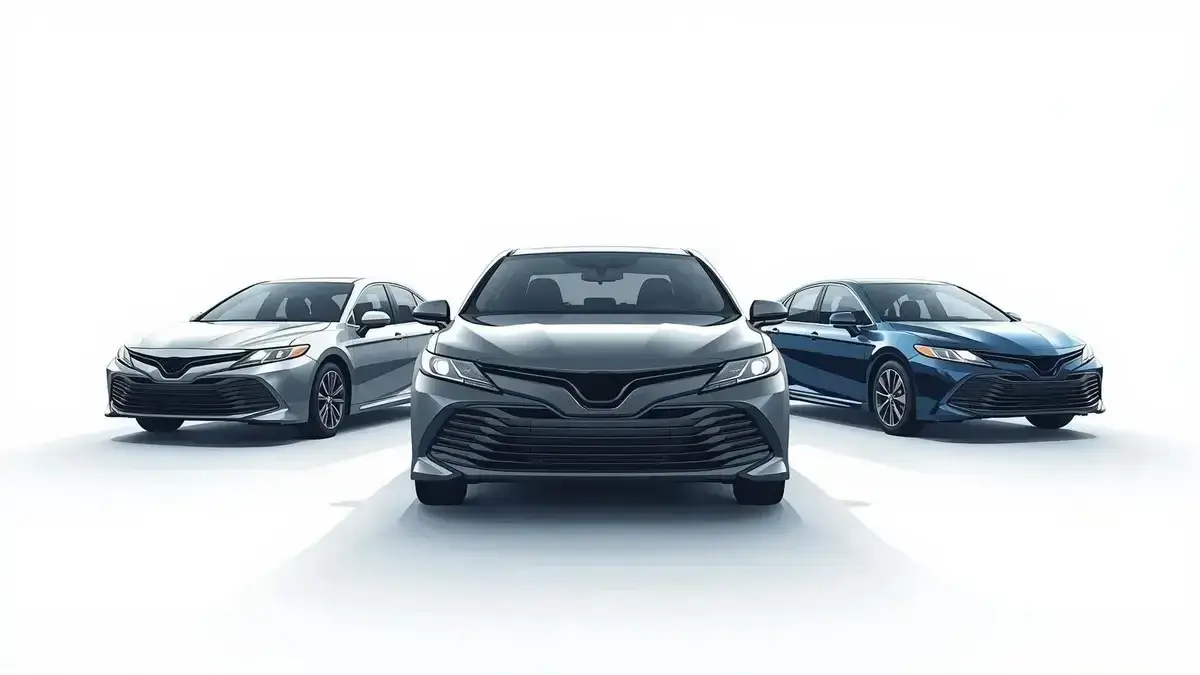
For most U.S. used buyers, the cleanest place to start is 2015 to 2017. If value matters more than having the newest shape or tech, 2013 to 2014 usually makes one of the strongest cases. If you are tempted by a cheap sixth-generation Camry, 2007 to 2009 is the range that deserves the most caution.
That answer fits most buyers because the real goal is not finding the “greatest” Camry ever made. It is finding a used Camry year that still makes sense on value, risk, and everyday ownership. The right pick changes depending on whether you care most about low purchase cost, lowest drama, or a more modern cabin and safety feel.
If you are still deciding whether a Camry is the right midsize sedan at all, compare it directly against the Accord in our Honda Accord vs Toyota Camry used-sedan comparison.
If you only want the short version, start with 2015 to 2017.
If you care most about value, start with 2013 to 2014.
If you are shopping cheap examples, read the caution section before you care about trim, wheels, or mileage.
CarMerit reliability tool
Check selected Camry years – NHTSA snapshot data
Pick a model year to see Toyota Camry complaint, recall, investigation, and manufacturer-communication counts from the article’s NHTSA snapshot, plus CarMerit’s used-buy verdict for that year band.
Owner complaints
…
NHTSA, CarMerit snapshot
Recall records
…
NHTSA, CarMerit snapshot
Investigations
…
NHTSA, CarMerit snapshot
Manufacturer communications
…
NHTSA, CarMerit snapshot
Most-reported problem areas
Complaint counts and manufacturer communications are raw NHTSA records, not defect rates or reliability scores. Older model years have had more time to collect reports, while newer years can look lower because the record is still young. Verdicts come from CarMerit’s article guidance. Data source: NHTSA.gov. Always verify VIN recall status, Toyota recall status, service records, oil level and oil-use history, cold start, transmission behavior, hybrid battery history where applicable, warning lights, brake feel, suspension wear, rust, accident or flood history, and independent inspection results before buying.
Best Toyota Camry Years at a Glance
For most buyers, the late seventh generation still makes the strongest overall used-Camry case. Later eighth-generation cars can work well, but usually when a newer cabin, fresher styling, and more current safety features matter enough to justify paying more.
| Year group | Verdict | Best for | Why it makes sense | Main watch-out |
|---|---|---|---|---|
| 2015–2017 | Buy first | Most used buyers | Best overall balance of confidence, age, and everyday livability | Still needs clean history and condition |
| 2013–2014 | Strong value | Budget-aware buyers who still want a modern-enough Camry | Usually captures much of the seventh-generation upside for less money | Better value than 2015–2017, but not quite as easy a default call |
| 2019–2021 | Good newer pick | Buyers who want newer safety tech and a fresher cabin | Stronger modern feel and easier transition from older cars | Usually weaker on value |
| 2004–2006 | Budget-only play | Buyers prioritizing low buy-in over newer features | Can still work if unusually well kept | Savings disappear fast if maintenance has been deferred |
| 2012 | Conditional | Buyers who find a documented example clearly below stronger alternatives | Still sits in the strong seventh generation | Only compelling if meaningfully cheaper than 2013+ with records to match |
| 2007–2009 | Extra caution | Only buyers with strong documentation and a real reason to proceed | Cheap entry price can look attractive | This is the clearest risk cluster in the evidence reviewed |
If you want the safest mainstream answer, skip the debate and start with 2015 to 2017. If you are price-sensitive but still want a smart used Camry, move one step earlier and start with 2013 to 2014.
If you are comparing a Camry against another midsize sedan, the decision is not only about the best Camry year. Our Mazda6 vs Toyota Camry comparison explains when the Camry is the safer long-term default and when a clean Mazda6 can be the better value play.
The Camry is the safer reputation-first play, but some buyers may prefer the Mazda6 for steering feel, cabin design, and value. If you cross-shop it, check the Mazda6 years to avoid and best years to buy guide so you compare Camry years against the right Mazda6 years.
Toyota Camry Years Most Buyers Should Target First
For most shoppers, 2015 to 2017 is the easiest recommendation to defend. Those years sit late in the strongest overall generation in the evidence reviewed, feel modern enough for daily use, and avoid the heavier caution tied to the sixth generation.
2013 to 2014 is the better answer for the buyer who wants to stay disciplined on budget. That range still sits in the strongest Camry generation for most used buyers, but it usually works better as a value play than as the safest no-brainer answer. In plain language, you are buying closer to the sweet spot than to the premium edge.
2012 can still make sense, but only when the gap to 2013 or later is large enough to matter and the service history is strong enough to justify staying earlier in the generation. If the price difference is small, stepping later is usually the cleaner move.
Later eighth-generation cars work when your priorities change. If you want a more modern cabin, more current safety features, and a car that feels less dated right away, they can justify a look. They are just not the default value winner for most used buyers.
Skip the late seventh-generation route if your top priority is getting the newest design and tech you can reasonably afford. Skip the 2013 to 2014 value route if you would rather pay more for the simplest possible answer and less age.
Toyota Camry Years to Avoid or Treat With Caution
The clearest caution range is 2007 to 2009. That span deserves the most caution because it is the clearest trouble cluster in the evidence reviewed, especially around oil-consumption concerns and broader sixth-generation downside. That does not mean every single example is doomed. It means the burden of proof sits with the seller, not with you.
If you are cross-shopping midsize sedans, it is also worth checking the Honda Accord years to avoid before choosing only by price.
2012 belongs in a lighter caution bucket, not in the same bucket as 2007 to 2009. It still sits inside the strongest overall generation, but it is not the cleanest place to enter that generation if the price gap to a later year is small.
Older fifth-generation cars can work, but only as condition-first buys. Once you are shopping that far back, the deciding factor shifts from online reputation to maintenance history, rust exposure, ownership quality, and whether the seller can document real care. If the car is only cheap because it has been neglected, the “budget win” usually disappears.
A cheap 2008 Camry with thin records is not a value buy. A clean 2014 with boring trim and strong service history is usually the smarter purchase even if the sticker is higher.
Toyota Camry NHTSA Complaints and Recalls by Year, 2004–2026
| Model year (generation) | Owner complaints | Recalls | Leading primary problem area | What the NHTSA evidence shows |
|---|---|---|---|---|
| 2004 (Gen 5) | 637 | 3 | Vehicle speed control | Speed-control reports lead the year while recalls stay present. |
| 2005 (Gen 5) | 721 | 5 | Vehicle speed control | Complaint volume rises versus 2004 and recall rows are highest in Gen 5. |
| 2006 (Gen 5) | 319 | 5 | Vehicle speed control | Complaint count drops sharply from earlier Gen 5 years, with recalls still logged. |
| 2007 (Gen 6) | 3,487 | 10 | Brakes | Highest complaint count in the table and double-digit recall rows. |
| 2008 (Gen 6) | 1,093 | 8 | Visibility / wipers | High complaints continue, led by visibility and body/safety categories. |
| 2009 (Gen 6) | 1,407 | 10 | Airbags / Seatbelts / Structure (safety) | Complaints rise again, with safety-structure and speed-control reports prominent. |
| 2010 (Gen 6) | 610 | 9 | Vehicle speed control | Complaint volume falls from 2007–2009, but recall rows remain high. |
| 2011 (Gen 6) | 619 | 5 | Airbags / Seatbelts / Structure (safety) | Similar complaint count to 2010, with fewer recall rows than the prior four years. |
| 2012 (Gen 7) | 642 | 2 | Airbags / Seatbelts / Structure (safety) | Gen 7 opens with a higher complaint count than later Gen 7 years. |
| 2013 (Gen 7) | 301 | 2 | Airbags / Seatbelts / Structure (safety) | Complaints fall materially from 2012 while recalls stay low. |
| 2014 (Gen 7) | 477 | 3 | Powertrain / Transmission | Complaints rise versus 2013, led by powertrain/transmission reports. |
| 2015 (Gen 7) | 282 | 1 | Steering | Lower complaint volume than 2012–2014, with one recall row. |
| 2016 (Gen 7) | 182 | 3 | Airbags / Seatbelts / Structure (safety) | Complaint count continues lower, though three recall rows remain. |
| 2017 (Gen 7) | 153 | 3 | Airbags / Seatbelts / Structure (safety) | Lowest Gen 7 complaint count in this table, with three recall rows. |
| 2018 (Gen 8) | 754 | 8 | Brakes | First Gen 8 year shows more complaints and recalls than late Gen 7. |
| 2019 (Gen 8) | 391 | 7 | Powertrain / Transmission | Complaints decline from 2018, while recall rows remain elevated. |
| 2020 (Gen 8) | 271 | 3 | Airbags / Seatbelts / Structure (safety) | Both complaint and recall counts drop versus 2018–2019. |
| 2021 (Gen 8) | 159 | 1 | Airbags / Seatbelts / Structure (safety) | Lower complaint volume with one recall row. |
| 2022 (Gen 8) | 58 | 1 | Airbags / Seatbelts / Structure (safety) | Low complaint count, but newer-year exposure is still limited. |
| 2023 (Gen 8) | 58 | 2 | Unknown / other | Low complaint count with two recall rows; still early-lifecycle data. |
| 2024 (Gen 8) | 45 | 1 | Airbags / Seatbelts / Structure (safety) | Lowest Gen 8 complaint count shown, with short exposure time. |
| 2025 (Gen 9) | 139 | 5 | Airbags / Seatbelts / Structure (safety) | First Gen 9 year has early complaints and five recall rows. |
| 2026 (Gen 9) | 76 | 2 | Unknown / other | Early Gen 9 counts are developing and should not be overread. |
Table note: Owner complaints are raw NHTSA reports, not defect rates or sales-adjusted reliability scores. This table follows the uploaded gas-scope and the requested 2004–2026 scope; earlier years are excluded.
Toyota Camry NHTSA Investigations and Manufacturer Communications by Year, 2004–2026
| Model year (generation) | Investigations | Manufacturer communications | What the official record shows |
|---|---|---|---|
| 2004 (Gen 5) | 2 | 165 | Two investigations and 165 communications keep Gen 5 documentation active. |
| 2005 (Gen 5) | 2 | 152 | Two investigations pair with 152 communications. |
| 2006 (Gen 5) | 1 | 146 | One investigation and 146 communications close Gen 5 with lower official follow-up. |
| 2007 (Gen 6) | 5 | 399 | Five investigations and 399 communications begin a heavily documented Gen 6 run. |
| 2008 (Gen 6) | 5 | 425 | Five investigations and 425 communications keep official follow-up high. |
| 2009 (Gen 6) | 4 | 444 | Four investigations and 444 communications show continued heavy documentation. |
| 2010 (Gen 6) | 2 | 433 | Two investigations and 433 communications remain elevated within Gen 6. |
| 2011 (Gen 6) | 2 | 422 | Two investigations and 422 communications keep the late Gen 6 record active. |
| 2012 (Gen 7) | 3 | 564 | Three investigations and 564 communications produce the highest yearly communication count in this table. |
| 2013 (Gen 7) | 3 | 556 | Three investigations and 556 communications stay near the 2012 level. |
| 2014 (Gen 7) | 2 | 535 | Two investigations and 535 communications remain high within Gen 7. |
| 2015 (Gen 7) | 1 | 369 | One investigation and 369 communications show a lower official-record footprint than 2012–2014. |
| 2016 (Gen 7) | 1 | 301 | One investigation remains while communications decrease further. |
| 2017 (Gen 7) | 1 | 236 | One investigation and 236 communications close Gen 7 at a lower level. |
| 2018 (Gen 8) | 1 | 385 | One investigation and 385 communications open Gen 8 with more documentation than 2017. |
| 2019 (Gen 8) | 1 | 247 | One investigation and 247 communications sit below the 2018 level. |
| 2020 (Gen 8) | 1 | 268 | One investigation and 268 communications keep official documentation active. |
| 2021 (Gen 8) | 1 | 195 | One investigation and 195 communications are lower than the 2018–2020 counts. |
| 2022 (Gen 8) | 1 | 151 | One investigation and 151 communications are lower again, but newer-year exposure matters. |
| 2023 (Gen 8) | 0 | 133 | Zero investigations and 133 communications reflect comparatively recent records. |
| 2024 (Gen 8) | 0 | 79 | Zero investigations and 79 communications remain limited by short exposure time. |
| 2025 (Gen 9) | 0 | 50 | Zero investigations and 50 communications are early Gen 9 evidence. |
| 2026 (Gen 9) | 0 | 23 | Zero investigations and 23 communications are too recent to read as settled. |
Table Note: Counts follow the article’s 2004-2026 gas scope. Manufacturer communications are service-document records, not recalls. Older model years have had more time to accumulate records, so lower recent counts do not prove better reliability.
Best Camry Years by Buyer Type and Budget
“Best” changes once you decide whether you care most about low buy-in, lowest ownership stress, or a more modern feature set. That is why the buyer-fit split matters more than one universal year recommendation.
| Buyer type | Best year group to start with | Why it fits | What you give up |
|---|---|---|---|
| Tight-budget commuter | 2013–2014, then selected 2004–2006 cars | Strong value without dropping straight into the main risk cluster | Less modern tech and more dependence on service history |
| Average used-car buyer | 2015–2017 | Best mainstream balance of reliability, age, value, and comfort | Usually costs more than older value picks |
| Newer-feature buyer | Later eighth-generation examples | Better safety and cabin feel, more up-to-date overall experience | Weaker value case |
| Hybrid-focused buyer | Later seventh-generation hybrids or well-vetted newer hybrids | Better fuel efficiency when battery health and records check out | More verification burden and less room for vague service history |
| Lowest-drama buyer | 2015–2017 | Easiest all-around answer to defend | Not the cheapest path in |
EPA-Estimated MPG for the Main Camry Year Groups
| Model years and configuration | City MPG | Highway MPG | Combined MPG |
|---|---|---|---|
| 2004–2006 gas, FWD | 18–21 | 26–31 | 21–25 |
| 2007–2009 gas, FWD | 19–21 | 28–31 | 22–25 |
| 2007–2009 hybrid, FWD | 33 | 34 | 34 |
| 2013–2014 gas, FWD | 21–25 | 30–34 | 25–28 |
| 2013–2014 hybrid, FWD | 40–42 | 37–38 | 39–40 |
| 2015–2017 gas, FWD | 21–25 | 30–34 | 24–28 |
| 2015–2017 hybrid, FWD | 40–42 | 37–38 | 38–40 |
| 2019–2021 gas, FWD | 22–29 | 31–41 | 25–34 |
| 2020–2021 gas, AWD | 25 | 34 | 28–29 |
| 2019–2021 hybrid, FWD | 44–51 | 47–53 | 46–52 |
Table Note: These are EPA-estimated ranges across the listed engine, transmission, trim, and drivetrain configurations—not invented model-year averages. Gas, hybrid, FWD, and AWD configurations remain separate. Actual fuel economy varies with condition, driving, weather, and maintenance.
If your budget is tight, the wrong move is trying to buy the “safest year” and the “cheapest year” at the same time. Usually you cannot. You are choosing where to accept compromise.
If you are buying for a family and just want a calm, dependable midsize sedan, stay simple and start with 2015 to 2017. If you are stretching every dollar, 2013 to 2014 is usually the better value starting point.
A clean Camry is one of the best roomy sedans under $20,000 when the year and mileage make sense. To compare it with Corolla, Accord, RAV4, and other options, use our best used cars under $20,000 guide.
What Changed by Generation and Why It Matters
Older durable generations still have appeal, but mostly as value or nostalgia plays. Once a Camry gets old enough, age starts to matter more than internet reputation. A well-kept older car can still work, but it stops being an easy recommendation and becomes a condition-dependent recommendation.
The seventh generation is where the strongest mainstream value case lives. It is modern enough for most U.S. buyers, repeatedly shows up as the safest overall used-Camry band in the evidence reviewed, and avoids the biggest sixth-generation traps. That is why it anchors the recommendation instead of sitting beside every other generation as an equal option.
The eighth generation changes the answer only when the buyer genuinely values a newer cabin, newer safety tech, and a fresher day-to-day feel. If that is not your priority, the late seventh generation still makes the cleaner used-buy argument.
A buyer moving out of a dated compact sedan may feel the eighth generation is worth paying more for. A buyer focused on value, predictability, and avoiding an unnecessary premium will usually land back on the seventh generation.
Reliability and Ownership Reality by Camry Era
A Camry badge does not erase age. Older cars bring more rubber wear, more deferred maintenance risk, more suspension fatigue, and more dependence on seller honesty. That is why an older “great-year” Camry can still be the worse buy than a clean late seventh-generation example.
For a deeper look at common problems, ownership burden, and long-term cost risk, read our Toyota Camry reliability and cost-to-own guide.
The sixth generation creates the opposite problem. It can look roomy, comfortable, and temptingly cheap. But once you account for the caution around 2007 to 2009, low entry price stops being the whole story. The wrong Camry year turns “good value” into catch-up ownership.
| Era | Ownership outlook | Main reason | Better for |
|---|---|---|---|
| 2004–2006 | Manageable only if unusually well kept | Age is now the main variable | Budget buyers with patience and inspection discipline |
| 2007–2009 | Risk-heavy | Sixth-generation trouble concentration and oil-consumption caution | Buyers with unusually strong paperwork and a real reason to proceed |
| 2013–2014 | Usually solid value | Better balance of age and dependability | Budget-conscious mainstream buyers |
| 2015–2017 | Easiest overall ownership case | Mature part of the strongest used-Camry generation | Most used buyers |
| Later eighth-generation examples | Usually easier day to day, but pricier | Newer safety and cabin advantages | Buyers willing to pay for a fresher feel |
Treat age, neglect, and service history as part of the model-year decision. Do not read “Toyota is reliable” as “this used Camry is automatically safe.”
Once you know the best Camry years to target, compare whether the Camry still fits your family better than an SUV. Our used family car shortlist helps you compare sedans, compact SUVs, and small SUVs by real family use.
Safest Camry Years vs Best-Value Camry Years
The safest mainstream years are not always the strongest value years. For many buyers, 2015 to 2017 is the safest easy answer. But for buyers who care more about getting most of that upside without paying the strongest premium, 2013 to 2014 often makes the smarter value case. That distinction is what separates a good shortlist from a lazy one.
What IIHS Ratings Add to the Camry Shortlist
Here, “safest mainstream” means the easiest overall used-buying choice—not a universal crash-safety ranking. IIHS results add important equipment and build-date distinctions:
| Year group | Selected IIHS evidence | Important limitation | What to verify |
|---|---|---|---|
| 2004–2006 | Good original moderate-overlap front rating | The original side rating was Poor without optional side airbags but Good with optional front and rear curtain airbags plus front-seat torso airbags | Confirm that the exact car has the optional side-airbag equipment |
| 2007–2009 | Good original moderate-overlap front, original side, and roof-strength ratings | Listed cloth-seat configurations received a Marginal head-restraint rating | Do not let favorable crash-test results override the separate ownership-risk concerns tied to these years |
| 2013–2014 | Good original moderate-overlap front, original side, and roof-strength ratings | The driver-side small-overlap rating was Poor for 2012–2014 cars built before January 2014 and Acceptable for 2014 cars built after December 2013 | Check the 2014 build date rather than relying on model year alone |
| 2015–2017 | Good driver-side small-overlap, original moderate-overlap front, original side, and roof-strength ratings; the optional pre-collision system was rated Advanced | For 2016–2017, headlight ratings ranged from Acceptable to Marginal or Poor depending on trim, engine, and equipment | Verify the exact headlight and Technology Package configuration |
| 2019–2021 | Good driver- and passenger-side small-overlap, original moderate-overlap front, and original side ratings; the standard vehicle-to-vehicle front crash-prevention system was rated Superior | Pedestrian crash-prevention results and headlight applicability vary by year and configuration | Confirm the equipment on the specific car rather than assuming every trim is identical |
Table Note: IIHS test procedures and award criteria changed over time, so these results should not be treated as one continuous safety ranking across model years. A missing rating does not mean the vehicle performed poorly.
Paying more is justified when the newer car changes something real for you. Better safety tech, a fresher cabin, and lower day-to-day friction can justify more spend. Paying more is not justified when you are only buying the feeling of “newer” without gaining anything that changes your actual ownership experience.
Saving money is smarter when the cheaper year still sits inside the strong part of the Camry timeline and comes with unusually strong documentation. Saving money is not smarter when the bargain lives in the risk-heavy years or needs too much explaining from the seller.
After narrowing the right Camry years, compare it against the Accord in our best used midsize sedans guide. That page helps you decide whether Camry is still the better all-around used sedan for your budget.
Hybrid and Trim Exceptions That Can Change the Recommendation
A Camry hybrid can be the better answer if fuel savings matter enough to justify extra verification. That usually means you drive enough to care about efficiency and you are willing to check battery history, service records, and total asking price more carefully. If the price premium is large, your annual mileage is modest, or the hybrid history is thin, the gas version is still the safer default.
Trim choice matters less than year and condition, but it is not irrelevant. The real question is whether the trim changes the ownership or value case enough to matter. For most used buyers, a clean mainstream trim from a stronger year is a better bet than reaching for a nicer trim that forces you into a weaker year or thinner history.
A clean LE or SE from a stronger year usually beats an upper-trim car from a weaker year that only wins on nicer features.
Factory Coverage and Service Checks That Can Change the Deal
If a later Camry makes your shortlist, check its model year in CarMerit’s Manufacturer Special Coverage Lookup before comparing it only on age or price, because a Toyota support program may change how you interpret a documented coolant-related repair.
| Vehicle scope | What Toyota’s records show | Used-buyer action |
|---|---|---|
| 2020 and newer Camry Hybrid | The hybrid battery warranty is 10 years or 150,000 miles from the original date of first use, whichever comes first | Confirm the VIN, in-service date, mileage, and eligibility before assuming any coverage remains |
| Applicable Camry hybrids | Current Toyota materials list the battery control module, hybrid control module, and inverter with converter under separate 8-year/100,000-mile hybrid-component coverage | Check the exact model-year warranty guide because the battery and other hybrid components may not share the same term |
| Certain 2018–2021 Camry and Camry Hybrid vehicles | Customer Support Program 24TE04 addresses qualifying repairs related to a flow shut-off valve coolant leak | Ask a Toyota dealer to check the VIN, production eligibility, covered condition, current program status, and exact terms |
| Every used Camry | The exact model-year Warranty and Maintenance Guide controls the factory schedule | Compare the service records with the correct model-year guide rather than relying on a generic dealer schedule |
Table Note: Customer Support Program 24TE04 is special coverage, not a recall. Warranty and support-program records do not establish failure likelihood or reliability. Remaining coverage cannot be determined without vehicle-specific information.
How to Shop a Used Camry Without Picking the Wrong Year
Start with year first, then condition, then trim. Too many buyers reverse that order. They fall for wheels, seat material, or a low headline price before they have even ruled out the risky year groups.
Then verify the service-record story. A strong-year Camry with thin records can still be the wrong buy. A caution-year Camry needs unusually strong paperwork before it deserves any more of your time.
A quick filter works:
- Confirm the model year is inside your target band before you look at trim.
- Check whether the seller can prove routine maintenance.
- On risk-heavy years, look for paperwork strong enough to change the risk story.
- Drive the car long enough to catch hesitation, warning lights, or obvious neglect.
- Walk away when the price only makes sense because you are hoping it will be fine.
If two or more of those checks fail, it is usually the wrong Camry, even if the year itself looks acceptable.
Once a Camry has passed your model-year filter, verify that the specific car matches what the seller is advertising before trim or price pulls you further into the deal. Run its VIN through the CarMerit VIN Lookup and compare the returned vehicle details with the listing and paperwork. Any mismatch is worth resolving before you judge the car on condition, service history, and value.
Buyers comparing long-term ownership risk can also review our Honda Accord reliability and cost-to-own guide before finalizing a Camry-versus-Accord shortlist.
How This Page Ranks Camry Years
The advice here is built around a U.S. used-buyer decision, not a generic “newest equals best” shortcut. The strongest weight goes to buyer fit, rule-out logic, ownership reality, and value, not to broad history or feature dumping.
Strong proof was treated as official or primary-style evidence, strong secondary references, and constrained buyer-fit reasoning. Forum chatter, social posts, and dealer-style claims can help surface anxieties and patterns, but they are not strong enough on their own to carry the recommendation. That is why the strongest claims in this article stay qualified rather than absolute.
That is also why this page avoids exact used-price claims. Without year, trim, mileage, condition, location, and timing context, exact price talk becomes more misleading than useful.
If you are still split after reading, the next best step is a deeper years-to-avoid page if your concern is risk, or a reliability-by-year / maintenance-cost page if your concern is ownership burden.
Once you know the safest Camry years, compare it against other reliable used cars before committing. Our Most Reliable Used Cars guide shows where the Camry fits against Corolla, Accord, RAV4, CR-V, and other low-risk picks.
Frequently Asked Questions
What are the best years for Toyota Camry for most used buyers?
For most buyers, 2015 to 2017 is the safest mainstream answer. Those years sit late in the strongest overall generation in the evidence reviewed and usually give the cleanest blend of reliability, value, and everyday livability. If you need a stronger value play, 2013 to 2014 is usually the next place to start.
What Toyota Camry years should I avoid?
The clearest caution range is 2007 to 2009. That span keeps showing up around excessive oil-consumption concerns and broader sixth-generation trouble concentration. It is the range most likely to turn a cheap Camry into the wrong Camry.
Is 2007 to 2009 really the worst Camry range to buy?
It is the clearest risk cluster in the evidence reviewed here. The practical takeaway matters more than the label. If you are shopping that range, assume you need stronger records, stronger inspection results, and a better reason to proceed than you would on a later seventh-generation car.
What is the best used Toyota Camry year under a tighter budget?
A tighter-budget buyer should usually start with 2013 to 2014. That range still sits inside the strongest Camry generation for most used buyers, but it usually gives a better value equation than chasing the safest later-year examples.
Is a newer Camry always a better buy than an older Camry?
No. A newer Camry can be the better choice if you care enough about newer safety tech, a fresher cabin, and more modern daily use. But for many shoppers, the smarter used buy is still a clean late seventh-generation car rather than a pricier newer option.
Which Camry generation gives the best value today?
The seventh generation makes the strongest overall value case in the evidence reviewed. It is modern enough for most U.S. buyers, strong enough on reputation, and easier to defend on value than a newer eighth-generation car for the average used buyer.
Are the best Camry hybrid years different from the best gas-model years?
Sometimes. A hybrid can become the better answer when fuel savings matter enough to justify extra verification. But the default advice does not automatically change just because the car is a hybrid. Battery health, service records, total asking price, and how much you actually drive still have to support the decision.
How much should service history change the year recommendation?
A lot. Service history is what decides whether an older value-year Camry still works and whether a caution-year Camry deserves any further attention at all. A strong-year Camry with weak records can still be the wrong buy.