

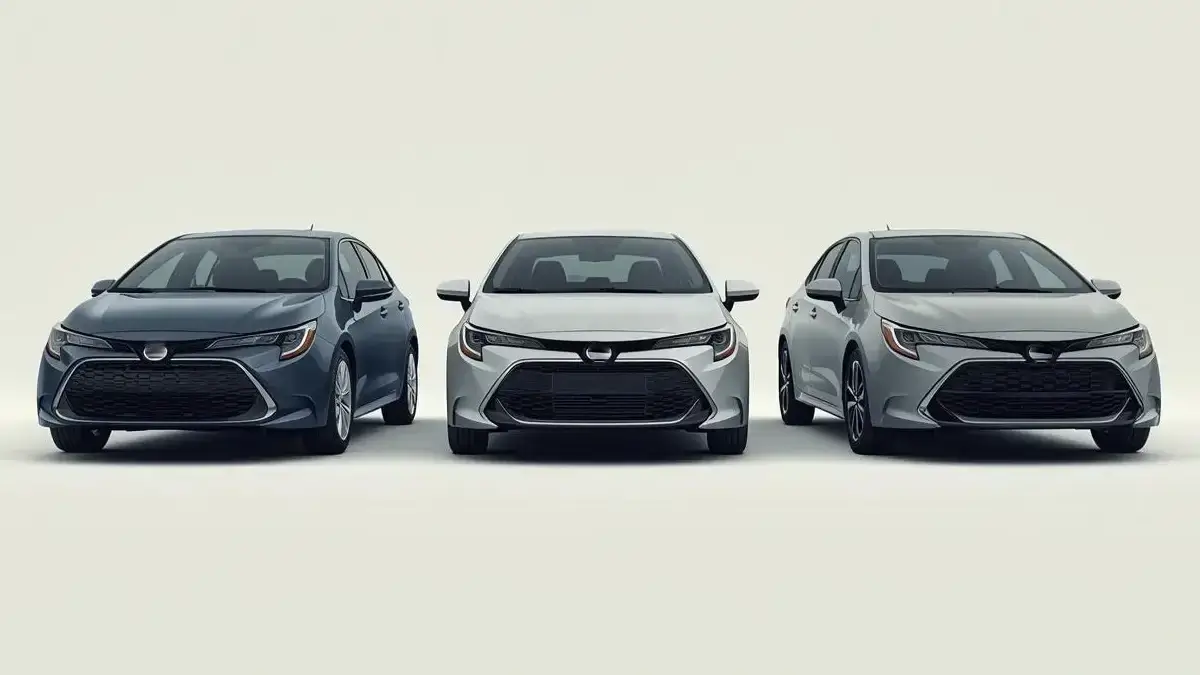
The best years for Toyota Corolla are usually the ones that give you the easiest used-buy case, not the ones that simply sound newest or cheapest. For most U.S. buyers, cleaner 2005–2008, 2011–2013, and 2017–2019 cars are the smartest places to start. The years that usually deserve more caution are 2000–2003, 2009–2010, and 2014.
That does not mean every Corolla inside a stronger year band is a good buy. A rough 2018 with thin records can still be a worse purchase than a well-kept 2011. Model year gets you into the right zone. Service history, inspection quality, and condition decide whether the exact car is worth your money.
This guide is for used-car shoppers who want a better shortlist fast. It is not a trim guide, and it is not a generic Corolla history recap. The goal is simple: show you where to start, where to be more careful, and what trade-off you are accepting if you go older or newer.
- Choose 2005–2008 if you want the strongest older-value play.
- Choose 2011–2013 if you want the safest default for most buyers.
- Choose 2017–2019 if you want a newer-feeling daily driver and can spend more.
- Be more careful with 2000–2003, 2009–2010, and 2014 unless the records and condition are unusually strong.
- Fastest safe default: start with a clean 2011–2013 Corolla.
What goes wrong if you pick wrong? Usually not the badge or the fuel bill. The real damage is surprise repair risk, weak maintenance history, and paying “cheap” money for a car that stops being cheap the moment it needs real work.
CarMerit reliability tool
Check selected Corolla years – NHTSA snapshot data
Pick a model year to see Toyota Corolla complaint, recall, investigation, and manufacturer-communication counts from the article’s NHTSA snapshot, plus CarMerit’s used-buy verdict for that year band.
Owner complaints
…
NHTSA, CarMerit snapshot
Recall records
…
NHTSA, CarMerit snapshot
Investigations
…
NHTSA, CarMerit snapshot
Manufacturer communications
…
NHTSA, CarMerit snapshot
Most-reported problem areas
Complaint counts and manufacturer communications are raw NHTSA records, not defect rates or reliability scores. Older model years have had more time to collect reports, while newer years can look lower because the record is still young. Verdicts come from CarMerit’s article guidance. Data source: NHTSA.gov. Always verify VIN recall status, Toyota recall status, service records, engine condition, oil level, transmission behavior, steering feel, brake feel, suspension wear, tire wear, warning lights, rust, accident or flood history, and independent inspection results before buying.
Best Toyota Corolla Years and the Years to Avoid
Start with the shortlist, not the whole Corolla timeline. Most buyers do not need one magic year. They need a safer starting map that tells them where to look first and where to raise their standards. That is why year bands work better than a single “best year” answer. A clean 2007, 2012, or 2018 can each make sense, but they solve different problems for different buyers.
If your budget is tight, start with 2005–2008. If you want the easiest balance of price and lower downside, start with 2011–2013. If you want a newer cabin feel and lower age-related wear, start with 2017–2019. If a listing keeps pushing you toward 2000–2003, 2009–2010, or 2014, make that car work harder to earn your trust.
The table below is not a guarantee. It is a better starting point for where to look first and where to be more skeptical.
| Year band | Starting view | Why it makes sense | Main trade-off | Best fit |
|---|---|---|---|---|
| 2005–2008 | Stronger starting band | Strong older-value case and a better place to begin than earlier 2000s cars | Age and mileage matter more now | Budget-conscious buyers |
| 2011–2013 | Stronger starting band | Best mix of price, maturity, and lower downside for most people | Not as modern as later cars | Mainstream used buyers |
| 2017–2019 | Stronger starting band | Newer-feeling daily-driver experience with less age-related wear | Higher upfront spend | Buyers willing to pay more |
| 2000–2003 | More caution needed | Harder to defend as a first stop because age and downside stack up faster | Cheap prices can hide expensive regret | Only for buyers willing to inspect carefully |
| 2009–2010 | More caution needed | Commonly treated as a weaker point inside an otherwise usable stretch | Tempting price, less confidence | Buyers who should compare harder against nearby years |
| 2014 | More caution needed | Can look newer than its real value case justifies | Newer styling can create false confidence | Buyers who should compare against a clean nearby alternative |
Example: if you find a clean 2007 LE with solid records beside a rough 2014 with maintenance gaps, the older car can still be the smarter buy. The model year matters, but the condition inside the year band matters almost as much.
If you are still deciding whether the Corolla is worth paying more for, compare it directly against Hyundai’s value-focused compact sedan in Hyundai Elantra vs Toyota Corolla. That comparison helps you decide whether Corolla’s lower-risk reputation is worth the premium, or whether a clean Elantra makes more sense.
Which Corolla Years Make the Most Sense for Most Used Buyers
The “best” Corolla year depends on what kind of pain you are trying to avoid.
A first-time buyer, a daily commuter, and someone planning to keep the car for years do not need the same answer. The real question is usually not “Which Corolla is best?” It is “How much older-car risk am I willing to accept to save money now?”
That question separates the older-value bands from the newer lower-risk bands. It also helps you avoid a common mistake: stretching into the newest Corolla you can barely afford instead of buying a cleaner middle-band car that is easier to own well.
A second mistake is buying with the wrong priority order. Year band should come first. Records, inspection, and condition come next. Styling and low mileage come later.
| Buyer type | Best starting band | Why it works | What you give up |
|---|---|---|---|
| Budget commuter | 2005–2008 | Lower entry cost with a stronger older-value case than earlier 2000s cars | More age and more inspection pressure |
| Mainstream used buyer | 2011–2013 | Strong balance of price, maturity, and lower downside | Not the newest feel |
| Newer-feature buyer | 2017–2019 | Fresher daily-driver feel and less age-related wear | Higher purchase price |
| Fuel-conscious daily driver | 2011–2013 or 2017–2019 | Good balance of efficiency, usability, and lower ownership stress | Usually costs more than an older basic car |
Example: if you commute every day and care more about low ownership drama than squeezing the price down another notch, 2011–2013 often makes more sense than diving into a cheaper early-2000s Corolla.
Why Some Toyota Corolla Years Are Better Than Others
Not all stronger Corolla years earn the same recommendation for the same reason.
Some year bands make sense because they sit in a cleaner part of the used-buy curve. Some make less sense because they fall too close to weaker pattern years. Others deserve attention because they give you a newer-car feel without pushing you too far into higher spend.
That is why a simple “Corollas are reliable” answer is not enough. Buyers usually need three clearer lanes: the older-value pick, the safest mainstream default, and the newer lower-risk option.
For most buyers, 2011–2013 works as the safest default because it lands in a practical middle ground. It is newer than the older bargain bands, avoids the extra age pressure that comes with early-2000s cars, and still stops short of the higher pricing that often comes with later examples. That does not make it perfect. It makes it the easiest balanced starting point.
Generation boundaries matter only when they change the decision. The move from weaker early-2000s cars into the stronger mid-2000s zone matters. The jump from an older value car into a later-2010s lower-risk car matters. Random feature lists do not.
If you care more about lower buy-in cost, the cleaner older sweet spots matter more than the newest badge. If you care more about a fresher daily-driver feel and lower age-related wear, later examples deserve more attention.
How IIHS Crash Ratings Change the Corolla Shortlist
IIHS results add an important safety layer to the year-band decision. The key is to check the exact sedan’s equipment and build scope instead of treating every Corolla from the same period as identical.
| Corolla sedan years | IIHS rating pattern | What the buyer should verify |
|---|---|---|
| 2003–2004 | Moderate overlap front: Good; side: Poor for the tested configuration without optional side airbags; head restraints and seats: Acceptable | For a 2003, confirm it was built after December 2002 before applying the Good moderate-overlap rating. |
| 2005–2008 | Moderate overlap front: Good; side: Acceptable with optional side airbags but Poor without them; head restraints and seats: Poor | Verify the factory side-airbag equipment rather than assuming every car received the stronger side rating. |
| 2009–2013 | Moderate overlap front, original side, roof strength, and head restraints and seats: Good | These ratings provide useful safety context, but they do not override the separate 2009–2010 caution guidance. |
| 2014–2016 | Driver-side small overlap front: Marginal; moderate overlap front, original side, roof strength, and head restraints and seats: Good | Newer styling did not produce a Good result in every displayed test. |
| 2017–2019 | Driver-side small overlap front, moderate overlap front, original side, roof strength, and head restraints and seats: Good | IIHS notes front-structure and driver-door-frame changes beginning with 2017 models. |
Table Note: Ratings shown are for IIHS-listed four-door sedans and apply only to the stated test, equipment, and build scope. Good, Acceptable, Marginal, and Poor are separate IIHS rating levels. Test availability and criteria changed over time, so these rows are not one universal safety score and do not independently establish a best or avoid year.
Toyota Corolla Years to Avoid or Inspect Much Harder
The years that usually deserve the most caution in this topic are 2000–2003, 2009–2010, and 2014.
That does not mean every example from those years is a disaster. It means most buyers should not start there when stronger year bands are usually easier to defend.
Early-2000s cars bring more age-related downside and less room for neglect. The 2003 model also tends to get treated more cautiously than the stronger mid-2000s stretch around it. The 2009 and 2010 cars often show up as weaker points inside their generation, and 2014 can tempt buyers just because it looks newer than some nearby alternatives.
Read “avoid” as a shopping-efficiency label, not as a dramatic statement. If a stronger year band is available for a reasonable jump in price, most buyers should not spend much time forcing a case for one of these caution years.
Do this:
- Start your search in the stronger year bands first.
- Raise your standards for service history on the caution years.
- Compare a caution-year listing directly against a clean nearby alternative.
Do not do this:
- Assume a cheap 2009, 2010, or 2014 is automatically smart.
- Let lower mileage erase weak records.
- Let newer styling do the decision-making for you.
Example: if you find a 2014 at a price that looks unusually attractive, compare it against a clean 2012 or a clean 2017 before assuming the newer-looking car is the better buy.
Reliability by Year: What Helps and What Misleads
Toyota Corolla reliability matters, but it does not erase buyer risk.
The wrong lesson is “Corolla equals safe.” The better lesson is “some Corolla year bands are safer starting points, and service history still decides whether the exact car is worth your money.”
That matters most once mileage climbs. A strong reputation can make buyers too comfortable with weak records, rushed inspections, or deferred maintenance. That is especially risky with older examples, where age can do more damage than the badge can fix.
Long-term ownership talk needs the same caution. Yes, many Corollas last a long time. No, that does not make every high-mileage car a safe buy. High mileage is easier to accept when the records are strong, the inspection is clean, and the asking price still makes sense.
Toyota Corolla NHTSA Complaint and Recall Snapshot by Model Year
| Model year | Complaints | Recalls | Buyer-useful read |
|---|---|---|---|
| 2000 (Gen 8) | 143 | 5 | Early-2000s caution year; age and evidence volume both matter. |
| 2001 (Gen 8) | 133 | 4 | Similar caution-zone row, with fewer complaints than 2000. |
| 2002 (Gen 8) | 117 | 5 | Lowest complaint count among 2000-2002, but still older-car risk. |
| 2003 (Gen 9) | 720 | 13 | Big jump in complaints and recalls at Gen 9 launch. |
| 2004 (Gen 9) | 477 | 13 | Lower than 2003, but recall count remains high. |
| 2005 (Gen 9) | 853 | 10 | High complaint volume despite being in the article’s stronger older-value band. |
| 2006 (Gen 9) | 839 | 10 | Complaint volume stays close to 2005. |
| 2007 (Gen 9) | 835 | 6 | Complaints remain high, while recall rows drop. |
| 2008 (Gen 9) | 313 | 6 | Lower complaint volume than 2005-2007. |
| 2009 (Gen 10) | 1459 | 13 | Highest complaint count in the table; supports caution. |
| 2010 (Gen 10) | 1239 | 17 | Very high complaint count and highest recall count. |
| 2011 (Gen 10) | 584 | 9 | Lower than 2009-2010, but still meaningful evidence volume. |
| 2012 (Gen 10) | 445 | 5 | Lower complaint and recall load than 2011. |
| 2013 (Gen 10) | 201 | 5 | Lowest complaint count inside Gen 10. |
| 2014 (Gen 11) | 267 | 2 | Caution year in article, but raw recalls are low. |
| 2015 (Gen 11) | 218 | 1 | Lower complaints than 2014. |
| 2016 (Gen 11) | 211 | 1 | Similar to 2015. |
| 2017 (Gen 11) | 176 | 3 | Lower complaint count; article treats 2017-2019 as stronger. |
| 2018 (Gen 11) | 133 | 3 | Lowest Gen 11 complaint count. |
| 2019 (Gen 11) | 200 | 6 | Complaint and recall counts rise versus 2018. |
| 2020 (Gen 12) | 301 | 5 | Highest Gen 12 complaint count so far. |
| 2021 (Gen 12) | 181 | 1 | Complaints and recalls drop from 2020. |
| 2022 (Gen 12) | 96 | 0 | Lower evidence volume, with zero recalls in NHTSA records. |
| 2023 (Gen 12) | 71 | 3 | Newer-data row; complaints are still early. |
| 2024 (Gen 12) | 58 | 2 | Early-data row with low complaints. |
| 2025 (Gen 12) | 25 | 0 | Very new year; do not read low count as proven reliability. |
| 2026 (Gen 12) | 9 | 1 | Early-data snapshot only. |
Table note: NHTSA complaint counts are raw owner reports and are not adjusted for sales volume or vehicle age. Newer years, especially 2025-2026, have had less time to collect reports.
Toyota Corolla NHTSA Investigation and Manufacturer Communication Context by Model Year
| Model year | Investigations | Mfr. Comms. | Top complaint area | Buyer-useful read |
|---|---|---|---|---|
| 2000 (Gen 8) | 0 | 77 | Engine | Older caution row with engine as the top complaint area. |
| 2001 (Gen 8) | 0 | 88 | Engine | Similar older-risk pattern, with engine again on top. |
| 2002 (Gen 8) | 1 | 90 | Airbags / Seatbelts / Structure | One investigation appears before Gen 9 begins. |
| 2003 (Gen 9) | 4 | 147 | Airbags / Seatbelts / Structure | High complaint, recall, and investigation activity. |
| 2004 (Gen 9) | 4 | 137 | Airbags / Seatbelts / Structure | Investigation count stays elevated. |
| 2005 (Gen 9) | 4 | 157 | Airbags / Seatbelts / Structure | High evidence volume despite older-value appeal. |
| 2006 (Gen 9) | 4 | 135 | Airbags / Seatbelts / Structure | Similar pattern to 2005. |
| 2007 (Gen 9) | 3 | 135 | Airbags / Seatbelts / Structure | Investigations fall slightly from 2003-2006. |
| 2008 (Gen 9) | 4 | 146 | Airbags / Seatbelts / Structure | Investigation count returns to four. |
| 2009 (Gen 10) | 3 | 362 | Airbags / Seatbelts / Structure | Heavy evidence row; aligns with caution guidance. |
| 2010 (Gen 10) | 3 | 385 | Airbags / Seatbelts / Structure | Highest recall count and very high communications. |
| 2011 (Gen 10) | 2 | 346 | Airbags / Seatbelts / Structure | Communications remain high even after complaints drop. |
| 2012 (Gen 10) | 2 | 340 | Airbags / Seatbelts / Structure | Still high communication count. |
| 2013 (Gen 10) | 2 | 343 | Airbags / Seatbelts / Structure | Lower complaints, but communications stay high. |
| 2014 (Gen 11) | 2 | 430 | Airbags / Seatbelts / Structure | Highest manufacturer-communication count in this table. |
| 2015 (Gen 11) | 2 | 313 | Airbags / Seatbelts / Structure | Communications decrease from 2014. |
| 2016 (Gen 11) | 2 | 258 | Airbags / Seatbelts / Structure | Continued decrease from 2015. |
| 2017 (Gen 11) | 2 | 232 | Airbags / Seatbelts / Structure | Lower evidence volume than early Gen 11 rows. |
| 2018 (Gen 11) | 2 | 173 | Airbags / Seatbelts / Structure | Lowest communication count in 2014-2019 group. |
| 2019 (Gen 11) | 1 | 209 | Powertrain / Transmission | Top complaint area shifts to powertrain/transmission. |
| 2020 (Gen 12) | 0 | 220 | Engine | No investigations, but communications remain notable. |
| 2021 (Gen 12) | 0 | 169 | Airbags / Seatbelts / Structure | Lower communications than 2020. |
| 2022 (Gen 12) | 0 | 105 | Airbags / Seatbelts / Structure | No investigations and lower communications. |
| 2023 (Gen 12) | 0 | 126 | Exterior lighting / Steering | Tie in top complaint areas; newer-data caution applies. |
| 2024 (Gen 12) | 0 | 81 | Steering | Early-data row; steering leads the complaint categories. |
| 2025 (Gen 12) | 0 | 42 | Unknown / Other | Very new year; low count is not a reliability proof. |
| 2026 (Gen 12) | 0 | 21 | Airbags / Seatbelts / Structure | Early-data snapshot only. |
Table note: Manufacturer communications are not recalls. Top complaint area uses the primary NHTSA complaint component from the NHTSA records, not a defect rate or reliability score.
Example: a 2011 Corolla with 155,000 miles and excellent records can still be the smarter buy over a 2014 with lower mileage but scattered maintenance and visible neglect.
Older vs Newer Corolla Years: The Real Trade-Off
Most buyers are choosing between two Corolla strategies.
Strategy one is older value. Pay less now, accept more age, and shop more carefully. Strategy two is newer peace of mind. Pay more now, reduce age-related surprise risk, and get a fresher daily-driver experience.
Neither strategy is automatically right. The better one depends on whether you hate overspending more than you hate surprise repairs.
The table below matters because it stops the usual false choice. This is not old good versus new good. It is value versus risk.
| Strategy | Best fit | What you gain | What you give up |
|---|---|---|---|
| Older value band | Budget-conscious buyers | Lower purchase price and stronger value if bought well | More age and more inspection pressure |
| Middle-band balance | Most mainstream buyers | Best mix of price, maturity, and lower downside | Not the newest feel |
| Newer lower-risk band | Buyers willing to spend more | Fresher feel and less age-related wear | Higher upfront cost |
Example: if you plan to keep the car for years and do not want to second-guess every new noise, stretching from an older value pick into a cleaner later-2010s car can make sense. If your budget is tighter and you can shop carefully, the stronger older bands still beat chasing the newest number you can barely afford.
How to Shop a Good Corolla Year Without Buying a Bad Corolla
Start with the year band. Then move to records. Then move to condition.
Do not reverse that order. The year band keeps you out of weaker zones. The records and inspection decide whether the exact car deserves a closer look.
A good Corolla year is only the first filter; the individual car still has to match the seller’s description. Before treating a promising listing as the right buy, check the VIN with CarMerit and compare the returned vehicle details with the listing and paperwork. If something does not line up, resolve that mismatch before moving on to condition, maintenance records, and inspection.
Mileage also needs context. High mileage is not a deal-breaker by itself. Low mileage is not safety by itself. What matters more is whether the mileage makes sense next to maintenance, seller transparency, and how the car behaves in inspection and test-drive steps.
Use this quick filter:
- Shortlist cars inside the stronger year bands first.
- Remove any listing with weak or missing service history.
- Remove any listing that feels cheap for a reason.
- On caution years, inspect even harder for signs of neglect or deferred work.
Do this:
- Pay more for a cleaner history when the gap is reasonable.
- Get a pre-purchase inspection.
- Treat seller transparency as part of the deal quality.
Avoid this:
- Let low mileage cancel out a weak year band.
- Skip inspection because “it’s a Corolla.”
- Assume a bargain price means better value.
Thirty-second self-check:
- Am I buying this Corolla because it is actually strong, or just because it is cheap?
- Do the records support the seller’s story?
- If it needs immediate work, does the deal still make sense?
If two or more answers make you uneasy, move on.
Best Toyota Corolla Years by Buyer Type
The right Corolla year band depends on what you need the car to do.
If you are a budget commuter, start with 2005–2008. That band makes the most sense when the goal is cheap, dependable transportation and you are willing to shop carefully for condition. You gain value, but you give up a newer-feeling car and a newer safety baseline.
If you want the safest default for most used-buy decisions, start with 2011–2013. It is the easiest middle answer because it still feels sensible on price while avoiding the extra age of older bargain cars and the higher pricing of newer ones.
If you care most about a newer-feeling daily driver and lower age-related downside, start with 2017–2019. That range often makes more sense for buyers who want a later-model Corolla without pushing too far into higher spend.
EPA Fuel Economy Across the Main Corolla Year Bands
Fuel economy works best as a tie-breaker after condition and service history. EPA estimates for the exact gasoline-sedan configurations below show where the meaningful efficiency differences appear.
| Year or year band | Exact gasoline-sedan configuration | City MPG | Highway MPG | Combined MPG |
|---|---|---|---|---|
| 2005–2008 | 1.8-liter, four-speed automatic | 26 | 35 | 29 |
| 2011–2013 | 1.8-liter, four-speed automatic | 26 | 33–34 | 29 |
| 2014 | 1.8-liter base Corolla CVT | 29 | 37 | 32 |
| 2014 | EPA-listed 1.8-liter LE Eco CVT configurations | 30 | 38–40 | 33–34 |
| 2017–2019 | 1.8-liter base Corolla CVT | 28 | 36 | 32 |
| 2017–2019 | EPA-listed 1.8-liter LE Eco CVT configurations | 29–30 | 38–40 | 33–34 |
Table Note: These are EPA rounded estimates for the exact gasoline-sedan configurations shown, not model-year averages. Manual transmissions, the 2.4-liter engine, Corolla iM, the 2019 hatchback, and other configurations can differ. The LE Eco is listed separately. Fuel economy alone does not establish a best or avoid year.
After narrowing the best Corolla years, compare Corolla with Civic and Mazda3 in our best used compact cars to buy guide.
Final Shortlist: The Best Corolla Years for Most Buyers
For most buyers, the safest default starting band is 2011–2013. It gives the best balance of price, maturity, and lower downside without forcing you into newer-car money.
The better-value play is 2005–2008. That band still makes sense if the budget matters and you can verify history carefully. It is usually the smarter older bet than pushing deeper into weaker early-2000s territory.
The stretch-budget option is 2017–2019. Go here if you care more about a fresher daily-driver feel and less age-related wear than about squeezing the purchase price down.
The years that deserve more caution are 2000–2003, 2009–2010, and 2014. They are not automatic write-offs. They just need more proof before you call them the smart buy.
Who should skip each path?
- Skip 2005–2008 if you do not want older-car inspection pressure.
- Skip 2011–2013 if your main goal is a newer-feeling Corolla, not the safest value balance.
- Skip 2017–2019 if the higher upfront price stretches your budget too far.
- Skip the caution years unless the records, condition, and price make a very strong case.
The simple rule is this: if you want the easiest answer, start with 2011–2013. If you want the best value, start with 2005–2008. If you want a newer-feeling daily driver, start with 2017–2019. If a listing keeps pulling you toward 2000–2003, 2009–2010, or 2014, make that car prove itself.
Choosing the right Corolla year is only one part of the decision. If you are comparing the Corolla against other low-risk used cars, use our Most Reliable Used Cars shortlist next.
If your budget is under $20,000, compare the Corolla with the Civic, Mazda3, Camry, RAV4, and CR-V in our best used cars under $20,000 guide.
Frequently Asked Questions
What are the best years for Toyota Corolla?
For most used buyers, the strongest starting bands are usually 2005–2008, 2011–2013, and 2017–2019. They solve different problems. The older band is the value play, the middle band is the safest default for most shoppers, and the later band is the better pick if you want a newer-feeling daily driver.
Which Toyota Corolla years should buyers avoid?
The years that usually deserve the most caution are 2000–2003, 2009–2010, and 2014. That does not mean every car from those years is unbuyable. It means most buyers should not start there when stronger alternatives are easier to defend.
What is the most reliable Toyota Corolla year?
There is no single answer that works for every buyer. “Most reliable” and “best used buy” are not always the same thing. If you want a practical used-buy answer instead of a bragging-rights answer, clean 2011–2013 cars are often the easiest default.
Is an older Corolla still worth buying if it has good service history?
Yes, often. That is the whole reason 2005–2008 still matters. A well-kept older Corolla can be a smarter buy than a weaker or neglected newer one. The key is to verify the service story, not just trust the badge.
What is the best used Toyota Corolla year for fuel economy?
Do not treat fuel economy as the only filter. In practice, a clean 2011–2013 or 2017–2019 Corolla often makes more sense because it balances efficiency with a stronger ownership case. A slightly thriftier car is not a better buy if the year band or maintenance story is weak.
Which Corolla years make the most sense for long-term ownership?
For long-term ownership, many buyers will feel more comfortable in a clean 2011–2013 or 2017–2019 car than in an older bargain buy. The newer the car, the less age-related wear you are usually asking yourself to absorb.
Are newer Corolla years always the better used buy?
No. Newer cars usually reduce age-related risk, but they also cost more. A clean 2012 can still beat a rougher 2018 if the price gap is meaningful and the history is better.
Is service history more important than model year on a used Corolla?
Not more important than model year by itself, but close. Think of model year as the first filter and service history as the deal-breaker filter. A good year with weak records can still be the wrong buy.
How many miles is too many for a used Toyota Corolla?
There is no universal cutoff that works on its own. High mileage becomes less scary when records are strong and the inspection is clean. Low mileage is not protective if the car was maintained badly or belongs to a weaker year band.