

Toyota Camry reliability is strong enough that many U.S. used-car buyers treat the badge like a shortcut. That helps, but it is not a buying strategy. A used Camry can still be a smart buy, a lazy buy, or an expensive correction depending on the year, the records, and the price.
That is the real decision here. You are not deciding whether the Camry has a good reputation. You are deciding whether a specific used Camry is likely to give you calm, predictable ownership without quietly turning “cheap” into “costly.”
For most mainstream used-sedan shoppers, the Camry still deserves a serious look. The mistake is assuming every one is safe, every hybrid is automatically better, or every low-priced older example is strong value. If your final choice is between the two default midsize sedans, Honda Accord vs Toyota Camry is the better next comparison after you understand Camry ownership risk.
If you only want the short answer:
- Buy in when the year band is cleaner, the maintenance story is clear, and the price still leaves room for normal upkeep.
- Slow down on early sixth-generation bargains, vague-history cars, and listings that rely on reputation instead of records.
- Walk fast when the seller cannot explain maintenance, the transmission feels wrong, or oil-use signs are already showing.
Is a Used Toyota Camry a Smart Reliability Bet?
A used Camry is usually a smart reliability bet for buyers who want low-drama transportation and are willing to buy carefully instead of blindly.
Reliability verdict in one sentence
Yes, a used Camry is often a safe shortlist car, but the wrong year and the wrong maintenance story can break the case faster than the badge can save it.
How long a well-maintained Camry can realistically last
A good Camry can stay useful for a long time. That does not mean every high-mileage example is a bargain. It means the platform usually rewards steady maintenance better than many alternatives in the same class.
Mileage matters, but history matters more. A later Camry with strong records and honest wear is often the safer buy than a cheaper earlier one with lower mileage and a vague story.
Who should not assume “Camry = automatic yes”
Bottom-of-market shoppers need the most discipline here. Sellers know the Camry reputation, so weak cars often get priced like strong ones.
If the value case depends on hope rather than proof, the badge stops helping. That includes listings with sloppy shifting, thin records, oil-use signs, or sellers who keep selling the nameplate instead of the actual car.
| Buyer type | Why a Camry fits | Caution |
|---|---|---|
| Daily commuter | Usually calm, practical, and easy to live with | A cheap rough example can erase the value advantage |
| Family sedan buyer | Strong comfort and everyday usability | Do not overpay for trim extras if the history is weak |
| Long-term owner | Often one of the easier mainstream ownership bets | Bad year choice and deferred maintenance hurt more than usual because buyers trust the badge too much |
What Does a Toyota Camry Really Cost to Own?
The Camry’s ownership story is usually better than fear-based used-car shopping suggests and weaker than pure badge faith suggests. That difference matters because a good used Camry is often manageable to own, while a neglected one can erase the value case quickly.
Maintenance vs repairs vs depreciation
Routine maintenance is rarely the part that breaks the case for a Camry. Oil changes, tires, brakes, fluids, and the usual wear items are normally manageable for the class.
The real cost risk comes from hidden neglect, not from the normal service menu. A cheap Camry stops being cheap when you inherit ignored fluids, unresolved shifting behavior, oil-use issues, or stacked wear items all at once.
Depreciation also works differently for a used buyer than for a new-car shopper. A newer Camry may feel safer, but you pay more for that comfort. An older Camry can save money, but only if its condition is strong enough to justify the discount.
Insurance, financing, and what cost calculators usually assume
Many cost-to-own pages are useful for showing the buckets. They are less useful for telling a used buyer what one specific Camry will feel like to own.
That is because those frameworks usually assume cleaner-condition cars and more average ownership paths than many used listings deserve. A used buyer should care more about age, mileage, prior neglect, and whether the next repair wave is close.
What changes for hybrid buyers
A hybrid can make excellent sense if you commute heavily, expect to keep the car long enough to benefit, and are buying a well-documented example.
A gas Camry is often easier to defend when the price gap is small, your annual mileage is moderate, or you want the simpler ownership story. The better answer depends on how you drive, not on which version sounds smarter on paper.
Ownership reality snapshot
| Cost bucket | What it usually looks like | What changes the answer |
|---|---|---|
| Routine maintenance | Usually manageable for the class | History matters more than averages |
| Repair risk | Often low on cleaner examples, moderate on weaker years | Year band, mileage, and neglect change this quickly |
| Fuel | Fuel Gas is reasonable, hybrid helps higher-mile commuters more | Your annual mileage decides whether the hybrid premium pays back |
| Depreciation | Moderate | Paying too much for reassurance weakens the value case |
| Insurance and financing | Variable | Driver profile, credit, and loan terms can outweigh small maintenance differences |
A simple test helps here. A cheaper older gas Camry can still be the better buy if your mileage is moderate and the records are strong. A pricier hybrid usually makes more sense when your fuel use is high enough to justify the premium over time.
Which Toyota Camry Years Are Safer Bets?
The safest used Camry is not just the newest one you can afford. It is the year band that gives you the best balance of lower ownership risk, fair pricing, and realistic maintenance confidence.
Toyota Camry NHTSA Evidence by Generation
| Camry years / generation | Owner complaints per model year | Unique recall campaigns | Investigations | Inspection-focused reading |
|---|---|---|---|---|
| 1983-1986 (Gen 1) | 4.75 | 2 | 9 | Older-car condition dominates. Verify recalls and inspect suspension, wheels, and safety items. |
| 1987-1991 (Gen 2) | 31.6 | 6 | 40 | Official investigation count is the main follow-up signal. Records and VIN checks matter before age alone. |
| 1992-1996 (Gen 3) | 131.6 | 8 | 10 | Check safety-restraint, structure, suspension, and older wear items carefully. |
| 1997-2001 (Gen 4) | 368 | 8 | 10 | Higher owner-report concentration than earlier generations. Inspect speed-control behavior, safety systems, and suspension or wheel condition. |
| 2002-2006 (Gen 5) | 682 | 11 | 12 | Stronger owner-report signal. Focus on speed control, brakes, engine or oil clues, steering, and records. |
| 2007-2011 (Gen 6) | 1443.2 | 15 | 18 | Largest owner-report concentration in this table. Inspect engine or oil-use clues, brakes, speed control, visibility or wipers, and service history. |
| 2012-2017 (Gen 7) | 339.5 | 12 | 11 | Lower than Gen 6, but not evidence-free. Verify steering, powertrain or transmission behavior, safety recalls, and maintenance history. |
| 2018-2024 (Gen 8) | 248 | 15 | 5 | Newer records can look lower because they are younger. Still check recall status, fuel-system, braking, powertrain, and electrical items. |
| 2025-2026 (Gen 9) | 107.5 | 5 | 0 | Early record only. Rely heavily on exact VIN recall status, inspection, and warranty or service documentation. |
Table Note: Figures are raw NHTSA records, not sales-adjusted defect rates or buy/avoid verdicts. Newer generations have had less time to collect reports, and hybrid listings still need exact VIN and powertrain verification.
IIHS Safety Differences That Matter by Camry Year
Do not treat one reliability year band as one uniform safety band. IIHS results changed with the test used, build date, and equipment, so an otherwise attractive Camry still needs an exact-year and exact-configuration check.
| Model years and applicability | Selected IIHS evidence | Used-buyer check |
|---|---|---|
| 2002-2006 | Original moderate-overlap front: G. Original side: P without optional side airbags, but G with the listed optional curtain and torso airbags on 2004-2006 cars. Listed 2004-2006 head restraints and seats: M. | Verify that the specific car actually has the side-airbag equipment tied to the stronger result. |
| 2007-2011 | Original moderate-overlap front, original side, and roof strength: G. Listed 2007 seat and build configurations: M for head restraints and seats. | Strong results in these older tests do not substitute for a small-overlap result, which was not part of this rating group. |
| 2012-2014, built before January 2014 | Driver-side small overlap: P. Original moderate-overlap front, original side, and roof strength: G. | Do not treat all 2014 Camrys alike; verify the door-jamb build date. |
| 2014, built after December 2013 | Driver-side small overlap: A after a front-structure change. | Confirm that the car falls after the stated build-date cutoff. |
| 2015-2017 | Driver-side small overlap: G. For 2016-2017 cars, headlights ranged from A to M to P depending on engine, trim, and Technology Package equipment. | Verify the exact headlight configuration instead of applying one result to every trim. |
| 2018-2023, built before February 2023 | Driver- and passenger-side small overlap: G. Updated side test: P. | Do not confuse a G in the original side test with a P in the newer updated side test; the test families are different. |
| 2023-2024, built after January 2023 | Updated side test: G. Updated moderate-overlap front: M. Driver- and passenger-side small overlap: G. | Verify the build date and test family before comparing the result with earlier Camrys. |
| 2025-2026 | Small overlap on both sides: G. Updated moderate-overlap front: G. Updated side test: G. Headlights: A. | These results apply to the redesigned, hybrid-only generation and the listed equipment. |
Table Note: G = Good; A = Acceptable; M = Marginal; P = Poor. Ratings apply only to the listed IIHS test family, model years, build dates, seats, trims, and equipment. IIHS tests and criteria changed over time, so these rows are not one continuous safety ranking. An unlisted rating does not mean a poor rating, and an IIHS result is not a reliability grade.
Safer generation and year ranges
For many used buyers, the stronger mainstream buy zone begins after the earliest sixth-generation trouble area. Roughly 2012 to 2017 is usually the cleaner mainstream used-buy zone, though any specific car can still fail on history, price, or condition. That is also why a separate best years for Toyota Camry guide matters more than chasing a single best-year slogan.
Years that deserve extra caution
Early sixth-generation cars deserve the highest proof standard, especially roughly 2007 to 2009. That caution is not random. These are the bargains that most often tempt buyers into paying too little attention to maintenance history, oil-use risk, and the true cost of “saving money up front.”
Roughly 2010 to 2011 can be easier to defend than the earliest sixth-generation cars, but they still belong in the “history matters a lot” bucket, not the “badge alone is enough” bucket.
Why generation changes matter more than one-year hype
Buyers need bands, not slogans. Which era carries the messiest ownership baggage? Which one is easier to buy with confidence? Which one still makes sense once price is included?
That framing is more useful than chasing a magical best-year answer without context.
Model-Year Risk Table
| Year band | Risk level | Why |
|---|---|---|
| Roughly 2007 to 2009 | High caution | Early sixth-generation bargains need the most proof because ownership risk is easier to underestimate |
| Roughly 2010 to 2011 | Caution | Usually easier to defend than the earliest sixth-generation cars, but still more proof-sensitive than later bands |
| Roughly 2012 to 2017 | Lower-risk mainstream zone | Broad used-buy case is cleaner when the records are strong and pricing is fair |
| Eighth-generation gas examples | Usually strong if priced right | Better refinement and newer tech help, but price discipline still matters |
| 2025-2026 hybrid-only Camrys | Case by case | The ninth-generation Camry is hybrid-only. Compare FWD versus AWD and trim-level fuel economy, then judge price, records, condition, and remaining coverage on the specific car |
Common Toyota Camry Problems That Actually Matter
Most Toyota Camry common problems should not scare you. They should sort the car into one of three buckets: monitor it, use it for negotiation, or walk away.
Most-Reported Toyota Camry Problem Areas in NHTSA Complaints
| Problem area | Owner complaints | Generations most represented | Highest-count years | Used-buyer check |
|---|---|---|---|---|
| Airbags / seatbelts / structure | 2,779 | Gen 6, Gen 5, Gen 7 | 2007 (Gen 6), 2009 (Gen 6), 2008 (Gen 6) | Confirm airbag or seatbelt warning lights, prior crash repairs, and open recalls. |
| Vehicle speed control | 2,630 | Gen 6, Gen 5, Gen 4 | 2007 (Gen 6), 2009 (Gen 6), 2002 (Gen 5) | Test throttle response, idle behavior, and cruise-control operation where equipped. |
| Engine | 2,207 | Gen 6, Gen 5, Gen 4 | 2007 (Gen 6), 2009 (Gen 6), 2003 (Gen 5) | Check oil-level history, burning smell, leaks, warning lights, and cold-start behavior. |
| Brakes | 2,059 | Gen 6, Gen 5, Gen 8 | 2007 (Gen 6), 2018 (Gen 8), 2002 (Gen 5) | Check pedal feel, ABS or brake warnings, rotor and pad condition, and repair records. |
| Visibility / wipers | 1,348 | Gen 6, Gen 8, Gen 5 | 2007 (Gen 6), 2008 (Gen 6), 2009 (Gen 6) | Verify wiper operation, glass, visibility equipment, and water-intrusion clues. |
| Powertrain / transmission | 1,262 | Gen 6, Gen 7, Gen 8 | 2007 (Gen 6), 2018 (Gen 8), 2012 (Gen 7) | Test shifting, hesitation, fluid or service history, and driveline noise. |
| Electrical | 870 | Gen 6, Gen 7, Gen 8 | 2007 (Gen 6), 2009 (Gen 6), 2020 (Gen 8) | Check battery or charging behavior, warning lights, accessories, and scan-tool codes. |
Table note: Problem areas use the primary NHTSA complaint component only so one complaint is not counted twice. These are owner-reported complaint categories, not confirmed defect rates. Use the rows as inspection triggers.
Transmission, oil-consumption, and warning-light patterns
Transmission hesitation matters because it can range from annoying to expensive. On the wrong car, it is not just a quirk. It is a reason to slow down and make the seller prove the case.
Oil-use concerns matter because they change the whole ownership equation. A car that drinks oil, smells hot, or comes with evasive answers around maintenance is not cheap just because the ad price is low.
Air-conditioning, electrical, and infotainment issues
These problems are usually less serious than major powertrain trouble, but they still matter because they change the daily ownership experience and can signal how carefully the car has been treated.
For certain 2018-2021 Camry and Camry Hybrid vehicles, Customer Support Program 24TE04 addresses a verified flow shut-off valve coolant leak. The covered condition can trigger an “Engine Maintenance Required” message or interfere with normal A/C operation.
Do not assume every coolant leak, warning message, or A/C problem qualifies. Have Toyota confirm the VIN, covered condition, and current program terms before treating the repair as fully out of pocket.
If a 2018–2021 Camry shows an “Engine Maintenance Required” message, coolant-loss history, or unexplained A/C trouble, CarMerit’s Manufacturer Special Coverage Lookup can show whether that model year has a Toyota support program worth investigating before you accept the repair as a normal ownership cost.
Problem Severity Table
| Problem pattern | Why it matters | Action level |
|---|---|---|
| Minor electronics or infotainment annoyance | Can be annoying, but does not automatically break the buy | Monitor / negotiate |
| AC weakness with otherwise clean history | More of a pricing and convenience issue than a full-case breaker | Negotiate |
| Transmission hesitation or odd shifting | Can point to a much more expensive ownership path than the price suggests | Inspect hard, then negotiate or walk |
| Oil-use signs, burning smell, or evasive maintenance answers | Changes the whole value case because the car may already be moving into a costly stage | Usually walk away unless proof is unusually strong |
| Multiple issues stacked on one cheap car | The low price often becomes the trap, not the savings | Walk away |
A useful rule of thumb is this: one small issue may be a pricing conversation. Two or three stacked issues plus weak records is usually a buying decision.
Gas vs Hybrid Camry: Which Is Safer Long Term?
There is no universal winner here. There is a better fit for a certain kind of buyer.
Hybrid battery and cooling-system risk
A hybrid should not be treated like a hidden disaster, but it also should not be treated like a free upgrade. The smarter move is selective confidence.
If the car has been maintained properly and the price premium is still rational, a hybrid can be a very strong commuter choice. If the seller has weak answers, thin records, or a stretched asking price, the gas car often becomes the easier call.
Hybrid-Battery Coverage Check
Beginning with model year 2020, Toyota states that the hybrid battery is covered for 10 years from the original date of first use or 150,000 miles, whichever comes first, subject to the New Vehicle Limited Warranty’s terms.
For a used buyer, that coverage can materially reduce battery-defect exposure only while it remains in force. It does not guarantee a particular remaining battery capacity. Verify the VIN, original in-service date, mileage, and eligibility before assigning financial value to the coverage. Warranty coverage is not proof that a car is more or less reliable.
Fuel-economy savings vs replacement-cost anxiety
Many buyers overreact in one direction or the other. Some avoid hybrids because they sound expensive. Others chase them because they sound modern and efficient.
The right question is simpler: will your real-world mileage and ownership horizon turn the hybrid premium into a real advantage, or are you paying extra for reassurance that your driving pattern will never fully use?
Best Fit by Ownership Horizon
For moderate-mileage buyers who want simpler used ownership, the gas Camry is often the easier answer. For high-mile commuters who plan to keep the car long enough for the math to matter, the hybrid case gets stronger.
EPA Fuel-Economy Checkpoints for Common Used Camry Configurations
| Model years | Configuration | City | Highway | Combined |
|---|---|---|---|---|
| 2007-2009 | Gas 2.4L FWD, automatic or manual | 21 | 30-31 | 24-25 |
| 2007-2010 | Hybrid 2.4L FWD | 33 | 34 | 34 |
| 2010-2011 | Gas 2.5L FWD, automatic or manual | 22 | 31-33 | 25-26 |
| 2011 | Hybrid 2.4L FWD | 31 | 35 | 33 |
| 2012-2017 | Gas 2.5L FWD automatic | 24-25 | 33-34 | 27-28 |
| 2012-2017 | Hybrid LE | 42 | 38 | 40 |
| 2012-2017 | Hybrid XLE/SE | 40 | 37 | 38-39 |
| 2018-2024 | Gas 2.5L FWD | 27-29 | 38-41 | 31-34 |
| 2020-2024 | Gas 2.5L AWD | 25 | 34 | 28-29 |
| 2018-2024 | Hybrid LE | 51 | 53 | 52 |
| 2018-2024 | Hybrid XLE/SE/XSE | 44 | 47 | 46 |
| 2025-2026 | Hybrid FWD LE | 52-53 | 49-50 | 51 |
| 2025-2026 | Hybrid FWD SE/XLE/XSE | 47-48 | 45-47 | 46-47 |
| 2025-2026 | Hybrid AWD LE | 50-51 | 49 | 50 |
| 2025-2026 | Hybrid AWD SE/XLE/XSE | 43-46 | 43-46 | 43-46 |
Table Note: All figures are EPA MPG. Ranges are the lowest and highest official rounded values among the listed model years and configurations, not averages. Before using them in a budget, verify the exact model year, engine, trim, drivetrain, and transmission in FuelEconomy.gov’s vehicle search. EPA estimates do not guarantee real-world MPG or establish total ownership cost.
The same-era spread makes the ownership trade-off more concrete. From 2018 through 2024, the Hybrid LE is rated at 52 MPG combined, versus 31-34 MPG for 2.5-liter gas FWD configurations and 28-29 MPG for gas AWD. That difference can materially favor the hybrid for a high-mile commuter, but the purchase-price gap and annual mileage still decide whether the premium pays back.
V6 gas cars are a separate fuel-cost case. Official combined ratings span 22-26 MPG across 2007-2024 configurations, so verify the exact year and trim rather than applying four-cylinder figures.
Which Used Camry Buyer Fits Best?
The Camry works best for buyers who value predictability more than novelty.
If you are comparing the Camry against other used sedans, see our best used midsize sedans guide. It shows when the Camry is the safer default and when an Accord or another sedan may be worth cross-shopping.
Daily commuter
If you want a quiet, comfortable mainstream sedan that usually avoids drama when bought carefully, the Camry remains one of the safer default choices.
Family sedan buyer
Families usually get what they came for here. Space is solid, comfort is solid, and the ownership story is often calmer than more adventurous alternatives. The mistake is paying premium money for a mainstream value proposition.
Long-term owner choosing low-drama transport
This is where the Camry is strongest. A buyer who wants to buy once, maintain it properly, and avoid constant ownership friction is exactly the buyer this page is written for.
The weak fit is the bargain hunter who wants the lowest price, the least proof, and the strongest outcome. That is not how the safest Camry buys happen.
If you are still comparing the two main used midsize sedan defaults, Honda Accord reliability and cost to own gives you the closest ownership-risk comparison before you choose.
When a Camry Is the Safer Default and When to Skip It
A Camry is the safer default when the records are strong, the year band is easier to defend, and the seller is not making you guess.
Strong yes scenarios
Say yes when the car comes from a cleaner used-buy zone, shifts properly, has steady maintenance history, and is priced like a real used car instead of a reputation premium.
Caution scenarios
Slow down when the car is cheap because it sits in an earlier riskier band, when maintenance paperwork is thin, or when the seller is leaning on “these cars last forever” instead of the actual evidence for that specific car.
Skip scenarios
Skip when the value case depends on denial. That includes sloppy shifting, active oil-use suspicion, stacked electrical annoyances, seller vagueness, or an asking price that leaves no room for the next ownership stage.
How to Shop a Used Toyota Camry Without Walking Into a Bad One
A good Camry still needs a good process. This is where buyers either protect the platform’s strengths or waste them.
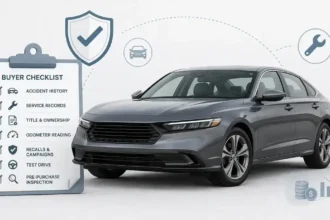
Before you turn a Camry listing into an ownership-cost decision, confirm that the car is actually represented correctly. Run the Camry’s VIN through CarMerit and compare the returned vehicle details with the seller’s description and paperwork. That keeps your reliability and cost judgment tied to the right vehicle before you move on to service records, inspection findings, and likely catch-up work.
Records to ask for
Ask for oil-change history, larger service receipts, repair invoices, and anything that shows how the car was treated once it stopped being new.
Inspection priorities
Your pre-purchase inspection should focus on the things that actually break the value case: shifting behavior, oil-use clues, AC function, electrical weirdness, and signs of deferred wear-item care.
When price should not tempt you
If the discount only works because you are ignoring risk, the price is not saving you money. It is advancing the bill.
| Check | Why it matters | Walk-away threshold |
|---|---|---|
| Service records | Separates reputation from real care | Seller cannot explain basic maintenance history |
| Transmission behavior | One of the fastest value-breakers | Sluggish, odd, or evasive shifting story |
| Oil-use clues | Changes the whole ownership equation | Burning smell, low-confidence answers, repeated excuses |
| AC and electronics | Reveal both daily annoyance and care level | Multiple small issues plus weak history |
| Price versus year band | Value depends on what risk you are accepting | Cheap price is still too high for the year, condition, and uncertainty |
The Camry is one of the strongest picks if you want a low-risk used sedan, but it is not the only smart option. If you are still comparing body styles and ownership risk, start with our broader Most Reliable Used Cars shortlist.
Final Verdict: Toyota Camry Reliability and Cost to Own Takeaway
Toyota Camry reliability is still good enough to keep the car near the top of many used midsize sedan shortlists. That part is real.
The better conclusion is more specific than that. A used Camry is often a strong buy when it comes from a cleaner year band, has a credible maintenance story, and is priced with enough humility to leave room for normal ownership. It becomes a weak buy when the seller expects the badge to cover for the year, the condition, or the missing paperwork.
So the final answer is simple:
- Buy a used Camry when the records support the reputation.
- Use caution when the car sits in an earlier riskier band or the value case depends on optimistic assumptions.
- Skip when price is doing all the work and proof is doing none of it.
The right Camry is still one of the smarter mainstream used-car answers in the U.S. The random Camry is not.
Camry reliability is strongest when you compare it against real alternatives, not in isolation. If you are deciding between Toyota’s safer ownership path and Mazda’s lower-price driving appeal, read our Mazda6 vs Toyota Camry comparison before choosing.
The Mazda6 can make sense if you want sharper handling and a nicer cabin for the money, but it needs a stricter year-by-year filter than a Camry. Compare the trade-off with the Mazda6 years to avoid and best years to buy guide before using it as your lower-cost midsize-sedan alternative.
The Camry is a practical family choice if you do not need SUV cargo height. See our best used family cars guide to compare the Camry with the Accord, CR-V, RAV4, CX-5, Corolla Cross, and HR-V.
The Camry is one of the strongest reliable used sedans under $20,000, especially when the records and mileage are clean. Compare it with other compact cars, sedans, and SUVs in our best used cars under $20,000 guide.
Frequently Asked Questions
Is the Toyota Camry actually reliable as a used car?
Usually, yes. The safer version of that answer is that a used Camry is often reliable enough to deserve a shortlist spot, but only when the year, records, and condition support the badge. A weak example can still be a weak buy.
How long does a Toyota Camry last?
A well-kept Camry can stay useful for a long time, but mileage is not the whole story. A higher-mile car with strong records can be safer than a lower-mile car with vague maintenance history.
Which Toyota Camry years need more caution?
The highest-caution zone is usually early sixth-generation cars, especially roughly 2007 to 2009. Roughly 2010 to 2011 still need more proof than later cleaner bands. Roughly 2012 to 2017 is usually the easier mainstream used-buy zone if the records and price make sense.
What are the most common Toyota Camry problems that matter?
The ones that matter most are the ones that change the deal: transmission hesitation, oil-use signs, stacked neglect, and enough smaller electrical or AC issues to suggest the car has not been cared for properly.
Is Toyota Camry maintenance cost actually low?
It is usually manageable for the class, but “low maintenance” is not the same thing as “safe to neglect.” The smarter view is that routine upkeep is often reasonable, while neglected examples can become expensive quickly.
Is a Camry Hybrid always the better buy?
No. It is often the better answer for higher-mile commuters who can justify the premium and have good records. A gas Camry is often the easier used-car answer for moderate-mile drivers who want the simpler ownership story.
What should I check before buying a high-mileage Camry?
Start with service records. Then check shifting behavior, oil-use clues, AC, electronics, and whether the seller can explain the car honestly. A pre-purchase inspection is worth it here.
Do cost-to-own calculators tell a used buyer everything they need to know?
No. They are useful for showing the buckets, but they do not fully capture used-car condition, prior neglect, or how a specific example will behave after purchase.