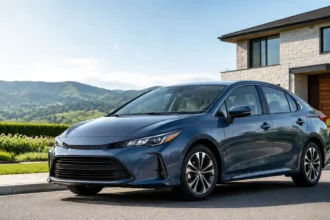


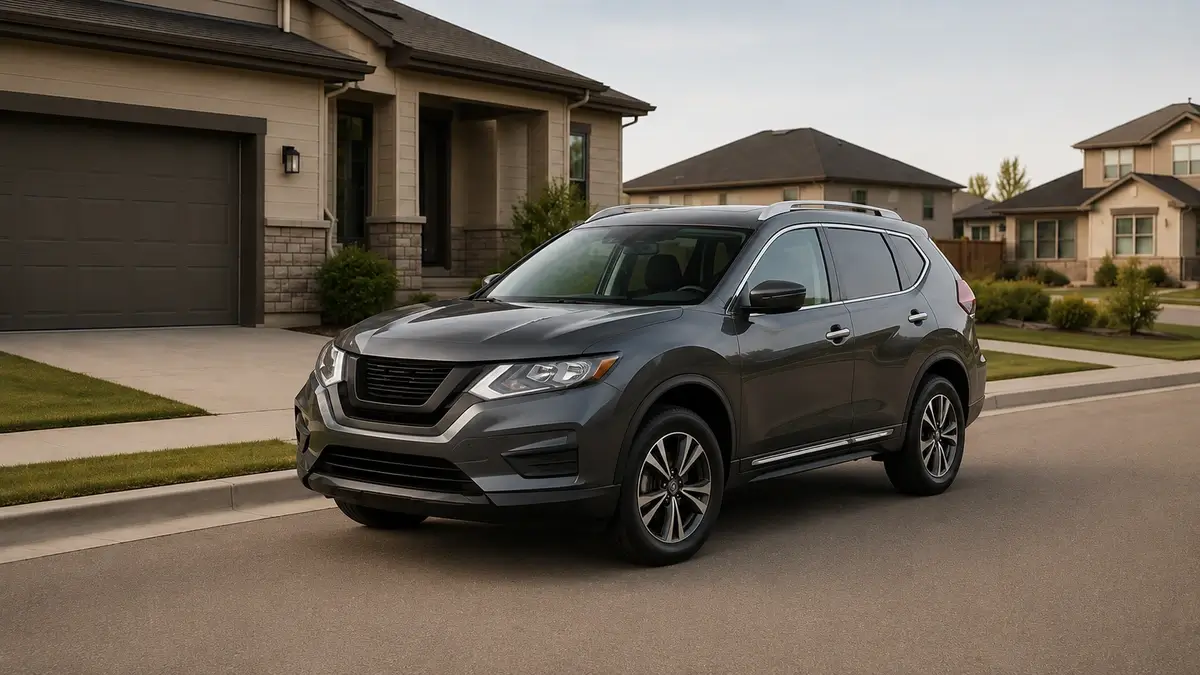
Nissan Rogue reliability is good enough to consider, but it is not a blind buy. The right used Rogue depends on model year, CVT behavior, mileage, maintenance records, and open recall status.
The safest default is simple. Shortlist a clean, well-maintained Rogue only after the VIN, service history, and test drive all check out.
- Shortlist a Rogue if it has clean records, smooth transmission behavior, and no unresolved recall issue.
- Be cautious if it has high mileage, weak records, or vague seller answers.
- Skip it if the CVT hesitates, shudders, whines, or shows warning lights.
- Compare alternatives if you want the lowest possible drivetrain risk.
- Fastest safe default: choose the best-documented Rogue, not the cheapest one.
What goes wrong if you pick poorly: a low purchase price can turn into transmission, engine, or repair-cost stress.
Is the Nissan Rogue Reliable Enough to Buy Used?
Yes, a used Nissan Rogue can be reliable enough to buy. The better answer is more conditional: buy the right year, with the right records, after the right checks.
The Rogue makes most sense for value-focused compact SUV shoppers. It gives useful space, easy daily comfort, and a lower-risk path only when the drivetrain feels right.
It is weaker for buyers who want maximum long-term confidence with minimal verification. Those shoppers should also compare the Nissan Rogue vs Toyota RAV4 before deciding.
The Rogue decision changes fast once the records get thin. A well-kept Rogue can be a smart buy, while a neglected one can become a false bargain.
Use this first filter before looking deeper.
| Buyer situation | Rogue verdict | Why it matters |
|---|---|---|
| Clean service records, smooth test drive, no open recall | Strong candidate | The main risk controls are already partly handled |
| Good price, but weak maintenance history | Inspect carefully | Savings may not cover drivetrain risk |
| High mileage with full records | Possible buy | Condition matters more than mileage alone |
| High mileage with no records | Usually skip | The risk is hard to price fairly |
| CVT hesitation, shuddering, warning lights, or rough engagement | Walk away | These are expensive-risk signals |
| Buyer wants lowest possible drivetrain risk | Compare rivals | A RAV4, CR-V, or CX-5 may be a safer-feeling choice for risk-averse buyers |
Nissan Rogue Reliability at a Glance
The Rogue is not a “bad used SUV,” but its reliability story has conditions. The biggest used-buying mistake is treating all years, engines, and histories the same.
Safety ratings and ownership-cost evidence add useful context, but they do not replace a VIN check, service-history review, or proper test drive.
| Reliability factor | Used-buyer read | What to do before buying |
| Overall reliability | Acceptable with the right example | Verify year, records, mileage, and recalls |
| Main used-buy concern | CVT and drivetrain condition | Test drive cold and warm |
| Newer engine recall concern | Some newer VC-Turbo Rogues need VIN-specific checks | Use the NHTSA and Nissan recall tools |
| Ownership-cost context | Fuel economy and service requirements vary by year, engine, drivetrain, and use | Match the exact vehicle to EPA data and Nissan’s maintenance schedule |
| Long-term ownership | Depends heavily on maintenance | Confirm oil, fluid, tire, brake, and inspection records |
| Best safe default | Documented, smooth-driving example | Pay for condition, not just mileage |
Generic model-wide repair averages are a weak forecast for one specific used Rogue. The better approach is to price the vehicle in front of you: verify its service history, inspect it for current needs, and use written estimates for any diagnosed work.
Fuel economy and official service requirements can be matched more safely to the exact model year and configuration, so those ownership-cost checks are covered below.
Nissan Rogue Reliability by Year
Year matters, but this page should not become another full model-year guide. For deeper year-by-year risk, use CarMerit’s Nissan Rogue Years to Avoid guide after this overview.
The key point is practical. Do not judge an older Rogue by current-model marketing, and do not judge a clean later Rogue by older CVT anxiety alone.
Nissan Rogue NHTSA Generation Evidence Snapshot
Powertrain/variant scope: regular Nissan Rogue evidence set, not Rogue Sport. Recall applicability still needs VIN confirmation.
| Gen/model years | Owner compl. | Compl. per model-year | Mfr. Comms. | Ownership-risk context |
|---|---|---|---|---|
| Gen 1, 2007-2013 | 2,316 | 330.9 | 703 | Use as older-vehicle context for drivetrain, safety-system, electrical, steering, and maintenance-record checks. |
| Gen 2, 2014-2020 | 3,237 | 462.4 | 1,773 | Supports deeper service-history review, especially around CVT behavior, brake, airbag, camera, and electrical checks. |
| Gen 3, 2021-2026 | 1,503 | 250.5 | 542 | Lower raw counts are age-limited; focus VIN recall status, engine, fuel-system, camera, restraint, and software checks. |
Table note: Complaint and manufacturer-communication counts are raw NHTSA records, not sales-adjusted defect rates or reliability scores. Older model years have had more time to collect records, so use this table as inspection context, not as a generation ranking.
| Used Rogue group | Reliability read | Buyer action |
| Older first-generation and Rogue Select examples | Higher age-related risk | Buy only with strong records and low-risk pricing |
| 2014 to 2020 redesigned Rogue | Common used-market target | Focus hard on CVT behavior and maintenance history |
| 2021 redesign and newer | More modern, but still needs checks | Verify recalls, service history, and early ownership issues |
| 2021 to 2024 Rogue with VC-Turbo exposure | VIN check is essential | Review NHTSA and Nissan recall status before purchase |
| 2023 to 2025 Rogue with 1.5L VC-Turbo exposure | Do not skip recall research | Confirm whether recall repair or inspection applies |
IIHS evidence is most useful here when it shows the safety change points that can alter how a used Rogue should be interpreted. The goal is not to reproduce every IIHS test or turn a reliability guide into a safety database.
Selected Nissan Rogue IIHS Safety Checkpoints
| Model years / scope | Selected IIHS result | Buyer-useful meaning |
|---|---|---|
| 2008–2013 Rogue and 2014–2015 Rogue Select | Driver-side small overlap: M | Rogue Select retained the older design, so ratings from the redesigned Rogue should not be carried backward to it |
| 2014–2020 redesigned Rogue | Driver-side small overlap: G; passenger-side 2018–2020: A | The passenger-side result has its own later applicability and should not be assumed for every 2014–2020 vehicle |
| 2016 Rogue | Headlights: A with SL Premium package; P for the listed S, SV, and SL configurations | Exact equipment can materially change the IIHS headlight result even within the same model year |
| 2021 Rogue and later redesign | Driver-side small overlap: G; passenger-side: G with build-specific applicability | Build date still matters: the 2021 passenger result has separate before-March/after-February records, and the later applicability changes again for vehicles built after April 2022 |
| 2021–2023 Rogue vs 2025–2026 Rogue | Updated moderate overlap: M vs A | This is a later IIHS test family; the checked 2024 page does not display an updated-moderate rating, so a missing 2024 entry should not be treated as a poor result |
Table Note: G = Good, A = Acceptable, M = Marginal, P = Poor. These are selected official IIHS change points, not a complete Rogue safety history or an overall safety score. Small-overlap, updated moderate-overlap, and headlight ratings are separate test families and should not be combined into one ranking. Build-date and equipment restrictions remain part of the rating.
For a used Rogue buyer, the practical lesson is simple: verify the exact model year, build scope, and equipment rather than carrying one Rogue rating across another design or configuration.
For newer Rogues, recall status matters more than broad year confidence. NHTSA recall records in the reviewed evidence set include engine-related campaigns affecting certain newer Rogue vehicles, including campaigns tied to engine-bearing concerns that can lead to engine damage, engine failure, or loss of drive power. The relevant recall exposure should be checked by VIN, especially on 2021-2024 Rogue models and 2023-2025 Rogue models with the 1.5L VC-Turbo engine.
Nissan Rogue Recall and VIN Due-Diligence Snapshot
| Generation and model years reviewed | Recall | Unique recall camps. | Inv. | VIN due-diligence focus |
|---|---|---|---|---|
| Gen 1, 2007-2013 | 15 | 7 | 1 | Check steering, TPMS/tire, passenger-airbag, and electrical/fire-related campaign status before trusting an older listing. |
| Gen 2, 2014-2020 | 38 | 19 | 6 | Check airbag occupant-classification, brake, liftgate, fuel-pump/stall, camera, key, electrical, and any hybrid-specific applicability by VIN. |
| Gen 3, 2021-2026 | 30 | 20 | 5 | Check fuel hose/tank, camera/software, brake caliper, seat-belt/restraint, engine-bearing, and throttle-body/drive-power recall applicability by VIN. |
Table note: Recall rows are campaign-year records, not proof that a specific vehicle still has an open recall. Campaign applicability can depend on VIN, equipment, and powertrain, so verify the exact vehicle through official VIN lookup before buying.
Nissan Rogue CVT Problems: What Used Buyers Should Know
The Rogue’s CVT is the main reason used buyers hesitate. That hesitation is reasonable, but it needs discipline.
The right approach is not “all Rogue CVTs fail.” The right approach is to treat CVT behavior as a serious inspection gate.
A CVT is a continuously variable transmission. It does not shift like a normal automatic, but it should still feel smooth and predictable.
Watch for these signs during the test drive:
- Hesitation when pulling away
- Shuddering at low speed
- Surging or uneven acceleration
- Whining or droning that feels abnormal
- Delayed engagement from Park to Drive or Reverse
- Warning lights or transmission-related messages
- Rough behavior after the vehicle warms up
Test the Rogue in normal city traffic and at highway speed. A short parking-lot drive is not enough.
Ask for service records before you negotiate hard. You want evidence of regular maintenance, not a vague claim that “it was serviced.”
Nissan also issued a CVT limited-warranty extension covering eligible 2015 Rogue Select and 2014–2018 Rogue vehicles; Rogue Hybrid was excluded, and VIN-specific conditions apply. The extension increased the original CVT term from 60 months/60,000 miles to 84 months/84,000 miles.
If you’re shopping one of these CVT-era Rogues, use CarMerit’s Manufacturer Special Coverage Lookup to see whether Nissan has a model-year coverage record worth checking before you judge the transmission history or negotiate around a possible repair.
For today’s used buyer, treat that as repair-history and eligibility context — not proof that warranty coverage still remains. Current coverage would depend on the VIN, original in-service date, mileage, eligibility status, and written terms. Ask whether CVT diagnosis, repair, or replacement work is documented in the vehicle’s history.
If the Rogue has high mileage, CVT history matters even more. Missing records should lower your offer or end the deal.
Walk away if the seller dismisses obvious symptoms. Also walk away if warning lights are present and the seller asks you to “just clear them.”
For newer VC-Turbo Rogues, engine recall checks are separate from CVT checks. NHTSA recall reports mention warning signs such as abnormal engine noise, rough running, malfunction indicator lights, and warning messages.
That means the safest inspection path is wider than the transmission. Listen to the engine, scan the vehicle, check recalls, and get a pre-purchase inspection.
How Long Do Nissan Rogues Last?
A Nissan Rogue can last a long time when it is maintained well. The weak answer is pretending there is one guaranteed mileage number.
Mileage is only one part of the decision. Service history, driving conditions, CVT behavior, engine condition, recall status, and prior repairs matter more.
A lower-mileage Rogue with missing records is not automatically safer. A higher-mileage Rogue with clean records can be the better buy.
The question is not only “how long do Nissan Rogues last?” The better question is whether this specific Rogue has been maintained well enough to justify the asking price.
Use this simple rule. The higher the mileage, the stronger the proof needs to be.
For higher-mileage examples, require:
- Complete or near-complete service records
- Smooth CVT behavior from cold start to warm driving
- No open safety recalls
- No engine warning lights
- No signs of overheating, fluid leaks, or harsh operation
- A clean pre-purchase inspection
Do not buy a high-mileage Rogue on price alone. A cheap Rogue with weak records can become the most expensive option.
Nissan Rogue Maintenance Cost and Repair Reality
Reliability and ownership cost belong together, but one model-wide repair number is a poor way to price a specific used Rogue. Fuel economy is one cost that can be matched directly to the exact vehicle, and the differences are large enough across some Rogue designs and powertrains to matter.
Use EPA/FuelEconomy.gov for the exact configuration rather than averaging every Rogue from the same year.
Nissan Rogue EPA Fuel-Economy Change Points
| Model Year | Configuration | City | Highway | Combined |
|---|---|---|---|---|
| 2008 | 2.5L FWD | 22 | 27 | 24 |
| 2008 | 2.5L AWD | 21 | 26 | 23 |
| 2014 | 2.5L FWD | 25 | 32 | 28 |
| 2014 | 2.5L AWD | 25 | 31 | 27 |
| 2014 | Rogue Select 2.5L FWD | 23 | 28 | 25 |
| 2014 | Rogue Select 2.5L AWD | 22 | 27 | 24 |
| 2017 | 2.5L FWD | 26 | 33 | 29 |
| 2017 | 2.5L AWD | 25 | 32 | 27 |
| 2017 | Hybrid 2.0L FWD | 33 | 35 | 34 |
| 2017 | Hybrid 2.0L AWD | 31 | 34 | 33 |
| 2021 | 2.5L FWD | 27 | 34 | 30 |
| 2021 | 2.5L AWD | 26 | 33 | 29 |
| 2021 | 1.5L FWD | 30 | 37 | 33 |
| 2021 | 1.5L AWD | 30 | 36 | 33 |
| 2022–2024 | 1.5L FWD, base EPA configuration | 30 | 37 | 33 |
| 2022–2024 | 1.5L AWD, base EPA configuration | 28 | 35 | 31 |
| 2025 | 1.5L FWD, base EPA configuration | 30 | 37 | 33 |
| 2025 | 1.5L AWD, base EPA configuration | 28 | 35 | 31 |
| 2025 | 1.5L AWD Rock Creek | 27 | 32 | 29 |
| 2026 | 1.5L FWD | 29 | 36 | 32 |
| 2026 | 1.5L AWD | 28 | 35 | 31 |
| 2026 | 1.5L AWD Rock Creek | 27 | 32 | 29 |
Table Note: Figures are EPA city/highway/combined MPG for the exact configurations shown. This is a selected change-point table, not a complete configuration database or a model-year average. Rogue Select, Rogue Hybrid, different drivetrains, the 2021 engine choices, later trim-group records, and Rock Creek must remain separate where EPA lists them separately. Verify the exact vehicle on FuelEconomy.gov because configurations not shown here can differ. Actual fuel economy varies with driving and operating conditions.
The buyer-relevant changes are more useful than a full year-by-year dump: Rogue Select differs from the redesigned 2014 Rogue, the 2017–2019 Hybrid has materially different EPA ratings from the gas model, 2021 has separate 2.5L and 1.5L records, and Rock Creek carries its own lower AWD rating in 2025–2026.
| Ownership item | What it tells you | Buyer action |
|---|---|---|
| EPA fuel economy | Running-cost exposure can change by year, engine, drivetrain, and powertrain | Match the exact EPA configuration |
| Nissan maintenance schedule | Shows what the manufacturer calls for on that specific year and powertrain | Match the correct schedule to the vehicle |
| CVT service history | Shows whether drivetrain care is actually documented | Ask for service records and invoices |
| Recall status | Shows whether VIN-specific safety work may still require attention | Check NHTSA and Nissan by VIN |
| Inspection findings and written estimates | Show what the specific Rogue needs now or soon | Budget from diagnosed work instead of a generic model-wide average |
Use Nissan’s official maintenance schedule for the exact model year and powertrain. For this article’s reliability decision, the most useful maintenance question is not every scheduled service item — it is whether the records support the drivetrain condition you are being asked to trust.
CVT fluid is a good example. Nissan’s Rogue schedules distinguish normal-use inspection from severe-use replacement. Under listed severe-use conditions such as towing, car-top carrier use, or rough or muddy-road driving, CVT-fluid replacement can be specified at 60,000 miles or 48 months.
Do not turn a normal inspection requirement into a universal replacement interval. Instead, ask what was actually done, under what driving conditions, and whether invoices or service records support the seller’s story.
High-Mileage Nissan Rogue: Worth It or Too Risky?
A high-mileage Nissan Rogue is not automatically a bad buy. It is also not a safe shortcut.
Mileage raises the proof standard. Once mileage is high, condition and records matter more than trim, color, or small feature differences.
The key risk is not the odometer alone. The real risk is high mileage plus missing service history, rough CVT behavior, warning lights, or unresolved recalls.
| High-mileage signal | What it means | Decision |
| Full records and smooth drivetrain | Risk is more manageable | Consider if price is fair |
| Missing records | Unknown maintenance risk | Usually skip |
| CVT shudder or hesitation | Possible expensive problem | Walk away |
| Engine noise or warning lights | Serious risk signal | Do not buy without diagnosis |
| Open recall with no clear plan | Ownership uncertainty | Resolve before purchase |
| Price discount without proof | False bargain risk | Keep shopping |
A high-mileage Rogue should feel boring on the test drive. No drama is the goal.
If anything feels off, do not talk yourself into it because the price is low. There will be another used compact SUV.
Common Nissan Rogue Problems to Check Before Buying
Common-problem lists can create the wrong reaction. They can make every used Rogue sound risky.
Use this section as a buying checklist, not a panic list. The goal is to find a good example and reject the weak ones.
Nissan Rogue Common Reported Problem Areas From NHTSA Complaints
| Owner-reported problem area | Compl. | Share of all Compl. | Model years shown in data | Inspection trigger |
|---|---|---|---|---|
| Powertrain / Transmission | 1,407 | 19.9% | 2008-2026 | Test the CVT cold and warm for hesitation, shuddering, whining, delayed engagement, and uneven acceleration. |
| Airbags / Seatbelts / Structure | 1,107 | 15.7% | 2007-2026 | Verify recall status, warning lights, seatbelt operation, crash history, and airbag-related records. |
| Engine | 1,000 | 14.2% | 2008-2026 | Listen for abnormal noise, rough running, warning lights, and scan codes, especially on newer VC-Turbo listings. |
| Electrical | 641 | 9.1% | 2008-2026 | Test screens, cameras, sensors, locks, windows, warning messages, and battery/charging behavior. |
| Brakes | 579 | 8.2% | 2008-2025 | Check brake feel, warning lights, fluid leaks, ABS behavior, calipers, and service history. |
| Driver-assist ADAS | 299 | 4.2% | 2016-2026 | Test AEB, forward-collision alerts, cameras, and sensor behavior during a real road test. |
Table note: Percentages show each problem area’s share of the 7,056 owner-filed NHTSA complaints reviewed here. They are not defect rates across all Rogues sold.
| Area to check | What to look for | Why it matters |
| CVT behavior | Hesitation, shudder, whining, delayed engagement | Main used-buy risk area |
| Engine behavior | Rough running, abnormal noise, warning messages | Important on recall-affected newer examples |
| Warning lights | Check engine, transmission, AWD, safety lights | Needs diagnosis before purchase |
| Recalls | Open or incomplete recall campaigns | Must be verified by VIN |
| A/C and heat | Weak cooling, weak heat, fan issues | Comfort repairs can still matter |
| Electrical items | Screens, cameras, sensors, locks, windows | Small issues add ownership friction |
| Suspension and steering | Clunks, wandering, uneven tire wear | Can signal neglected maintenance |
| Brakes and tires | Vibration, pulling, worn tires | Helps reveal ownership care |
| Fluids and leaks | Oil leaks, coolant smell, dirty fluids | Can point to deeper neglect |
Owner complaints and forum posts can reveal what shoppers worry about. They should not be treated as proof that every Rogue has the same defect.
For hard decisions, use stronger checks. Start with VIN recall status, service records, a long test drive, and a pre-purchase inspection.
Nissan Rogue vs Other Used Compact SUVs
The Rogue makes the most sense when value, comfort, space, and verified condition line up. It is often worth considering if the price is meaningfully better than rivals.
It is less convincing when the price is close to a cleaner RAV4, CR-V, or CX-5. At that point, the lower-risk alternative may be worth the extra money.
Use this as a routing decision, not a full comparison.
| Alternative | Consider it instead if | Trade-off |
| Toyota RAV4 | You want a safer-feeling reliability default and can afford a clean example | Usually costs more used |
| Honda CR-V | You want a familiar family-SUV benchmark with strong ownership confidence | Clean examples can be expensive |
| Mazda CX-5 | You want nicer driving feel and cabin quality | Rear space may be tighter |
| Subaru Forester | You want visibility and AWD confidence | Check Subaru-specific ownership risks |
| Nissan Rogue | You want value and comfort after verification | Requires stricter drivetrain checks |
For the next comparison step, read CarMerit’s Nissan Rogue vs Toyota RAV4 guide.
If you are still building a compact SUV shortlist, start with Best Used Compact SUVs to Buy. That page helps route the Rogue against CR-V, RAV4, CX-5, and other practical options.
Who Should Buy a Used Nissan Rogue — and Who Should Skip It
The Rogue is a conditional buy. It rewards buyers who verify details and punishes buyers who chase the lowest price.
This is the cleanest buyer-fit breakdown.
| Buyer type | Rogue fit | Recommendation |
| Budget-conscious compact SUV buyer | Good fit | Buy only after records and drivetrain checks |
| Small family buyer | Good fit | Prioritize condition over trim |
| Daily commuter | Good fit | Confirm smooth CVT behavior |
| High-mileage shopper | Mixed fit | Require strong service history |
| Risk-averse buyer | Weaker fit | Compare RAV4, CR-V, or CX-5 |
| Buyer with no time for inspection | Poor fit | Choose a lower-risk alternative |
| Buyer looking at a suspiciously cheap Rogue | Poor fit | Assume there is a reason |
Buy a used Rogue if the deal is strong and the vehicle proves itself. That means clean records, smooth operation, no unresolved recall concern, and no seller pressure.
Skip it if the deal requires trust instead of proof. Used Rogue reliability depends too much on condition for guesswork.
Used Nissan Rogue Buying Checklist
This checklist is where the reliability decision becomes practical. Do not skip it because the vehicle looks clean.
A clean cabin tells you very little about drivetrain care. The records and test drive tell you much more.
Before you work through the Rogue-specific checks, confirm that the VIN belongs to the exact vehicle the seller is describing. Run the Nissan Rogue’s VIN through CarMerit and compare the returned vehicle details with the listing and paperwork. This is especially useful before you apply Rogue-specific guidance to a listing that could be confused with Rogue Select or Rogue Sport; then keep official NHTSA and Nissan recall checks, service history, CVT behavior, and the pre-purchase inspection as separate steps.
Before buying a used Nissan Rogue, check:
- Use the NHTSA recall lookup with the VIN.
- Use Nissan’s official recall lookup for the same VIN.
- Confirm whether it is Rogue, Rogue Select, or Rogue Sport.
- Ask for oil-change and maintenance records.
- Check whether CVT-related service history is documented.
- Start the vehicle cold and listen for abnormal engine noise.
- Let the vehicle warm up before judging drivetrain behavior.
- Test low-speed acceleration, stop-and-go traffic, and highway merging.
- Watch for shuddering, surging, whining, or delayed engagement.
- Scan for stored codes, not just dashboard lights.
- Test A/C, heat, screens, cameras, locks, windows, and driver aids.
- Inspect tires, brakes, suspension, leaks, and underbody condition.
- Get a pre-purchase inspection from an independent mechanic.
- Compare the asking price against better-documented alternatives.
- Walk away if the seller resists inspection or cannot explain records.
The most important rule is simple. Do not buy a used Rogue that needs excuses.
Final Verdict: Is Nissan Rogue Reliability Good Enough?
Nissan Rogue reliability is good enough for the right used buyer. It is not strong enough to ignore year, mileage, CVT behavior, recall status, or service history.
The Rogue is worth shortlisting when it is clean, documented, smooth, and priced fairly. It is a weak buy when the seller leans on vague “reliable SUV” language instead of proof.
For most buyers, the best Rogue is not the cheapest one. It is the one with the cleanest history and the least drivetrain uncertainty.
If you are comparing the Rogue against Honda’s safer compact SUV default, the Nissan Rogue vs Honda CR-V guide shows when the Rogue’s lower price is enough to justify the added inspection risk.
If your budget allows a cleaner RAV4, CR-V, or CX-5, compare those before deciding. If the Rogue is clearly better value and passes every check, it can be a sensible used compact SUV.
Frequently Asked Questions
Are Nissan Rogues reliable used cars?
Yes, Nissan Rogues can be reliable used cars when the year, mileage, service history, and drivetrain condition check out. They are not ideal blind buys.
Is a used Nissan Rogue a good SUV to buy?
A used Nissan Rogue can be a good SUV if it is well maintained and priced below stronger rivals. Avoid examples with rough CVT behavior, weak records, or unresolved recall issues.
What Nissan Rogue years are most reliable?
The better question is which specific example has the best records and condition. For deeper model-year guidance, use CarMerit’s Nissan Rogue Years to Avoid guide.
Which Nissan Rogue years should you avoid?
Avoid any Rogue year or example with poor maintenance history, unresolved recalls, CVT symptoms, or suspicious seller behavior. For year-specific risk, use the dedicated years-to-avoid guide.
Does the Nissan Rogue have CVT transmission problems?
Some used Rogue shoppers report CVT-related concerns, and CVT condition should be treated as a major inspection point. Do not assume every Rogue has a bad CVT, but do not skip the test drive.
How long do Nissan Rogues usually last?
A Rogue’s lifespan depends on maintenance, driving conditions, mileage, and drivetrain care. Avoid guaranteed mileage claims and judge the specific vehicle.
Is a high-mileage Nissan Rogue worth buying?
A high-mileage Rogue can be worth buying only with strong records, smooth CVT behavior, no warning lights, and a fair price. Without records, it is usually not worth the risk.
Is Nissan Rogue maintenance expensive?
There is no single annual number that tells you what a specific used Rogue will cost. Fuel economy, model year, powertrain, mileage, condition, prior care, and any repair needs found during inspection all matter.
Check the exact vehicle on EPA/FuelEconomy.gov, match it to Nissan’s official maintenance schedule, and review its service records. If an inspection identifies a repair, use a written estimate for that specific work rather than treating a generic model-wide average as your likely bill.
Should you buy a used Nissan Rogue or choose a Toyota RAV4 or Honda CR-V instead?
Choose the Rogue if it is clearly better value and passes inspection. Choose a RAV4 or CR-V if you want a safer-feeling reliability default and can afford a cleaner example.