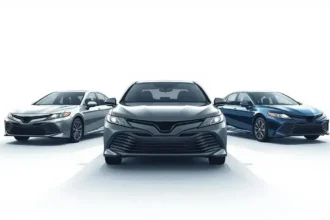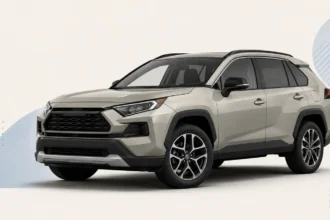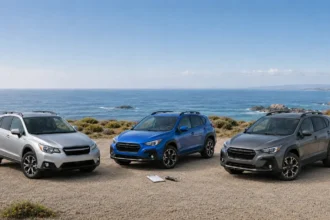


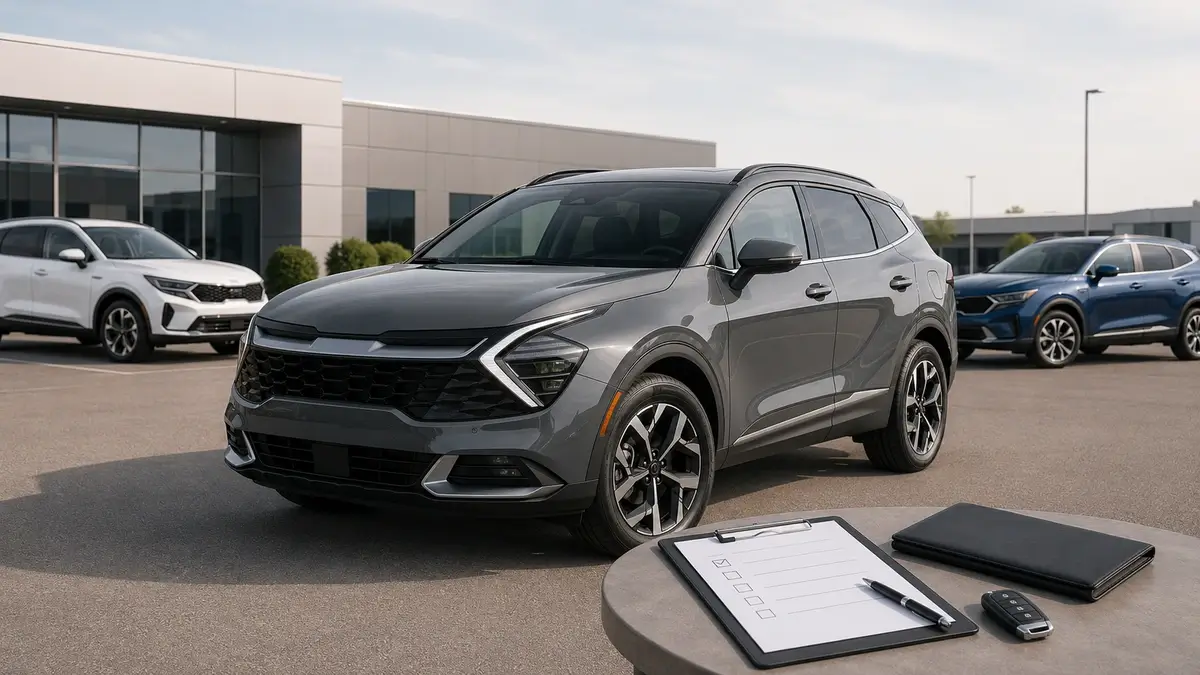
The Kia Sportage can be a smart used compact SUV, but the wrong year can make the deal risky.
The main concern is not one small annoyance. It is the mix of engine, brake-system, fire-risk, recall, electrical, and maintenance-history concerns across different generations.
For most used buyers, the Kia Sportage years to avoid first are 2011–2013, especially if recall records, engine history, and service records are missing.
Be careful with 2014–2016, 2017–2021, and 2023 examples unless the seller can prove recall completion and the SUV passes a proper inspection.
Fastest safe default: start with a clean, well-documented later-year Sportage. Then verify the exact VIN, service records, recall status, and inspection results before treating it as safe.
The cheapest Sportage is rarely the safest one.
CarMerit reliability tool
Check any Sportage year – NHTSA-backed snapshot
Pick a model year to see Kia Sportage complaint, recall, investigation, and manufacturer-communication counts from the article’s NHTSA snapshot, plus CarMerit’s used-buy verdict for that year band.
Owner complaints
…
NHTSA, CarMerit snapshot
Recall records
…
NHTSA, CarMerit snapshot
Investigations
…
NHTSA, CarMerit snapshot
Manufacturer communications
…
NHTSA, CarMerit snapshot
Most-reported problem areas
Complaint counts and manufacturer communications are raw NHTSA records, not defect rates or reliability scores. Newer model years have had less time to collect reports, so lower counts do not prove better reliability. Verdicts come from CarMerit’s article guidance. Data source: NHTSA.gov. Always verify VIN recall status, Kia recall status, service records, engine cold-start behavior, oil-pressure history, ABS or brake warnings, electrical symptoms, burning smells, tow-hitch harness status, accident or flood history, and independent inspection results before buying.
Quick Verdict: Kia Sportage Years to Avoid
Use this table as the first filter, not the final buying decision. A clean VIN check and inspection can make a specific SUV better than its year reputation.
| Model years / verdict | Why it matters | Buy only if |
|---|---|---|
| 2011–2013 — Avoid first | Engine-recall history, age, maintenance gaps, and later ABS/HECU fire-risk recall coverage raise the risk | Recall work is documented, engine history is clean, and inspection finds no warning signs |
| 2014–2016 — Strong caution | These years are covered by a HECU fire-risk recall, so unresolved recall status is a serious issue | VIN shows no open recalls and service records are complete |
| 2017–2021 — Buy only with proof | Select Sportage vehicles from this range were covered by a HECU fire-risk recall | Recall repairs are complete and there are no brake, ABS, burning-smell, or electrical red flags |
| 2022 — Better shortlist with caveats | Later fourth-generation age helps, but some 2017–2022 Sportage vehicles with Genuine Kia tow-hitch harness equipment need recall verification | VIN is clean, tow-hitch harness status is checked, and records are strong |
| 2023 — Buy only after extra checks | Early redesign year with recall-sensitive brake, electrical, and drivetrain-related areas | All recalls are complete and the SUV has no brake, electrical, warning-light, or drivetrain symptoms |
| 2024 and newer — Too new to call proven best | Newer examples may be attractive, but long-term used data is still developing | You want a newer SUV and can verify recall status, warranty coverage, and records |
The safer answer is not “never buy a Sportage.”
The safer answer is: avoid the riskiest years first, then judge the exact vehicle.
How We Judged the Risk by Year
A model year was treated as risky when the issue could change the used-buying decision.
Engine failure, fire-risk recalls, brake-assist problems, electrical faults, and unclear repair history matter more than minor interior complaints.
The strongest proof comes from official recall data, VIN recall checks, service records, and inspection results.
Owner complaints and competitor lists can reveal patterns, but they are not enough by themselves.
IIHS adds a separate crash-safety layer to the year choice.
| Model years | Selected IIHS crashworthiness context | What it means for a used buyer |
|---|---|---|
| 2011–2016 | Driver-side small overlap: Poor. Original moderate overlap: Good. Original side: Good. | These years combine some strong legacy-test results with a clear small-overlap weakness. |
| 2017–2022 | Driver- and passenger-side small overlap: Good. Original moderate overlap: Good. Original side: Good. Updated side: Moderate. | The later generation improved small-overlap performance, but the newer side test adds an important limitation. |
| 2023 | Driver- and passenger-side small overlap: Good. Original moderate overlap: Good. | These results add useful safety context, but they do not erase the recall checks that make 2023 a higher-verification used buy. |
| 2024–2026 | Small overlap: Good. Updated side: Good. | The updated-side Good rating applies across these model years. For 2026, the updated moderate-overlap Good rating applies only to vehicles built after May 2025. |
Table Note: IIHS test families and criteria changed over time. Do not treat these ratings as one simple cross-year safety score, and do not treat an unlisted rating as a weak rating.
NHTSA Owner Complaints and Safety Recalls by Kia Sportage Model Year
| Model year / generation | Owner complaints | Safety recalls | Buyer-useful note |
|---|---|---|---|
| 2011 – Gen 3 | 181 | 6 | Elevated complaints with several recall rows. |
| 2012 – Gen 3 | 392 | 5 | One of the highest complaint years in the NHTSA records. |
| 2013 – Gen 3 | 380 | 3 | Complaint volume stays very high after 2012. |
| 2014 – Gen 3 | 122 | 3 | Lower complaints than 2011-2013, but recalls still matter. |
| 2015 – Gen 3 | 145 | 2 | Moderate complaints with two recall rows. |
| 2016 – Gen 3 | 129 | 2 | End of Gen 3 shows fewer complaints than 2011-2013. |
| 2017 – Gen 4 | 392 | 4 | Highest Gen 4 complaint year in the NHTSA records. |
| 2018 – Gen 4 | 158 | 3 | Complaints drop from 2017, but recall checks still matter. |
| 2019 – Gen 4 | 66 | 2 | Lower complaint count with two recall rows. |
| 2020 – Gen 4 | 153 | 2 | Complaints rise versus 2019. |
| 2021 – Gen 4 | 45 | 2 | Low complaints, but still verify recall status. |
| 2022 – Gen 4 | 42 | 1 | Lowest Gen 4 complaint count in this range. |
| 2023 – Gen 5 | 285 | 7 | Redesign year with high complaints and seven recall rows. |
| 2024 – Gen 5 | 93 | 3 | Lower complaints than 2023, but still early data. |
| 2025 – Gen 5 | 66 | 1 | Newer-year count is still early. |
| 2026 – Gen 5 | 20 | 1 | Very early data; low count does not prove reliability yet. |
Table note: Owner complaints are raw NHTSA reports, not defect rates or reliability scores. Newer years have had less time to collect reports, so lower counts do not automatically prove better reliability.
Before buying any used Sportage, check the NHTSA recall lookup and the Kia recall page. Then compare the recall result against the seller’s paperwork.
NHTSA Investigations and Manufacturer Communications by Kia Sportage Model Year
| Model year | Investigations | Manufacturer communications | Buyer-useful note |
|---|---|---|---|
| 2011 | 4 | 167 | High communication volume and four investigations. |
| 2012 | 4 | 172 | High official-service-document activity. |
| 2013 | 4 | 162 | Similar official follow-up level to 2011-2012. |
| 2014 | 2 | 176 | Highest Gen 3 communication count in this range. |
| 2015 | 2 | 149 | Still high manufacturer communication volume. |
| 2016 | 2 | 123 | Lower than earlier Gen 3 years, but still notable. |
| 2017 | 2 | 187 | Highest communication count in the NHTSA records. |
| 2018 | 1 | 129 | One investigation with high communication volume. |
| 2019 | 2 | 77 | Lower communications than 2017-2018. |
| 2020 | 2 | 88 | Communications rise slightly versus 2019. |
| 2021 | 2 | 63 | Lower communication count than 2019-2020. |
| 2022 | 0 | 47 | No investigations listed in the NHTSA records. |
| 2023 | 0 | 102 | No investigations, but high redesign-year communications. |
| 2024 | 0 | 70 | No investigations with moderate communications. |
| 2025 | 0 | 12 | Early newer-year communication count. |
| 2026 | 0 | 22 | Early data; count can change over time. |
Table note: Manufacturer communications are service-document records, not proof that every vehicle has the issue. Newer model years may gain more records over time.
Do not accept “the recalls were probably done” as proof.
Worst Kia Sportage Years to Avoid
The highest-risk years are the ones where age, recall history, and repair severity overlap.
These years are not all bad in the same way. Some are engine-risk years. Some are recall-verification years. Some are newer but still need extra checks.
2011–2013 Kia Sportage
The 2011–2013 Sportage should be the first group most used buyers treat with caution.
These years are older now, so mileage, maintenance gaps, previous repairs, and neglected recalls matter heavily.
The risk is not just age. The 2011–2013 Sportage was affected by an official engine bearing-wear recall for certain vehicles. Some 2011–2012 examples also had an engine oil pan leak recall.
NHTSA also lists 2010–2013 Sportage vehicles in a later ABS/HECU fire-risk recall.
That combination makes these years weak casual buys.
Only consider a 2011–2013 Sportage if it has documented recall completion, strong service records, no engine noise, no oil-pressure warning history, and a clean pre-purchase inspection.
Skip it if the seller cannot prove the work.
2014–2016 Kia Sportage
The 2014–2016 Sportage can look tempting because many examples are cheaper than newer compact SUVs.
That lower price does not automatically make it good value.
These years require careful recall verification because all 2014–2016 Sportage vehicles were included in a HECU fire-risk recall. NHTSA also advised owners of select 2014–2016 Sportage vehicles to park outside until repaired.
A clean 2016 may be more appealing than a rough 2012. But condition and proof decide the deal.
Do not buy one with vague recall records, ABS warning lights, burning smells, electrical symptoms, or poor service history.
2017–2021 Kia Sportage
The 2017–2021 Sportage is not a blanket “avoid forever” group.
These years are newer and can be more livable than older Sportage models. The problem is recall status.
NHTSA warned owners of select 2017–2021 Sportage vehicles to park outside until repaired because the HECU electrical circuit could short and cause an engine-compartment fire. That makes VIN verification mandatory.
A repaired, well-maintained 2019, 2020, or 2021 can still be worth shortlisting.
An unrepaired one with vague service history should be passed over quickly.
Do not treat 2021 as automatically one of the safest years. It can be acceptable with proof, but it still belongs to the recall-sensitive group.
2023 Kia Sportage
The 2023 Sportage launched a newer generation, so it attracts buyers who want fresher styling and newer features.
The risk is that early redesign years often need more proof before they become safe used picks.
The 2023 Sportage had several recall-sensitive areas, including a brake booster recall, an instrument-cluster recall, and an electric oil pump fire-risk recall affecting certain vehicles.
That does not make every 2023 Sportage a bad SUV.
It does mean you should not buy one only because it is newer. Check the VIN, confirm recall completion, test the brakes carefully, and watch for warning lights.
Before ruling out an older Sportage only because of potential engine or ABS repair exposure, check whether the exact vehicle may qualify for one of Kia’s coverage programs.
That check is easier to start with CarMerit’s Manufacturer Special Coverage Lookup, which can flag the Sportage model-year programs worth investigating before you compare the VIN, engine, campaign history, and current Kia terms.
| Program | Potential Sportage scope | Coverage that may matter | What to verify |
|---|---|---|---|
| WTY007 | 2011–2014 with 2.0L Turbo GDI or 2.4L GDI | Qualifying short-block coverage extended to 10 years/120,000 miles from the date of first service | VIN, engine, qualifying condition, and maintenance requirements |
| PI1803 / KSDS | 2011–2013 Sportage with 2.0L Turbo GDI | Lifetime engine long-block coverage after required campaign/KSDS completion for qualifying connecting-rod-bearing damage | VIN and Product Improvement Campaign/KSDS completion |
| Kia Engine Settlement | 2011–2018 and certain 2019 Sportage vehicles with qualifying Theta II 2.0L or 2.4L GDI engines | Qualifying lifetime powertrain or short-block benefits | VIN/class eligibility, engine, KSDS status, and settlement terms |
| Engine Litigation II / SC200SL1 | 2011–2013 Sportage with qualifying Theta II 2.4L MPI | Qualifying connecting-rod-bearing-related engine damage may be covered for 15 years/150,000 miles from original retail delivery | VIN, original delivery date, KSDS or applicable recall exception, and settlement limits |
| WTY020 | Certain 2017 Sportage vehicles | Qualifying door-latch diagnosis and replacement coverage extended to 10 years with no mileage limit from the date first put into service | VIN, qualifying door-latch condition, and applicable exclusions |
| WTY027 | 2017 Sportage | Qualifying airbag-warning-light diagnosis and repairs extended to 15 years with no mileage limit from the date first put into service | VIN, warning-light condition, qualifying diagnostic codes, and applicable exclusions |
| HECU settlement | Covered 2014–2021 Sportage class vehicles | A free one-time ABS-module inspection may be available after covered recall repair or replacement. Future qualifying ABS-module coverage may also apply, with the coverage period depending on warranty and recall-repair circumstances. | VIN/class eligibility, recall-repair status, warranty branch, and relevant dates |
Table Note: Do not treat any of these coverage programs as proof that the affected Sportage years are reliable or automatically safe to buy.
These are not blanket warranties. A matching model year alone does not establish eligibility. Verify the exact VIN, engine, original in-service or delivery date where applicable, campaign or KSDS status, recall-repair history, qualifying condition, and current program terms before relying on any coverage.
Best Kia Sportage Years to Buy Used
The best year for Kia Sportage buyers depends on budget and risk tolerance.
A clean later-year vehicle beats a “recommended” year with missing records.
| Buyer type | Better Sportage shortlist | Why it makes sense | Main caution |
| Budget buyer | 2019–2020 | Newer than the oldest high-risk years and often easier to find used | Verify HECU recall completion |
| Lower-risk used buyer | 2022 | Cleaner starting point than many older examples | Check VIN, service history, and tow-hitch harness recall status if equipped |
| Newer-feature buyer | 2024 and newer | More modern cabin and tech; some factory coverage may still remain on a specific vehicle | Long-term used reliability is still developing, and remaining coverage depends on the exact vehicle, mileage, in-service date, and ownership/CPO status |
| Risk-averse buyer | Clean 2022 or compare alternatives | Better than chasing the cheapest older Sportage | May cost more upfront |
Do not assume Kia’s 10-year/100,000-mile powertrain warranty transfers to every used buyer. Kia’s current public warranty summary lists that coverage for the original purchaser and a Kia Certified Pre-Owned purchaser. Verify the exact vehicle’s remaining coverage before paying extra because a seller says it is “still under warranty.
Do not calculate or state the remaining warranty for an individual Sportage without its VIN, original in-service date, current mileage, ownership status, and applicable eligibility terms.
The best used Kia Sportage year is usually not the cheapest one. It is the one with the cleanest proof.
A clean 2021 can still be acceptable, but it should not be treated as the safest default. It needs the same recall and brake/electrical checks as the rest of the 2017–2021 group.
If you are choosing between a Sportage and its closest rival, read the Kia Sportage vs Hyundai Tucson comparison before deciding. The two SUVs are close enough that year, condition, and ownership risk can matter more than brand preference.
If you are cross-shopping the Sportage against its closest Hyundai alternative, use the Hyundai Tucson years to avoid guide to judge whether the Tucson offers a cleaner used-buy path.
Kia Sportage Reliability by Year: What Actually Changes
- Kia Sportage reliability by year is not a straight line.
- The main difference is the type of risk you are accepting.
- Older years raise more concern around engine condition, prior repairs, and neglected maintenance.
- Middle years raise more recall-verification concern.
- Newer years reduce age-related risk, but early examples from a redesign can still need extra recall checks.
- That means a newer Sportage is not automatically better.
- A newer SUV with open recalls and poor records can still be a bad buy.
The practical rule is simple: avoid the oldest high-risk years first, then buy the cleanest verified vehicle you can afford.
Year choice is only the first filter; the exact SUV still has to prove it is worth owning. Use the Kia Sportage Reliability and Cost to Own guide to check maintenance risk, recall status, common problems, inspection priorities, and ownership-cost concerns before choosing a specific listing.
Kia Sportage Problems by Year
Sportage problems by year should not be treated equally.
A minor infotainment issue is not the same as an engine recall, fire-risk recall, brake-assist problem, or repeated warning-light concern.
Engine Risk
Engine history matters most on 2011–2013 Sportage models.
Any knocking noise, oil-pressure warning, check-engine light, stalling history, oil leak, or vague engine-replacement story should slow the deal immediately.
For these years, do not rely on the seller’s confidence. Ask for paperwork.
Brake, ABS, and HECU Risk
Brake-system, ABS, and hydraulic electronic control unit concerns matter because they can connect to fire-risk and safety issues.
This is why VIN recall checks are essential on affected Sportage years.
If a seller will not let you run the VIN, walk away.
Tow-Hitch Harness Risk
Some 2017–2022 Sportage vehicles equipped with a Genuine Kia tow-hitch harness were involved in a fire-risk recall related to the tow-hitch harness module.
This does not affect every Sportage in that range.
It does mean you should check whether the SUV has a tow hitch, whether it is a Genuine Kia harness, and whether the recall shows as open or completed.
Electrical Risk
Electrical issues can range from minor annoyance to serious recall context.
Treat battery, charging, warning-light, instrument-cluster, fuse, and unexplained electrical symptoms as inspection triggers.
A cheap, documented fix is one thing. A mystery electrical problem is not.
First-Year Redesign Risk
- The 2023 Sportage deserves extra caution because it was an early model year for a newer generation.
- First-year examples are not always bad, but they need more verification.
- A 2023 with completed recalls and clean inspection results can still work.
- A 2023 with open recalls, brake symptoms, drivetrain warning lights, or electrical problems should be skipped.
Used Kia Sportage Inspection Checklist
- Do not inspect a Sportage like a generic used SUV.
- Check the items that actually change the buying decision.
Sportage model-year risk can change with the engine, recall coverage, and vehicle configuration, so verify the exact SUV before applying the checklist. Run its VIN through the CarMerit VIN Lookup and compare the returned vehicle details with the seller’s listing and paperwork. Once those details line up, continue with the official recall checks, service records, relevant tow-hitch-harness verification, and the mechanical inspection.
Before purchase, confirm:
- The VIN has no open safety recalls.
- Kia dealer records show recall completion where applicable.
- The engine starts cold without knocking or rough idle.
- No oil-pressure, check-engine, ABS, brake, or electrical warning lights remain.
- Braking feels normal, with no hard pedal or inconsistent assist.
- The service history shows regular oil changes.
- Any engine replacement or recall repair has paperwork.
- There are no signs of overheating, oil leaks, smoke, or burning smell.
- Any tow-hitch harness is checked for recall relevance.
- A mechanic checks stored codes, not just dashboard lights.
- The test drive includes city stops, highway speed, and idle time.
If the seller refuses inspection, that is your answer.
Which Used Kia Sportage Should You Buy?
Most buyers should start with the cleanest later-year Sportage they can afford, not the cheapest one on the lot.
A clean 2022 is a good starting point if the VIN check, service records, inspection, and tow-hitch status are clean.
Budget shoppers can consider a 2019 or 2020, but only with proof that recall work is complete and there are no brake, ABS, electrical, or engine warning signs.
A 2021 can be acceptable, but it should not be treated as a low-risk default. It still needs recall proof.
Do not stretch for an older 2011–2013 Sportage unless the paperwork is unusually strong and the price leaves room for repairs.
Buyers who want a newer SUV can consider 2024 and newer examples, but they should not assume long-term reliability is already proven.
Which Sportage year/powertrain should you buy?
| 2023 EPA Configuration | City | Highway | Combined |
|---|---|---|---|
| Gas FWD | 25 MPG | 32 MPG | 28 MPG |
| Gas AWD | 23 MPG | 28 MPG | 25 MPG |
| Hybrid FWD | 42 MPG | 44 MPG | 43 MPG |
| Hybrid AWD | 38 MPG | 38 MPG | 38 MPG |
| PHEV AWD — charge-sustaining | 36 MPG | 35 MPG | 35 MPG |
| PHEV AWD — charge-depleting | 88 MPGe | 79 MPGe | 84 MPGe |
Table Note: EPA MPG and MPGe figures describe different operating modes and are not directly interchangeable. The 2023 Sportage PHEV record is AWD; EPA also lists a 34-mile charge-depleting range and a 2-hour 240-volt charge time for this exact configuration. Fuel economy does not override recall status, vehicle condition, service history, or inspection results.
If the Sportage still feels risky after inspection, compare it against broader compact SUV choices in Best Used Compact SUVs to Buy or cross-shop the Kia Sportage vs Honda CR-V decision path.
Kia Sportage Years to Avoid: Final Recommendation
Avoid 2011–2013 first unless the records are unusually strong.
Be cautious with 2014–2016, 2017–2021, and 2023 unless recall completion and inspection results are clear.
For a lower-friction used shortlist, start with a clean 2022. Then compare each vehicle by VIN, records, mileage, condition, recall status, and inspection results.
The safest used Kia Sportage is not just a “good year.” It is a clean example from a better year group with no open recalls, complete records, and no inspection red flags.
Frequently Asked Questions
What are the Kia Sportage years to avoid?
The Kia Sportage years to avoid first are 2011–2013, especially if recall records, engine history, and service history are missing.
Also be careful with 2014–2016, 2017–2021, and 2023 unless recall completion is confirmed.
What is the best year for a used Kia Sportage?
For many used buyers, a clean 2022 is a better starting point than older high-risk years.
A clean 2019 or 2020 can also work for budget buyers, but only with recall proof, strong service records, and a clean inspection.
Is the 2021 Kia Sportage a bad year?
The 2021 Sportage is not an automatic reject, but it is not the cleanest low-risk default either.
Because 2021 is part of the 2017–2021 recall-sensitive group, check the VIN and confirm repair history before buying.
Should I buy a 2023 Kia Sportage used?
A 2023 Sportage can be worth considering, but only after extra recall checks.
It was an early redesign year with several recall-sensitive areas, so do not buy one without VIN verification and a careful brake, electrical, and drivetrain inspection.
Is a used Kia Sportage reliable?
A used Kia Sportage can be reliable if you choose the right year and condition.
The safest approach is to avoid the riskiest older years, verify recall completion, check service records, and get a pre-purchase inspection.
Is the Kia Sportage better than the Hyundai Tucson?
It depends on the year, condition, and deal.
The Sportage and Tucson are close rivals, so compare the exact used SUVs instead of relying only on brand reputation. Use the Kia Sportage vs Hyundai Tucson guide before choosing.