

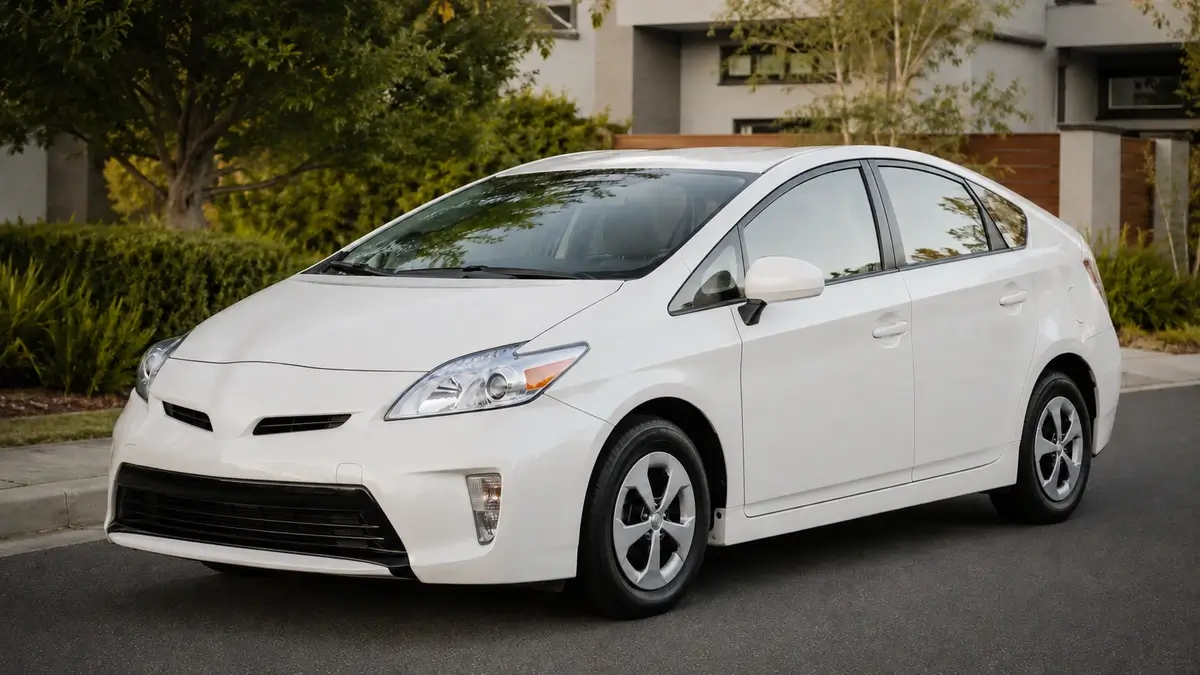
Toyota Prius reliability is one of the main reasons used buyers keep considering it, but the smart answer is not “buy any Prius.” The Prius can be a low-risk, low-cost used car when the specific car has solid maintenance records, healthy hybrid battery behavior, no unresolved warning lights, clean diagnostic results, and a clean inspection.
The wrong Prius can be different. A cheap, older, high-mileage example with unknown battery condition can turn fuel savings into repair risk fast.
Toyota Prius Reliability: Quick Verdict
Here is the practical verdict:
- Shortlist a used Prius if you want strong fuel economy, low daily running cost, and a commuter-friendly car with verifiable service history.
- Be careful if the car is older, high-mileage, poorly documented, or being sold with warning lights, weak battery behavior, or unresolved codes.
- Skip it if the seller cannot prove maintenance history, the hybrid battery condition is unknown, or the price only looks good because the car may need expensive work.
- Compare alternatives if you want a more conventional compact car, more rear-seat comfort, or less hybrid-system uncertainty.
- Fastest safe default: buy the cleanest Prius you can verify, not the cheapest Prius you can find.
The minimum proof standard is simple: records, clean scan, battery-health confidence, no unresolved recall surprise, a strong test drive, and a price that honestly reflects age and mileage.
What goes wrong if you pick badly: you can overpay for Toyota’s reliability reputation while inheriting battery, brake, electrical, or age-related repairs that should have been caught before purchase.
Is the Toyota Prius Reliable as a Used Car?
Yes, the Toyota Prius is generally a reliable used car, especially for commuters and high-mileage drivers who value fuel savings. But used Prius reliability depends heavily on the individual car. Age, mileage, maintenance records, battery condition, previous use, and inspection results matter more than reputation alone.
The Prius has a strong ownership case because it was designed around efficiency and long-term daily use. Many used buyers like it because it can deliver low fuel consumption, predictable commuter behavior, and a practical hatchback layout. That said, broad reliability reputation is only a starting point. It is not proof that a specific used Prius is safe to buy.
The biggest mistake is treating “Toyota reliability” as proof that every used Prius is low-risk. A maintained Prius and a neglected Prius can feel like two different cars. The maintained one may be a smart ownership move. The neglected one may need hybrid-system diagnosis, battery work, brake-system attention, or age-related repairs soon after purchase.
That is why the better question is not only “is Toyota Prius reliable?” The better question is: is this used Prius reliable enough to buy after checking records, battery health, warning lights, recalls, diagnostic results, and inspection findings?
What Usually Makes a Used Prius a Smart Buy
A used Prius makes the most sense when its strengths match your real use case. It is not trying to be sporty, luxurious, or powerful. Its advantage is practical: efficient commuting, low fuel use, easy city driving, and useful hatchback cargo space.
For many U.S. used-car buyers, the strongest Prius ownership benefits are:
- Fuel savings: Prius fuel economy is the main cost advantage, but official EPA ratings vary materially by model year and configuration. Check the exact year, drivetrain, and trim on FuelEconomy.gov before buying.
- Commuter fit: A Prius works best for buyers who drive often, sit in traffic, or want fewer fuel stops.
- Simple daily mission: It is strongest as a practical transport car, not as a performance car or family hauler.
- Lower routine burden when maintained: A well-kept Prius can be easier to live with than many older used cars because fuel cost stays controlled.
The condition filter is still non-negotiable. A Prius with complete records, matching tires, clean fluids, no dashboard warning lights, and documented battery confidence is a very different purchase from one with missing history and a vague seller story.
High mileage is not an automatic deal-breaker, but it raises the proof standard. The more miles a Prius has, the more you should demand maintenance records, hybrid battery confidence, diagnostic scan results, and a proper pre-purchase inspection.
Toyota Prius Reliability Risks Used Buyers Should Check
Prius reliability risk usually comes from age, mileage, hybrid components, previous maintenance, and warning signs the buyer ignores before purchase. Owner forums and complaints can help reveal common worries, but they should not be treated as proof by themselves. For recalls and safety-related issues, use official checks such as the NHTSA recall lookup and Toyota recall lookup.
Toyota Prius NHTSA Evidence Types: How Used Buyers Should Use Them
| Evidence type | Figure checked | Coverage | What it supports | What it cannot prove |
|---|---|---|---|---|
| Owner complaints | 13,292 | 2000-2026 | Recurring owner-report patterns and inspection priorities | Defect rates, reliability scores, or failure probability |
| Recall records | 109 recall rows / 42 unique campaigns | Full available history | VIN recall checks and campaign due diligence | That every car is affected or that a specific VIN still has an open recall |
| Investigations | 46 | Full available history | Safety questions that received formal review | Current condition of the car being inspected |
| Manufacturer communications | 6,132 | 2000-2026 | Service-document density and repair-topic context | A defect count or proof that every car needs the repair |
Table note: NHTSA complaints are owner reports, not defect rates or reliability scores. Older Prius years have had more time to collect reports. Use these figures as inspection prompts, then verify the exact VIN, service records, diagnostic scan, recall status, and current condition before buying.
Before the table, keep one rule in mind: a risk is not always a reason to avoid the car. Sometimes it is only a reason to inspect harder, negotiate, or choose a cleaner example.
| Reliability risk / risk level | Buyer impact | What to check before buying |
|---|---|---|
| Hybrid battery condition — High | Can change the ownership-cost equation quickly if weak or failing | Battery-health documentation if available, warning lights, reduced fuel economy, seller documentation, hybrid-aware inspection |
| Dashboard warning lights — High | May point to hybrid, brake, emissions, or electrical problems | Scan for stored and pending codes; do not rely only on lights being off during a short test drive |
| Brake or ABS concerns — High | Can be expensive and safety-sensitive if unresolved | Warning lights, braking feel, service history, recall check, technician inspection |
| Oil consumption or engine concerns — Medium to high | Can turn a cheap Prius into a risky buy | Oil level, smoke, service records, engine noise, evidence of neglected oil changes |
| 12-volt battery and electrical age — Medium | Weak 12-volt battery can create confusing warning behavior | Battery age, starting behavior, accessories, diagnostic scan |
| Cooling and inverter-related concerns — Medium to high | Hybrid system heat management matters on older cars | Maintenance history, warning lights, coolant condition, technician inspection |
| Suspension, tires, and alignment — Medium | Older commuter cars can hide wear from heavy use | Tire wear pattern, road noise, ride quality, alignment pull |
| Missing maintenance records — High | Raises uncertainty across every system | Receipts, Toyota service history, vehicle-history report, seller documentation |
| Open recalls — High | Safety and compliance risk | Check VIN through NHTSA and Toyota before purchase |
Do not buy a Prius with unresolved warning lights unless you already know the cause, the repair cost, and who is paying for it. “It just needs a sensor” is not enough. Get the code scanned and interpreted before money changes hands.
Toyota Prius NHTSA Owner-Report Themes to Use as Inspection Triggers
| Reported owner issue theme | NHTSA owner reports | Affected span | Top component counts | Buyer check |
|---|---|---|---|---|
| Brake performance issues | 4,468 | 2001-2025 / Gen 1-5 | Service brakes: 2,215; hydraulic brakes: 1,227; electric brakes: 751 | Check brake/ABS lights, pedal feel, pump cycling, recall status, and brake-module scan results. |
| Exterior lighting issues | 3,195 | 2000-2026 / Gen 1-5 | Exterior lighting: 2,909; headlights: 275 | Test headlights, brake lights, warning messages, night visibility, and prior lighting repairs. |
| Electrical / infotainment / software issues | 1,223 | 2001-2026 / Gen 1-5 | Electrical system: 1,125; instrument cluster: 35; 12V battery: 26 | Check 12V battery age, dashboard warnings, stored/pending codes, accessories, and charging behavior. |
| Airbag / seatbelt / structural safety issues | 821 | 2001-2024 / Gen 1-5 | Air bags: 366; body structure: 243; structure: 70; seat belts: 45 | Check airbag light, seatbelt function, crash-repair quality, title history, and VIN recall status. |
| Vehicle speed-control issues | 764 | 2001-2024 / Gen 1-5 | Vehicle speed control: 711; accelerator pedal: 46 | Test throttle response, cruise behavior, stored codes, warning lights, and any campaign/recall history. |
| Engine issues | 643 | 2001-2022 / Gen 1-4 | Engine: 393; engine/cooling: 149; engine/cooling-engine: 56 | Check oil level, oil-use history, cold start, coolant loss, misfire codes, smoke, and service records. |
Table note: These are owner-report themes from NHTSA complaint records. They are useful inspection triggers, not proof that any specific Prius has the problem. A clean diagnostic scan, VIN recall check, service history, and hybrid-aware inspection still control the buying decision.
IIHS Safety Checkpoints That Change What to Verify
IIHS ratings do not measure reliability, but they can reveal meaningful safety differences between used Prius years. Across several Prius eras, IIHS published Good results in major crash tests, but the equipment, build-date, headlight, and newer-test differences below are the ones most useful when comparing actual used cars.
| Used model years | Buyer-relevant IIHS checkpoint | What to verify |
|---|---|---|
| 2004–2009 | For 2004–2006, the IIHS side rating was G with optional side airbags but P without them. 2007 marked the change to standard side airbags and a G side rating. | On 2004–2006 cars, confirm the actual side-airbag equipment rather than treating every example alike. |
| 2010–2015 | IIHS records show the G roof-strength rating applies to 2011–2015 cars built after December 2010. The A driver-side small-overlap rating applies to 2014–2015 cars built after November 2013. | Build date matters on cars near these boundaries. |
| 2016–2017 | The 2016 Prius received a P headlight rating, while 2017 results varied between A and P by configuration. | Check the exact lighting configuration if night-driving performance matters. |
| 2018–2022 | The passenger-side small-overlap A rating applies to 2018–2022 models built after May 2018. | For 2018 cars, verify the build date rather than assuming every example has the same applicability. |
| 2023–2026 | Under the newer IIHS test, the updated moderate-overlap rating was A for 2023–2024 Prius and G for 2025–2026 standard Prius. The latter result does not apply to the Prius Plug-in Hybrid. | Keep standard Prius and plug-in-hybrid evidence separate, and do not compare newer test results with older tests as one unchanged rating ladder. |
Table Note: G = Good, A = Acceptable, M = Marginal, P = Poor. IIHS ratings are test-, configuration-, and sometimes build-date-specific. Test procedures changed over time, so these checkpoints are not a reliability score or a simple best/worst-year ranking.
Toyota Prius Reliability by Year and Generation
Toyota Prius reliability by year matters, but this article should not replace a full model-year guide. The right way to use year and generation information here is simple: older cars need more inspection, newer cars still need verification, and high-mileage examples should be judged by condition rather than year alone.
For detailed model-year risk, use the Toyota Prius years to avoid and best years to buy guide. This section only gives the reliability boundary for the cost-to-own decision.
| Used Prius age group | Reliability meaning for buyers | Main caution | Best next step |
| Older Prius examples | Can still be useful, but age becomes a major factor | Battery age, old rubber parts, electronics, missing records, prior neglect | Inspect harder and avoid vague seller history |
| Mid-age Prius examples | Often the sweet spot if records and condition are strong | Mileage, battery condition, oil history, brake-system behavior | Compare price against inspection results |
| Newer used Prius examples | Usually easier to verify and may have more remaining warranty support | Higher purchase price, accident history, trim/drivetrain differences | Check VIN, records, warranty status, and fuel-economy rating |
| Very high-mileage Prius examples | Can make sense only with unusually strong proof | Unknown battery condition, fleet/rideshare use, deferred maintenance | Buy only after hybrid-aware inspection |
The safest used Prius is not always the newest or lowest-mileage car. It is the car with the best evidence: clean records, clean scan, clean test drive, no unresolved recalls, and no sign the seller is hiding expensive hybrid-system work.
Toyota Prius Cost to Own
Toyota Prius cost to own is usually strongest when the car is used for regular commuting and bought in good condition. Fuel savings are the main advantage. Repair risk is the main counterweight.
Avoid judging a used Prius from broad repair-cost averages or brand reputation. A repair estimate is only meaningful for the specific procedure, model year, location, service model, and date checked. Use service records, diagnostic results, battery assessment, and a hybrid-aware pre-purchase inspection to identify what the specific car actually needs.
Fuel economy is one of the Prius’s clearest measurable ownership advantages, but there is no single Prius MPG number. EPA and FuelEconomy.gov records show meaningful differences across model years, drivetrains, and newer trim configurations.
EPA Fuel Economy by Used Prius Year and Configuration
| Model years | EPA configuration | City | Highway | Combined |
|---|---|---|---|---|
| 2001–2003 | Prius FWD | 42 | 41 | 41 |
| 2004–2009 | Prius FWD | 48 | 45 | 46 |
| 2010 | Prius FWD | 51 | 48 | 50 |
| 2011–2014 | Prius FWD | 49 | 46 | 48 |
| 2015 | Prius FWD | 50 | 46 | 48 |
| 2016–2018 | Prius FWD | 54 | 50 | 52 |
| 2016–2018 | Prius Eco FWD | 58 | 53 | 56 |
| 2019–2020 | Prius FWD | 54 | 50 | 52 |
| 2019–2020 | Prius AWD | 52 | 48 | 50 |
| 2019–2020 | Prius Eco FWD | 58 | 53 | 56 |
| 2021–2022 | Prius FWD | 54 | 50 | 52 |
| 2021–2022 | Prius AWD | 51 | 47 | 49 |
| 2021–2022 | Prius Eco FWD | 58 | 53 | 56 |
| 2023–2026 | Prius FWD | 57 | 56 | 57 |
| 2023–2026 | Prius XLE/LTD FWD | 52 | 52 | 52 |
| 2023–2026 | Prius AWD | 53 | 54 | 54 |
| 2023–2026 | Prius AWD XLE/LTD | 49 | 50 | 49 |
Table Note: Figures are official EPA/FuelEconomy.gov city/highway/combined MPG ratings using current revised public label values. They are not guaranteed real-world fuel economy. Different Prius configurations should not be averaged into one figure. This table covers the standard Prius; Prius Prime/PHEV is excluded because its EPA evidence uses separate MPG, MPGe, and operating-mode records.
The cost picture looks like this:
| Cost area | Expected behavior | Buyer risk | Buyer action |
| Fuel | Usually the Prius strength, especially for commuting | Real-world MPG depends on year, trim, condition, tires, driving, and climate | Verify the exact year/trim on FuelEconomy.gov |
| Routine maintenance | Can be manageable on a well-kept car | Neglected maintenance can create expensive catch-up work | Ask for service records before negotiating |
| Hybrid battery | Not a routine service item; if testing shows repair or replacement is needed, get a vehicle-specific estimate. | Unknown battery condition creates meaningful cost uncertainty. | Check battery health first, then price the confirmed repair path rather than relying on a generic battery estimate. |
| Brake system | Regenerative braking can reduce some wear, but hybrid brake systems still need inspection | Warning lights or ABS issues can be serious | Scan codes and inspect professionally |
| Tires and alignment | Normal used-car cost area | Uneven tire wear may signal suspension or alignment issues | Inspect tire condition and road-test carefully |
| Insurance and registration | Varies by driver, location, coverage, and model year | Not Prius-specific enough to generalize safely | Quote before buying |
| Age-related repairs | Older cars can need hoses, sensors, suspension, and electrical work | Low purchase price may hide deferred maintenance | Budget for age, not just mileage |
Battery replacement cost should be treated carefully. It is important, but it should not dominate the whole article. The practical buyer rule is this: do not buy a used Prius unless the price still makes sense after accounting for battery uncertainty.
Written Toyota coverage can materially change the cost risk on a specific used Prius, but only when the exact vehicle still qualifies. Toyota’s hybrid warranty information records hybrid-battery defect coverage at 8 years/100,000 miles before model year 2020 and 10 years/150,000 miles beginning with model year 2020. Other hybrid-system components remain at 8 years/100,000 miles under the applicable written terms.
Certain 2010–2015 Prius vehicles may also qualify under Toyota’s 23TE02 or 23TE03 IPM/inverter customer-confidence programs. These programs provide 20 years with no mileage limit from the date of first use for the specific covered conditions.
If an older Prius has documented inverter, EGR, or brake-booster work, CarMerit’s Manufacturer Special Coverage Lookup can show which Toyota program records overlap that model year before you decide how much of the repair risk belongs in your ownership budget.
Before treating any coverage as part of the deal, verify the VIN, date of first use, mileage, diagnostic condition or DTCs, certification/state rules, and current Toyota eligibility. Hybrid-battery coverage is defect coverage, not a battery-capacity guarantee, and none of these terms proves failure frequency.
Used Toyota Prius Inspection Checklist
A used Prius inspection checklist is not a formality. It is the part of the process that separates a smart fuel-saving buy from a risky cheap hybrid.
Before the checklist, get the VIN and seller details. Then check recalls, service records, and inspection results before negotiating seriously. Use official recall tools first, then a qualified mechanic or hybrid-aware shop for the car itself.
| Inspection item | Why it matters | Red flag |
| VIN recall check | Confirms whether open safety recalls or campaigns need attention | Seller avoids giving the VIN or recall status is unclear |
| Maintenance records | Shows whether the car was cared for consistently | No receipts, no history, or long unexplained gaps |
| Hybrid battery condition | Central to used Prius risk | Warning lights, weak battery behavior, poor MPG, no battery-health proof |
| Diagnostic scan | Finds stored or pending codes that may not show as active lights | Seller refuses a scan or codes were recently cleared |
| Dashboard warning lights | Can signal hybrid, brake, ABS, emissions, or electrical issues | “It comes and goes” explanation without diagnosis |
| Test drive | Reveals braking feel, engine behavior, noise, vibration, and acceleration smoothness | Rough transitions, strange braking, hesitation, warning lights, overheating |
| 12-volt battery | Weak 12-volt battery can cause odd electrical behavior | Old battery, repeated jump-starts, unstable electronics |
| Tires and alignment | Shows wear pattern and possible suspension neglect | Uneven tire wear, pulling, vibration, mismatched tires |
| Fluids and leaks | Helps reveal neglect or hidden repairs | Low oil, dirty fluids, leaks, burnt smells |
| Pre-purchase inspection | Gives an independent view before payment | Seller pushes you to skip it or says another buyer is waiting |
A normal mechanic can check many used-car basics, but a Prius is still a hybrid. For battery, hybrid warning codes, inverter-related concerns, and brake-system diagnosis, use a shop that is comfortable with Toyota hybrids.
Do not treat a clean exterior as proof. A Prius can look tidy and still have battery uncertainty, old codes, weak records, or expensive deferred work.
Who Should Buy a Used Toyota Prius?
A used Prius is a strong fit for buyers who will actually benefit from its efficiency and are willing to verify the car properly.
You should shortlist a Prius if:
- You commute often and fuel cost matters.
- You drive enough miles for fuel savings to matter.
- You want a practical hatchback, not a sporty car.
- You can verify maintenance records.
- You can check battery health before buying.
- You are comfortable paying for a proper inspection.
- You care more about total ownership cost than acceleration or luxury feel.
A Prius also makes sense for buyers who want a proven hybrid layout but do not need a larger SUV. It can be especially useful as a second car, commuter car, student car, light delivery-use car, or daily driver for someone who prioritizes low fuel use.
The best Prius buyer is not just someone who wants reliability. It is someone who understands that hybrid reliability depends on proof.
Who Should Skip a Used Toyota Prius?
Skip a used Prius if the deal depends on ignoring risk. The worst Prius purchase is usually the one that looks cheap because the seller has priced in problems without saying so.
You should skip or pause if:
- The hybrid battery condition is unknown.
- The car has warning lights or unresolved codes.
- The seller cannot provide maintenance records.
- The car has very high mileage and weak documentation.
- You need more rear-seat comfort or family cargo space.
- You do mostly short, irregular driving and will not benefit much from fuel savings.
- You do not have access to a hybrid-aware inspection.
- You cannot tolerate the uncertainty of an older hybrid repair.
A regular Toyota Corolla, Honda Civic, or another simpler compact car may be a better fit if you want fewer hybrid-specific inspection concerns. The Prius is not a bad choice; it is just not the right low-risk choice when the battery, records, and diagnostic status are unknown.
Toyota Prius vs Alternatives
The Prius should stay on your list if fuel economy is the top priority and the inspection checks out. But it is not the only smart used Toyota hybrid decision.
If you are cross-shopping Toyota hybrids, compare the Prius against the Toyota Prius vs Toyota Corolla Hybrid guide. The Corolla Hybrid can feel more conventional, while the Prius usually has the stronger hatchback-efficiency identity. The better choice depends on space, driving feel, battery confidence, and the specific used examples available.
Also compare the Toyota Corolla Hybrid reliability and cost-to-own guide if you want a hybrid but prefer a sedan-style ownership experience.
For a broader shortlist, use the most reliable used cars guide. A Prius can belong on a reliability-focused list, but only when the individual car passes records, battery, warning-light, and inspection checks.
Final Verdict: Is the Toyota Prius Reliable Enough to Buy Used?
The Toyota Prius is reliable enough to buy used when the specific car proves it. Toyota Prius reliability is strongest when the car has complete maintenance records, clean diagnostic results, no open recall surprises, healthy hybrid battery behavior, and a price that reflects age and mileage honestly.
Buy a used Prius if you want low fuel use, practical daily transportation, and a commuter-friendly ownership experience. Skip it if the deal depends on trusting reputation while ignoring battery condition, warning lights, missing records, or high-mileage uncertainty.
The safest Prius purchase is not the cheapest one. It is the one with the least hidden risk.
Frequently Asked Questions
Is the Toyota Prius reliable?
Yes, the Toyota Prius is generally reliable, but used Prius reliability depends on the specific car’s condition, maintenance records, mileage, battery health, and inspection results. Do not buy one on reputation alone.
Is a used Toyota Prius a good car to buy?
A used Prius can be a good buy for commuters, high-mileage drivers, and fuel-cost-conscious buyers. It is a weaker choice if the battery condition is unknown, records are missing, or warning lights are present.
Are older Toyota Prius models still worth buying?
Older Prius models can be worth buying only when the condition, records, battery health, and inspection results are strong. Age raises the proof standard, especially for hybrid battery and electrical-system concerns.
How many miles can a Prius last?
A Prius can last a long time when maintained well, but there is no safe mileage promise for every used car. Mileage should be judged with service records, battery condition, ownership history, and a pre-purchase inspection.
What are the most common Toyota Prius problems used buyers should check?
Used buyers should check hybrid battery condition, warning lights, stored codes, brake or ABS concerns, oil or engine issues, 12-volt battery age, electronics, suspension wear, tire condition, and open recalls.
Is Toyota Prius battery replacement expensive?
There is no safe one-size-fits-all hybrid-battery replacement cost. If battery testing shows repair or replacement is needed, get a vehicle-specific written estimate for the exact model year, repair path, location, and service provider before deciding whether the car still makes financial sense.
How can I check a used Prius battery before buying?
Ask for battery-health documentation if available, scan for hybrid-related codes, watch for warning lights, check fuel economy behavior, and use a mechanic or shop familiar with Toyota hybrids. Do not trust a seller’s verbal claim by itself.
Which Toyota Prius years should used buyers be careful with?
Used buyers should be careful with any Prius that is older, high-mileage, poorly documented, or showing unresolved warning lights. For detailed year guidance, use the dedicated Prius years-to-avoid guide instead of relying on a broad reliability article.
Is a Toyota Prius cheaper to own than a regular gas car?
It can be cheaper to own when fuel savings are high and the car is well maintained. It may not be cheaper if you buy a neglected Prius with battery, brake, electrical, or age-related repair needs.
Should I buy a high-mileage Toyota Prius?
Buy a high-mileage Prius only if the records, battery condition, diagnostic scan, test drive, and inspection results are strong. A cheap high-mileage Prius with weak documentation is not a safe default.
Is the Prius better than the Corolla Hybrid for reliability?
Do not treat one as automatically better. The Prius may be the better efficiency-focused hatchback, while the Corolla Hybrid may feel more conventional. Compare the specific years, records, battery condition, mileage, and price.
What should I check before buying a used Toyota Prius?
Check maintenance records, hybrid battery condition, diagnostic codes, dashboard warning lights, recalls, test-drive behavior, tires, fluids, 12-volt battery age, and inspection results from a mechanic who understands Toyota hybrids.
A Prius can look like a low-cost ownership choice until the exact vehicle tells a different story. Before applying the reliability and hybrid-system guidance in this guide to a specific listing, run the Prius VIN through CarMerit and compare the returned vehicle details with the seller’s description and paperwork. Once they match, continue with battery condition, diagnostic checks, maintenance records, recall status, and the pre-purchase inspection.