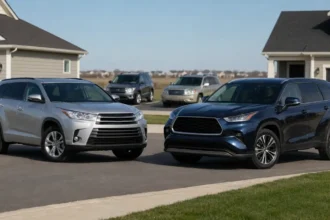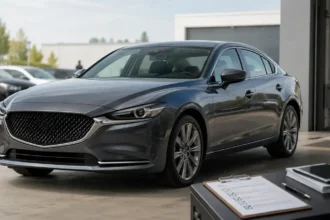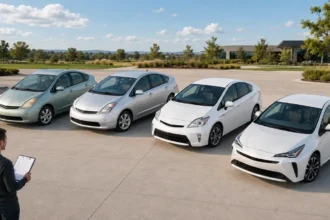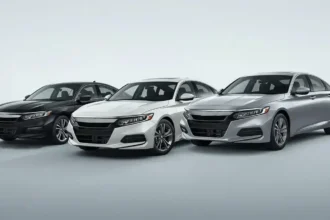


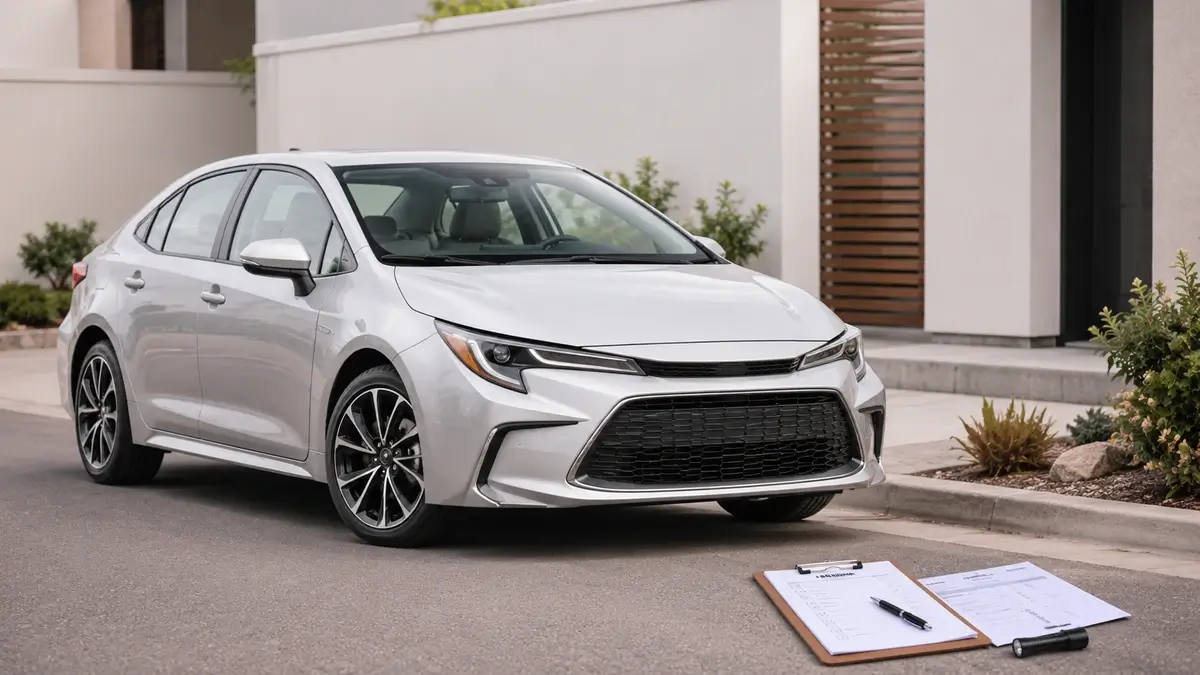
The Toyota Corolla Hybrid years to avoid are not simple “bad years.”
The better answer is more practical. Avoid any Corolla Hybrid with open recalls, weak records, warning lights, unclear 12V battery history, or a poor inspection.
For most used buyers, the safest starting point is a clean 2022 Corolla Hybrid. After that, consider 2023 to 2025 examples only when recall status is clear and repair records are documented.
The 2020 model needs the hardest checks because it was the first U.S. Corolla Hybrid and now has more age and recall exposure. The 2023 and 2024 model years also deserve careful VIN checks because of steering, brake-control, and related recall history.
Do not use regular Toyota Corolla advice as a shortcut. The Corolla Hybrid has its own used-buying logic. It should not be mixed with the Corolla Cross Hybrid, Prius, or non-U.S. Corolla hybrid variants.
CarMerit reliability tool
Check any Corolla Hybrid year – NHTSA-backed snapshot
Pick a model year to see Toyota Corolla Hybrid complaint, recall, investigation, and manufacturer-communication counts from the article’s NHTSA snapshot, plus CarMerit’s used-buy verdict for that year band.
Owner complaints
…
NHTSA, CarMerit snapshot
Recall records
…
NHTSA, CarMerit snapshot
Investigations
…
NHTSA, CarMerit snapshot
Manufacturer communications
…
NHTSA, CarMerit snapshot
Most-reported problem areas
Complaint counts and manufacturer communications are raw NHTSA records, not defect rates or reliability scores. Older model years have had more time to collect reports, so lower counts on newer years do not prove better reliability. Verdicts come from CarMerit’s article guidance. Data source: NHTSA.gov. Always verify VIN recall status, Toyota recall status, service records, 12V battery age, hybrid-system scan results, brake feel, steering feel, warning lights, accident or flood history, and independent inspection results before buying. Confirm the exact vehicle too: Corolla Cross Hybrid, Prius, gas Corolla, and non-U.S. Corolla hybrid variants are not the same used-buying decision.
Quick Verdict: Toyota Corolla Hybrid Years to Avoid
Start with the actual car, not just the model year.
A clean, well-documented Corolla Hybrid from a caution year can be safer than a neglected example from a better year.
Fastest safe default: shortlist 2022 first. Then consider 2023 to 2025 only after recall completion, clean records, and a good inspection.
What goes wrong if you pick carelessly: you may buy a car with unresolved safety recall work, weak battery history, hidden warning-light issues, or deferred maintenance.
| Model year | Used-buy classification | Main reason | Buyer action |
|---|---|---|---|
| 2020 | Caution | First U.S. Corolla Hybrid year, age, and more recall exposure | Buy only with completed recalls, full records, and a clean inspection |
| 2021 | Acceptable with checks | Less first-year risk, but VIN recall checks still matter | Verify recall status, 12V battery condition, and maintenance history |
| 2022 | Safer shortlist | Cleaner recall record in currently available NHTSA-supplied recall data | Best early used target if condition and records are strong |
| 2023 | Caution | Updated model with more features, but steering intermediate shaft and brake-control recall checks matter | Buy only after VIN recall check and completed repair proof |
| 2024 | Caution | Steering and brake-control recall exposure, plus newer used pricing | Require completed recall work before paying a premium |
| 2025 | Acceptable with checks | Newer model, but brake-control recall status still needs confirmation | Good if recall status is clear and price makes sense |
| 2026 | Too new to judge as used | Limited used-market history | Do not treat it as a proven used-year pick yet |
Toyota Corolla Hybrid NHTSA Year-by-Year Evidence Snapshot
| Model year | Owner Comp. | Safety recalls | NHTSA INV. | NHTSA MC | Buyer-useful reading |
|---|---|---|---|---|---|
| 2020 | 1 | 2 | 0 | 93 | First U.S. Corolla Hybrid year. Treat as the hardest inspection year because of age and recall exposure. |
| 2021 | 0 | 0 | 0 | 95 | No complaints or recalls appear in the available NHTSA records for 2021, but still verify VIN status, records, and 12V battery condition. |
| 2022 | 1 | 0 | 0 | 72 | Cleanest recall record in the NHTSA records. Best early used-year target if condition and records are strong. |
| 2023 | 0 | 2 | 0 | 83 | Recall-driven caution year. Verify steering intermediate shaft and brake-control software recall completion. |
| 2024 | 2 | 2 | 0 | 71 | Caution year. Verify steering intermediate shaft and brake-control software recall completion before paying a premium. |
| 2025 | 1 | 1 | 0 | 37 | Acceptable near-new option if the brake-control software recall is clear or repaired. |
| 2026 | 0 | 0 | 0 | 20 | Too new to judge as a proven used-year pick. Use VIN, records, and inspection first. |
Table note: NHTSA complaint and manufacturer-communication counts naturally rise as older model years spend more time on the road. Use these figures as inspection clues, not as reliability scores. Always check the specific VIN for open recalls before buying
The simple answer: avoid neglected 2020 examples and unrepaired 2023 to 2025 examples.
Treat those as inspection-first years, not automatic bargains.
How to Judge Corolla Hybrid Model Years Safely
A Corolla Hybrid year should not be labeled bad because one owner complained online.
Owner forums can show what shoppers worry about. They do not prove that a full model year is defective.
Use three checks before trusting any year ranking.
First, run the VIN through Toyota’s official recall lookup tool and NHTSA’s recall search. A model-year recall page helps you know what to investigate. The VIN decides whether that exact car needs repair.
Before you move on to maintenance history, confirm that the Corolla Hybrid you are evaluating matches the seller’s description. Use the CarMerit VIN Lookup to compare the VIN-derived vehicle details with the listing and paperwork. Keep Toyota and NHTSA’s official VIN tools as the separate source for open-recall status and completed recall work.
Second, review the maintenance history. A Corolla Hybrid with regular service, documented recall repairs, and a recent inspection is much stronger than one with vague seller promises.
Third, inspect the hybrid system and 12V battery. Many hybrid complaints are really weak-battery, scan-code, or neglected-maintenance issues.
| Evidence type | How much it should matter | How to use it |
| VIN recall result | Very high | Do not buy until open safety recalls are handled |
| Completed repair paperwork | Very high | Ask for dealer records or service history |
| Warning lights or stored codes | Very high | Require diagnosis before negotiating |
| Owner complaints | Medium | Use them as inspection leads, not final proof |
| Forum posts or social comments | Low | Useful for questions to ask, not hard conclusions |
| General Corolla reputation | Low | Helpful background, but not Corolla Hybrid proof |
This matters because standard Corolla advice can mislead hybrid shoppers.
For gas Corolla reliability context, use the separate Toyota Corolla reliability guide instead.
Toyota Corolla Hybrid Years to Avoid or Treat With Caution
There are no U.S. Corolla Hybrid years that should be avoided in every case.
The years below are better described as caution years.
That wording matters. A caution year can still be a good buy if the VIN is clean, recall work is complete, and inspection results are strong.
2020 Toyota Corolla Hybrid
The 2020 Corolla Hybrid deserves the hardest inspection.
Toyota identified the 2020 model as the first Corolla Hybrid offered in the U.S. That makes it the oldest and earliest version of this setup in the used market.
Recall exposure is the other reason to slow down. The NHTSA records list two 2020 Corolla Hybrid recall campaigns: brake booster pump and rear seat belt buckle assembly. That makes recall-completion proof especially important on 2020 examples.
Do not reject every 2020 automatically. A well-maintained 2020 with completed recall work can still make sense.
Walk away from a 2020 if the seller cannot prove recall completion, the dash shows warning lights, the brake feel is odd, or the 12V battery history is unknown.
2023 Toyota Corolla Hybrid
The 2023 Corolla Hybrid is more appealing than the early cars because Toyota expanded the lineup.
Toyota said the 2023 Corolla Hybrid added more hybrid grades and available Electronic On-Demand All-Wheel Drive. That gives buyers more choice than the early LE-only setup.
That extra choice comes with a real efficiency and maintenance trade-off.
FuelEconomy.gov shows a clear efficiency split after 2022. From 2023 onward, the exact FWD or AWD configuration matters:
| Model years | EPA-listed configuration | City MPG | Highway MPG | Combined MPG |
|---|---|---|---|---|
| 2020-2022 | FWD | 53 | 52 | 52 |
| 2023-2026 | FWD, higher-rated configuration | 53 | 46 | 50 |
| 2023-2026 | FWD, lower-rated configuration | 50 | 43 | 47 |
| 2023-2026 | AWD, higher-rated configuration | 51 | 44 | 48 |
| 2023-2026 | AWD, lower-rated configuration | 47 | 41 | 44 |
Table Note: FuelEconomy.gov lists separate configurations with the same drivetrain for 2023-2026. Do not average them or infer an exact trim match from drivetrain alone. Verify the specific car against its EPA label. These are laboratory estimates, not guaranteed real-world results.
AWD also adds service items worth checking in the records. Toyota’s 2023 and 2024 maintenance guides list an AWD drive-shaft-nut re-torque at 15,000-mile/18-month intervals and rear differential oil inspection at 30,000-mile/36-month intervals. If you are shopping AWD, ask for AWD-specific maintenance records rather than assuming the FWD schedule covers everything.
That does not make it risk-free.
The NHTSA records list 2023 Corolla Hybrid recall exposure involving the steering intermediate shaft and skid-control ECU software. These are not casual inspection items.
A 2023 can be a smart buy after the recall work is completed. It is weak only if the seller cannot show VIN status, repair records, and a clean inspection.
2024 Toyota Corolla Hybrid
The 2024 Corolla Hybrid carries similar caution logic.
Cars.com’s NHTSA-supplied recall page lists steering intermediate shaft and skid-control ECU software recall entries for the 2024 Corolla Hybrid.
That does not mean every 2024 is unsafe. It means the car should not be bought casually.
A clean 2024 with documented repair completion can be a strong newer used pick. An unrepaired 2024 should not be treated like a normal low-risk Toyota purchase.
2025 Toyota Corolla Hybrid
The 2025 Corolla Hybrid is newer, so age is less of a concern.
The main issue is still recall verification. Cars.com’s NHTSA-supplied 2025 Corolla Hybrid recall page lists the skid-control ECU software recall. The listed concern is possible loss of power brake assist in limited conditions.
A 2025 is acceptable if the VIN is clear or the software update is documented. If the recall status is unresolved, finish that step before buying.
Best Toyota Corolla Hybrid Years to Buy Used
The best years for Toyota Corolla Hybrid shoppers are the ones with clean records, lower recall friction, and enough used-market history to judge condition.
For most buyers, start with 2022. Then consider clean 2021, repaired 2023, repaired 2024, and clean 2025 examples if the price is right.
Do not read “best year” as a guarantee. A clean year can still be a bad buy if the individual car has poor records, warning lights, accident history, or a weak inspection.
| Model year | Best fit | Why it makes sense | Main caveat |
| 2022 | Best early used target | Cars.com’s NHTSA-supplied recall page currently lists no recorded recalls for this model year | Still inspect battery, tires, brakes, and service history |
| 2021 | Good budget option | Older than 2022 but less first-year concern than 2020 | Verify VIN status, 12V battery condition, and maintenance records |
| 2023 | Best feature/value balance after repairs | More trims and available AWD broaden buyer fit | Must verify steering intermediate shaft and brake-control recall work |
| 2024 | Good newer used option after repairs | Newer age and similar updated-model benefits | Do not overpay without completed recall proof |
| 2025 | Strong near-new option | Less age and a newer used-car starting point | Brake-control recall status still needs confirmation; verify any remaining factory warranty for the exact car |
IIHS adds another useful check to the year decision. The important differences involve build date, headlights, newer crash-test families, and whether a rating actually applies to the hybrid.
| Model year(s) | IIHS evidence that matters | Buyer takeaway |
|---|---|---|
| 2020-2021 | Hybrid LE headlights are rated Marginal. IIHS also lists an Acceptable updated-side rating that applies to these Corolla Hybrid sedans. Shared Corolla sedan Top Safety Pick listings require specific headlights, so those awards should not be applied to Hybrid LE. | Do not assume the shared Corolla sedan award automatically applies to the Hybrid LE. |
| 2022 | Hybrid LE headlights are Marginal on vehicles built before December 2021 and Acceptable on vehicles built after November 2021. The updated side test is Acceptable, while seat-belt reminders are Marginal. The shared Corolla sedan Top Safety Pick+ listing applies only to vehicles built after November 2021. | Check the build date rather than treating every 2022 Corolla Hybrid as having identical IIHS evidence. |
| 2023-2024 | Hybrid-trim headlights are Good. The updated side test is Acceptable, the updated moderate-overlap front test is Marginal, and seat-belt reminders are Good. The shared Corolla sedan is listed as a Top Safety Pick within the applicable sedan scope. | These are different test families. A Good result in one area does not cancel a Marginal result in another. |
| 2025 | The updated side test improves to Good. The shared Corolla sedan is listed as a Top Safety Pick. The Marginal updated moderate-overlap rating shown on the 2025 IIHS page explicitly does not apply to the hybrid variant. | Do not copy the non-hybrid sedan’s updated moderate-overlap rating onto the Corolla Hybrid. |
| 2026 | The updated side test is Good, and vehicle-to-vehicle front crash prevention 2.0 is Good. No shared Corolla sedan award is displayed. The Marginal updated moderate-overlap result shown for 2025-2026 does not apply to the hybrid variant. | Use only the hybrid-applicable ratings. Do not turn these safety results into a proven used-year reliability verdict. |
Table Note: IIHS test protocols and rating scales changed over time. Do not treat these entries as one cross-year safety score, and do not treat a missing or non-applicable rating as weak. These ratings also do not make 2026 a proven used-year choice.
A “best year” can still become a bad buy.
High mileage, missing records, open recalls, accident history, warning lights, or weak inspection results should override the year ranking.
For broader compact-car shopping, compare the Corolla Hybrid against the options in CarMerit’s best used compact cars guide.
Toyota Corolla Hybrid Reliability by Year: What Actually Matters
Toyota’s hybrid reputation is strong, but reputation alone should not decide the purchase.
A used hybrid sedan is still a used car.
The Corolla Hybrid reliability by year question comes down to four things: recall completion, battery condition, maintenance history, and how the car was used.
A low-mileage car with open recalls is not automatically safer than a higher-mileage car with complete records. The better car is the one with fewer unanswered questions.
| Reliability factor | Why it matters | What to check |
|---|---|---|
| Open recalls | Safety repairs can be VIN-specific | Toyota recall lookup and NHTSA search |
| 12V battery | Weak 12V batteries can trigger confusing symptoms | Age, voltage test, replacement receipt |
| Hybrid battery warranty | Reduces fear, but does not replace inspection | In-service date and mileage |
| Brake-control and steering recall work | Brake-control recall affects 2023-2025; steering intermediate shaft recall affects 2023-2024 | Dealer repair confirmation |
| Service records | Shows whether the car was maintained normally | Oil changes, tires, brakes, inspections |
| Warning lights or codes | Can hide expensive diagnosis | Pre-purchase scan and hybrid-system check |
Toyota separates the traction-battery warranty from the rest of the hybrid system.
For U.S. Corolla Hybrids in this 2020-and-newer range, the Hybrid Battery Warranty is 10 years or 150,000 miles, whichever comes first. The separate Hybrid System Warranty is 8 years or 100,000 miles and covers the battery control module, hybrid control module, and inverter with converter, subject to Toyota’s written terms.
These are defect warranties. The battery warranty is not a battery-capacity or degradation guarantee.
Remaining coverage depends on the original in-service date, mileage, and vehicle-specific eligibility. Verify the exact car before treating warranty as protection.
Common Toyota Corolla Hybrid Problems by Year
The most useful way to handle Toyota Corolla Hybrid problems by year is not to memorize complaint lists.
Use problem themes as inspection targets.
The 2020 model deserves extra recall and age checks. The 2021 model needs VIN recall verification. The 2022 model looks cleaner in currently available recall data, but condition still controls.
The 2023 model needs steering intermediate shaft and brake-control recall confirmation. The 2024 model needs steering and brake-control recall confirmation. The 2025 model needs brake-control recall confirmation.
| Problem area | Years to check hardest | Why it matters | Buyer action |
|---|---|---|---|
| Rear seat belt recall | 2020 | Restraint performance matters in crash scenarios | Verify repair completion |
| Brake booster or brake-control recall | 2020, 2023, 2024, 2025 | Braking assist and stability control are safety-related | Confirm dealer remedy |
| Steering intermediate shaft recall | 2023, 2024 | Steering-control issues are serious | Require VIN check and repair proof |
| 12V battery weakness | All used years | Can create no-start or warning-light issues | Test or replace if age is unknown |
| Hybrid battery concern | Higher-mileage examples | Expensive if neglected or out of coverage | Verify warranty status and scan results |
| Generic gas Corolla problems | Not automatically applicable | Gas Corolla advice can drift off target | Do not import issues without proof |
There is one additional check for certain 2020-2021 cars: Toyota Customer Support Program 24TE04.
The program addresses a flow shut-off valve coolant leak that can trigger a Maintenance Required display or abnormal A/C operation. NHTSA indexes the program for Corolla Hybrid, but Toyota’s coverage applies only to certain eligible 2020-2021 Corolla vehicles.
The primary coverage period ended November 30, 2025. Eligible vehicles can still have secondary coverage for 10 years from the date of first use or 100,000 miles, whichever comes first.
Eligibility is VIN-specific. Ask a Toyota dealer to verify the VIN, original in-service date, mileage, and program eligibility before assuming the repair is covered.
If a 2020–2021 Corolla Hybrid shows the coolant-loss, Maintenance Required, or abnormal A/C symptoms described here, check CarMerit’s Manufacturer Special Coverage Lookup before letting that repair history push the car off your shortlist; Toyota still needs to confirm the exact vehicle’s eligibility.
Avoid one common mistake: do not copy Corolla Cross Hybrid recalls into this page.
Corolla Cross Hybrid is a different vehicle. It can share some recall language in certain campaigns, but it is not the same used-buying decision.
Battery, Hybrid-System, and 12V Checks Before Buying
Hybrid battery fear is often exaggerated.
The smarter move is to check the actual car.
A used Corolla Hybrid should start cleanly, drive smoothly, show no hybrid-system warnings, and pass a scan. The 12V battery should also be tested, because a weak 12V can create confusing electrical symptoms.
| Check | What to ask or inspect | Good sign | Warning sign |
| Hybrid battery warranty | In-service date and mileage | Still within warranty window | Seller does not know coverage status |
| 12V battery | Age and voltage test | Recent replacement or strong test result | Original or unknown-age battery |
| Warning lights | Dashboard and scan report | No warning lights or stored codes | Hybrid, brake, ABS, or check-engine warning |
| Dealer service history | Toyota dealer records if available | Recall repairs and routine service shown | Missing or vague records |
| Test drive | Braking, steering, smooth startup | Normal braking and steering feel | Brake warning, odd steering feel, rough behavior |
| Inspection | Hybrid-aware pre-purchase inspection | Clean report | Seller refuses inspection |
Do not buy a Corolla Hybrid only because the seller says “Toyota hybrids last forever.”
That is not a maintenance record.
For buyers who care most about low long-term risk, CarMerit’s most reliable used cars guide can help compare the Corolla Hybrid against other low-risk used choices.
Recall and Safety Checks You Should Run by VIN
Static recall lists age quickly.
A model-year page tells you what to investigate. The VIN tells you what needs repair on the exact car.
Toyota Corolla Hybrid NHTSA Recall Campaigns Buyers Should Verify by VIN
| NHTSA campaign | Affected Corolla Hybrid years | Component | Issue to verify | Buyer action |
|---|---|---|---|---|
| 19V544000 | 2020 | Electronic Stability Control | Brake booster pump issue may affect braking assist or vehicle stability control. | Confirm dealer inspection/replacement was completed. |
| 19V877000 | 2020 | Rear seat belt buckle assembly | Rear seat belt locking mechanism may not lock as intended. | Confirm seat belt assembly inspection/replacement was completed. |
| 24V708000 | 2023, 2024, 2025 | Service brakes, electric software/programming | Skid-control ECU software issue may cause loss of power brake assist when turning. | Confirm ECU software update was completed. |
| 24V878000 | 2023, 2024 | Steering | Intermediate steering shaft may fracture or detach. | Confirm intermediate steering shaft replacement was completed. |
Table note: This table shows recall campaigns found in the NHTSA records. It does not show whether a specific car still has an open recall. Always run the VIN through Toyota and NHTSA before buying.
Use this order before leaving a deposit:
- Run the VIN through Toyota’s Safety Recalls & Service Campaigns lookup.
- Run the VIN or year, make, and model through NHTSA’s recall search.
- Ask the seller for completed dealer repair records.
- Confirm there are no warning lights after repairs.
- Have the car inspected before purchase.
If the recall is open, do not treat it as a small negotiation detail.
Require the repair before purchase, or price the risk only if you are willing to handle the dealer visit yourself.
For a private-party sale, the safest move is simple: complete the recall first, then finalize the deal.
Corolla Hybrid vs Prius: When to Compare Before Buying
The Corolla Hybrid is the simpler choice if you want a compact sedan shape, familiar Corolla controls, and a lower-drama daily driver.
The Prius is worth comparing if you want stronger hybrid identity, hatchback practicality, and more dedicated hybrid design. It can also make sense if cargo flexibility matters more than sedan styling.
Do not turn this decision into a reputation contest. Compare the actual use case.
Choose the Corolla Hybrid if you want a normal compact sedan with excellent fuel-saving logic. Compare it with the Prius if cargo space, hybrid-first design, or long-term hybrid ownership depth matters more.
For that decision, use CarMerit’s Toyota Prius vs Toyota Corolla Hybrid comparison. If you are shopping Prius model years too, check the Toyota Prius years to avoid guide before deciding.
Final Buying Recommendation
The best Toyota Corolla Hybrid year to shortlist first is 2022, if the individual car has clean records and passes inspection.
After that, consider 2021, repaired 2023, repaired 2024, and clean 2025 examples. The exact car still matters more than the model-year label.
Choosing the right Corolla Hybrid year is only part of the decision. Use the full Toyota Corolla Hybrid reliability and cost-to-own guide to check service history, hybrid battery context, 12V battery condition, fuel-savings math, and inspection risks before buying a specific car.
The years to treat with the most caution are 2020, 2023, and 2024. The 2020 needs first-year, age, and recall scrutiny. The 2023 needs steering intermediate shaft and brake-control recall confirmation. The 2024 needs steering and brake-control recall confirmation.
A 2025 can be a good near-new buy, but do not skip recall verification. A 2026 is too new to treat as a proven used-year choice.
The right buying rule is blunt: buy the cleanest documented car, not just the newest year.
Walk away if the seller avoids the VIN check, refuses inspection, cannot explain recall status, or dismisses warning lights. A Corolla Hybrid is usually a smart used-car idea, but only when the specific car earns the trust.
Frequently Asked Questions
What Toyota Corolla Hybrid years should I avoid?
Avoid any Toyota Corolla Hybrid with open recalls, poor records, warning lights, or a failed inspection.
By model year, treat 2020, 2023, and 2024 with the most caution.
The 2020 model has first-year, age, and recall-check concerns. The 2023 and 2024 models need steering intermediate shaft and brake-control recall verification.
What is the best year for a used Toyota Corolla Hybrid?
The 2022 Corolla Hybrid is the strongest early used-year target.
Currently available NHTSA-supplied recall data shown by Cars.com lists no recorded recalls for the 2022 Corolla Hybrid.
Still inspect the individual car. Tires, brakes, 12V battery condition, accident history, and service records can change the answer.
Are Toyota Corolla Hybrids reliable by year?
They can be reliable used cars, but reliability by year should be judged carefully.
Recall completion, maintenance records, 12V battery health, and hybrid-system scan results matter more than broad Toyota reputation.
Do not assume every Corolla Hybrid is low-risk just because it has a Toyota badge.
What problems should I check before buying a used Toyota Corolla Hybrid?
Check recall status, 12V battery age, hybrid-system warning lights, brake feel, steering feel, accident history, and maintenance records.
For 2023 and 2024 examples, pay special attention to steering and brake-control recall completion.
For 2020 examples, confirm all recall work and inspect the car more carefully because it is the oldest U.S. Corolla Hybrid year.
Do Toyota Corolla Hybrid batteries have problems?
Hybrid battery failure should not be assumed, but the battery should still be checked.
Toyota’s Hybrid Battery Warranty is 10 years or 150,000 miles, whichever comes first, for covered defects. It is not a battery-capacity or degradation guarantee.
Before buying, verify the car’s original in-service date, mileage, warranty status, and hybrid-system scan results.
Should I worry about the 12V battery in a Corolla Hybrid?
Yes, but do not panic.
A weak 12V battery can cause no-start issues or confusing warning behavior in hybrid vehicles.
Ask when the 12V battery was last replaced. If the seller does not know, have it tested before buying.
How do I check Toyota Corolla Hybrid recalls by year?
Use Toyota’s official recall lookup and NHTSA’s recall search.
A model-year recall page can show general recall history, but the VIN check is the step that matters before purchase.
Ask for completed dealer repair records if any recall applies.
Should I buy a Corolla Hybrid or a Prius?
Buy the Corolla Hybrid if you want a normal compact sedan with hybrid efficiency.
Compare the Prius if you want hatchback practicality, stronger hybrid identity, or more cargo flexibility.
The better choice depends on how you use the car, not just which Toyota hybrid has the stronger reputation.
Is a used Toyota Corolla Hybrid worth buying with higher mileage?
It can be, but only with strong records.
Higher mileage is less scary when service history is complete, recalls are handled, and the hybrid system passes inspection.
Skip high-mileage cars with missing records, open recalls, warning lights, or vague seller answers.