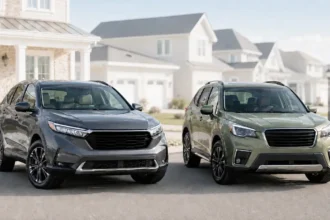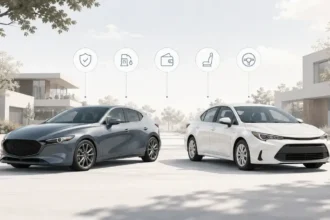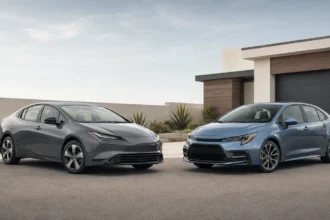


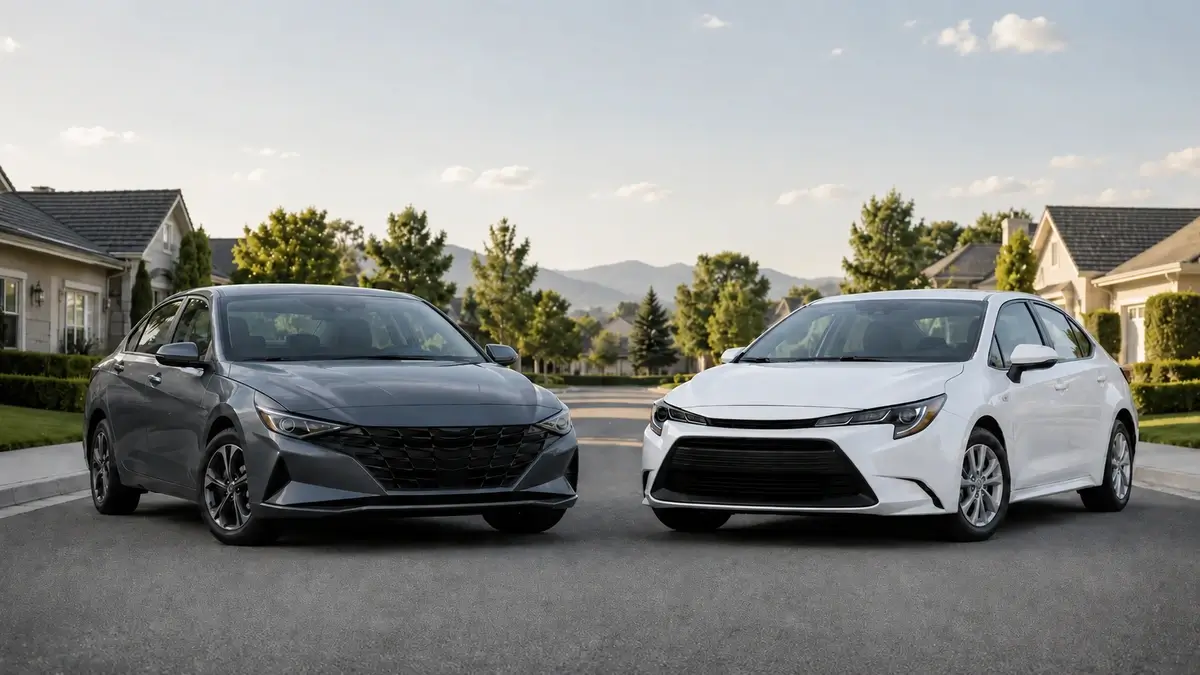
The Hyundai Elantra vs Toyota Corolla decision is really a risk-versus-value choice.
The Toyota Corolla is the safer default for most used buyers. The Hyundai Elantra can be the smarter buy when the price gap is real and the car checks out clean.
Choose the Corolla if you want the simpler default and are willing to pay only a condition-justified premium.
Choose the Elantra if a matched local example gives you a meaningful price, feature, or space advantage and still passes the records-and-inspection test.
The mistake is treating every used Corolla or Elantra as equal. Model year, mileage, trim, service history, accident history, warranty status, and inspection results can change the answer.
Fastest safe default: buy the cleanest Corolla you can afford unless the Elantra gives you a clear price, feature, or condition advantage.
CarMerit reliability comparator
Hyundai Elantra vs Toyota Corolla: 2007-2026 NHTSA snapshot
Owner-complaint and recall counts from NHTSA for 2007-2026, each model’s best used-year lane, and which buyer each one fits.
| 6,869 | complaints (2007-26) | 7,022 |
| 78 | recalls (2007-26) | 89 |
EngineAirbags / seatbelts / structureSteeringBrakes | top issues | Airbags / seatbelts / structureEngineSteeringPowertrain / transmission |
Hyundai Elantra
Best used year: 2019
Best overall 2018-2020; newer gas pick 2023-2025; avoid first 2011-2013; verify 2014-2017 and 2021-2022 more carefully.
Best for: Value-first buyers who want a lower buy-in, useful features, and more room in some newer examples when the exact car checks out clean.
Toyota Corolla
Best used year: 2013
Safest default 2011-2013; newer-feeling pick 2017-2019; older-value overlap 2007-2008; inspect 2009 and 2014 harder before buying.
Best for: Lower-risk buyers who want a simpler long-term ownership decision and fewer judgment calls before purchase.
Quick take: The Toyota Corolla is still the safer default for most used compact-sedan buyers. Choose the Hyundai Elantra only when the price gap is real, the records are clean, recalls are closed, and the inspection shows no engine, warning-light, brake, steering, camera, or hybrid-system red flags. Do not crown either sedan from raw NHTSA counts alone.
Complaint counts are raw owner reports filed with NHTSA, not adjusted for sales volume, so they should guide inspection rather than crown a winner. The quick comparator above uses a 2007-2026 overlapping NHTSA snapshot for both models; if one model has older NHTSA history before 2007, those model-only years are excluded here to keep the comparison balanced. Always inspect the specific vehicle before buying.
Hyundai Elantra vs Toyota Corolla: Quick Verdict for Used Buyers
The Corolla wins for buyers who want the least complicated used compact sedan.
It is the better default if you plan to keep the car for years, want fewer judgment calls before purchase, or dislike gambling on condition-sensitive cars.
The Elantra wins when value matters more than brand reputation. A clean, fairly priced Elantra can give you more equipment for the money.
That only works if the car has strong maintenance records, no major accident history, and no unresolved recall or warning-light issues.
| Used-buyer factor | Better default | Why it matters |
|---|---|---|
| Lowest-risk used choice | Toyota Corolla | Easier recommendation for long-term ownership when you want fewer judgment calls. |
| Better feature value | Hyundai Elantra | Often attractive when similarly priced Corollas feel basic |
| Price-premium discipline | Depends | Compare matched local listings and do not pay extra for the badge alone |
| Rear-seat space in many newer examples | Hyundai Elantra | Can feel roomier for passengers |
| Simple commuter choice | Toyota Corolla | Strong default when you want predictable daily use |
| Budget stretch | Hyundai Elantra | Makes sense if the savings are large enough |
| First-time used buyer | Toyota Corolla | Requires fewer judgment calls before purchase |
The better question is not “which car is better?” It is which risk profile fits you.
The Corolla asks you to pay for confidence. The Elantra asks you to verify the deal more carefully.
Which One Should You Buy? Buyer-Fit Matrix
A used Corolla is the cleaner answer for most shoppers who want one practical car.
A used Elantra is better for buyers who compare condition closely and refuse to overpay for a badge.
| Buyer type | Better pick | Buying logic |
| Risk-averse commuter | Toyota Corolla | Pick the car that is easier to trust long term |
| First-time used-car buyer | Toyota Corolla | Simpler default with fewer judgment calls |
| Feature-focused buyer | Hyundai Elantra | More equipment can matter if the car is clean |
| Tight-budget buyer | Hyundai Elantra | Choose the Elantra only when the matched savings are meaningful and the car’s condition is strong. |
| Exit-price-focused buyer | Depends | Compare matched local listings and actual trade-in offers; do not assume a fixed Corolla premium |
| High-mileage driver | Depends | Compare exact fuel economy, inspection results, and records |
| Small family | Hyundai Elantra | Rear-seat comfort can favor the Elantra in some newer examples |
| Buyer keeping the car 8–10 years | Toyota Corolla | Lower-risk ownership matters more than extra features |
The Corolla is not automatically worth any premium. A neglected Corolla is still a bad used car.
The Elantra is not automatically risky. A well-kept Elantra at the right price can be a strong value.
Reliability and Long-Term Risk
The elantra vs corolla reliability question should not be answered with slogans.
The Corolla has the stronger low-risk case. It is the better default when you want fewer doubts before and after purchase.
The Elantra’s case depends more on price, condition, service records, and model-year checks. That does not make it a bad car.
It means the buyer has less room for a lazy inspection.
| Ownership issue | Corolla buyer view | Elantra buyer view |
| Long-term confidence | Stronger default | Strong if condition and history are clean |
| Service history importance | Still important | More decision-changing |
| High-mileage purchase | Easier to justify if clean | Needs tighter inspection |
| Purchase-price discipline | Do not overpay for the badge | Savings must be large enough to justify the specific car |
| Warranty comfort | Less central to the case | Must verify transfer and remaining coverage |
| Inspection burden | Normal used-car check | Higher priority before buying |
Use NHTSA’s recall lookup before buying either car. Enter the VIN, not just the model name.
A VIN check matters because a model-year search may miss repaired recalls, recently added VINs, or vehicle-specific details.
Do not use Reddit or forum threads as proof. Use them to discover concerns, then verify those concerns through records, recalls, service history, and inspection.
Best Used Years and Years to Be Careful With
A used Hyundai Elantra vs Toyota Corolla comparison can fall apart if you ignore model year.
The right model with the wrong year, weak records, or hidden damage can be worse than the “less reliable” option.
Do not buy either sedan only because the nameplate has a good reputation.
| Used-year check | What to do before buying |
| Confirm exact model year | Safety ratings, features, and recalls can change by year |
| Check the VIN | Look for open recalls, title issues, and repair history |
| Review maintenance records | Oil changes, tires, brakes, fluids, and inspections matter |
| Inspect warning lights | Do not accept “it just needs a sensor” without diagnosis |
| Check accident history | Body repairs can change value and safety confidence |
| Compare trims | A higher trim is not always a better used value |
| Test drive cold and warm | Listen for drivetrain, brake, suspension, and steering issues |
For Corolla-specific year risk, use CarMerit’s Best Years for Toyota Corolla guide before choosing a final model year.
For deeper ownership background, read the Toyota Corolla reliability guide.
The Elantra needs the same year-by-year discipline. Until a dedicated Elantra year guide is available, treat inspection and records as non-negotiable.
The Elantra can be the better value play, but the model year matters more than the badge. Before choosing one over a Corolla, check the Hyundai Elantra years to avoid so you do not save money upfront and inherit a higher-risk used year.
Cost to Own, Maintenance, and Resale Value
The ownership-cost decision has to start with the two actual cars being compared. There is no badge-wide cost winner.
Compare the purchase price, insurance quote, exact EPA configuration, service history, tires, brakes, upcoming scheduled maintenance, inspection findings, and the local offers available when you expect to sell.
A lower-priced Elantra is not automatically cheaper long term, and a higher-priced Corolla does not automatically recover its premium later.
Important newer-used maintenance checkpoints
| Vehicle and scope | Official maintenance checkpoints that matter to a used buyer |
|---|---|
| 2021, 2022, and 2023 Elantra gas 2.0L | The normal oil-and-filter interval is 8,000 miles or 12 months. |
| 2021 Elantra gas 2.0L | Spark plugs are listed at 96,000 miles. Initial coolant replacement is listed at 120,000 miles or 120 months, followed by 30,000 miles or 24 months. |
| 2021 Elantra Hybrid | Oil and filter: 7,500 miles or 12 months. Inspect the hybrid starter-generator belt every 7,500 miles or 12 months and replace it at 67,500 miles or 48 months. Spark plugs are listed at 102,500 miles. |
| Corolla gas—2022 guide, 2025 guide, and 2026 guide | Scheduled maintenance is organized around 5,000-mile/6-month checkpoints. Normal-use oil service can extend to 10,000 miles or 12 months; the stated special-use conditions call for 5,000 miles or 6 months. |
| 2022–2026 Corolla gas | Inspect automatic-transmission fluid at 30,000-mile checkpoints. Replacement at 60,000 miles is tied to Toyota’s stated special operating conditions, not a universal normal-use replacement interval. Initial engine coolant is listed at 100,000 miles or 120 months, followed by 50,000 miles or 60 months. Spark plugs are listed at 120,000 miles. |
| Corolla Hybrid—2021 guide and 2024 guide | Verified 2021–2024 schedules use 5,000-mile/6-month checkpoints. Normal oil service is 10,000 miles or 12 months; stated special-use conditions reduce it to 5,000 miles or 6 months. Inspect the high-voltage-battery cooling intake filter every 5,000 miles and clean it at 20,000-mile checkpoints. Initial engine coolant is listed at 100,000 miles; initial inverter coolant at 150,000 miles; spark plugs at 120,000 miles. |
Table Note: Intervals apply only to the stated model year, powertrain, and operating condition, using whichever mileage or time limit comes first where specified. The exact model-year owner’s or warranty-and-maintenance guide controls. A maintenance interval is not evidence that a component is likely to fail.
Use these checkpoints to audit the records. Missing proof near a major due point should trigger a closer inspection and price discussion; it is not automatic proof that the car is bad.
The Kia Forte can look tempting if you want another lower-priced compact sedan, but year and condition still matter more than the asking price alone. Use the Kia Forte years-to-avoid guide before cross-shopping one against an Elantra or Corolla.
Calculate ownership cost from the deal in front of you. Include fuel, insurance, scheduled service, immediately needed tires or brakes, financing, inspection findings, and your expected ownership period.
Fuel Economy, Hybrid Options, and Daily Driving Costs
Fuel economy is configuration-specific. In the selected high-efficiency gas examples below, the Elantra leads on combined MPG through 2025. For 2026, the selected stop-start Elantra and one-mode Corolla both reach 35 MPG combined, while another listed Corolla configuration is rated at 34 MPG combined.
Hybrids require a separate comparison because the Corolla offers multiple FWD and AWD configurations, while the Elantra Hybrid Blue uses a distinct high-efficiency setup.
Selected gas configurations
| Model year | Vehicle and exact EPA configuration | City mpg | Highway mpg | Combined mpg |
|---|---|---|---|---|
| 2018–2019 | Elantra 1.4L turbo, Automatic (AM7), FWD | 32 | 40 | 35 |
| 2018–2019 | Corolla LE Eco 1.8L, automatic variable ratios, FWD | 30 | 40 | 34 |
| 2020 | Elantra 1.4L turbo, Automatic (AM7), FWD | 33 | 41 | 36 |
| 2020 | Corolla 2.0L, Automatic (AV-S10), FWD | 31 | 40 | 34 |
| 2021–2022 | Elantra 2.0L with stop-start, Automatic (AV-S1), FWD | 33 | 43 | 37 |
| 2021–2022 | Corolla 2.0L, Automatic (AV-S10), FWD | 31 | 40 | 34 |
| 2023 | Elantra 2.0L with stop-start, Automatic (AV-S1), FWD | 33 | 42 | 37 |
| 2023–2024 | Corolla 2.0L, Automatic (AV-S10), FWD | 32 | 41 | 35 |
| 2024 | Elantra 2.0L, Automatic (AV-S1), stop-start flagged, FWD | 32 | 41 | 36 |
| 2025 | Elantra 2.0L with stop-start, Automatic (AV-S1), FWD | 32 | 41 | 36 |
| 2025 | Corolla 2.0L, one-mode variable-ratio record, FWD | 32 | 41 | 35 |
| 2026 | Elantra with stop-start, FWD | 31 | 40 | 35 |
| 2026 | Corolla, one-mode transmission record, FWD | 32 | 41 | 35 |
| 2026 | Corolla, three-mode transmission record, FWD | 31 | 40 | 34 |
Table Note: These are selected exact EPA configurations, not model-year averages or figures for every trim. Other engines, transmissions, wheels, and configurations can have lower ratings. Verify the exact vehicle at FuelEconomy.gov. Actual mileage varies with speed, traffic, weather, tires, loading, and driving style.
Hybrid configurations
| Model year | Vehicle and exact EPA configuration | City mpg | Highway mpg | Combined mpg |
|---|---|---|---|---|
| 2021–2026 | Elantra Hybrid, FWD | 49 | 52 | 50 |
| 2021–2023 | Elantra Hybrid Blue, FWD | 53 | 56 | 54 |
| 2024–2026 | Elantra Hybrid Blue, FWD | 51 | 58 | 54 |
| 2020–2022 | Corolla Hybrid, FWD | 53 | 52 | 52 |
| 2023–2026 | Corolla Hybrid FWD, higher-EPA configuration | 53 | 46 | 50 |
| 2023–2026 | Corolla Hybrid FWD, alternate configuration | 50 | 43 | 47 |
| 2023–2026 | Corolla Hybrid AWD, higher-EPA configuration | 51 | 44 | 48 |
| 2023–2026 | Corolla Hybrid AWD, alternate configuration | 47 | 41 | 44 |
Table Note: EPA lists multiple Corolla Hybrid configurations from 2023 onward. The listing’s exact trim and drivetrain must be matched to the correct EPA record. These figures are not hybrid-model averages. AWD should be evaluated separately because its official ratings are lower than the corresponding higher-EPA FWD configuration.
The Elantra Hybrid Blue carries the highest combined figure shown here at 54 mpg. The Corolla Hybrid counters with available AWD from 2023, but the AWD configurations have lower official combined ratings.
Whether either hybrid saves money depends on the purchase-price difference, annual mileage, insurance, fuel use, battery-warranty status, and how long you keep the car.
Interior Space, Comfort, Trunk Room, and Daily Practicality
The Corolla is easy to drive and park, but the Elantra can feel more spacious in some newer examples.
This matters if adults often sit in the back seat. It also matters if you use the trunk daily.
Do not make this decision from dimensions alone. Sit in both cars and compare the exact model years you are shopping.
| Practical factor | Better fit |
| Rear-seat room | Hyundai Elantra in many newer examples |
| Trunk usefulness | Hyundai Elantra in many newer examples |
| Tight parking | Both are easy enough |
| Simple cabin controls | Depends on year and trim |
| Small-family duty | Elantra if rear-seat room matters |
| Long-term simplicity | Corolla if space is not the priority |
Do not turn this into a raw spec contest.
A Corolla may still be the better daily car if the seats fit you better, visibility feels easier, or the used example is cleaner.
An Elantra may be the better real-life car if rear passengers matter and the price is right.
Safety, Driver Assistance, and Tech Differences
Safety results are year-, test-, build-date-, and equipment-specific. Use these IIHS change points to narrow the search, then verify the exact vehicle and run its VIN through NHTSA’s recall lookup.
| Model years | Hyundai Elantra—selected displayed IIHS evidence | Toyota Corolla—selected displayed IIHS evidence |
|---|---|---|
| 2007–2010 | Moderate-overlap front: G. Side: M on models built before December 2009, changing to G on models built after November 2009. Head restraints: A on the earlier configuration and G for 2010. Sources: 2007 Elantra, 2010 Elantra. | 2007–2008 moderate-overlap front: G; side: A with optional side airbags and P without them; head restraints: P. For 2009–2010, the displayed moderate-overlap, side, roof-strength, and head-restraint ratings are G. Sources: 2007 Corolla, 2010 Corolla. |
| 2011–2016 | Driver-side small overlap: A. The displayed original moderate-overlap, side, roof-strength, and head-restraint ratings are G. Sources: 2011 Elantra, 2016 Elantra. | For 2011–2013, the displayed original moderate-overlap, side, roof-strength, and head-restraint ratings are G. For 2014–2016, driver-side small overlap is M while the other listed categories remain G. Sources: 2011 Corolla, 2016 Corolla. |
| 2017 | Driver-side small overlap: G. Specific LED projector headlights: G; other displayed headlights: P. Source: 2017 Elantra. | Driver-side small overlap: G. The displayed original moderate-overlap, side, roof-strength, and head-restraint ratings are G. Source: 2017 Corolla. |
| 2018–2019 | Driver-side small overlap: G. Passenger-side small overlap is A for 2018 and G for 2019. Headlights retain a G/P equipment split. Sources: 2018 Elantra, 2019 Elantra. | Driver-side small overlap and the other displayed crashworthiness categories are G. Sources: 2018 Corolla, 2019 Corolla. |
| 2020–2022 | Driver- and passenger-side small overlap: G. Headlights continue to vary by equipment. Sources: 2020 Elantra, 2022 Elantra. | Driver- and passenger-side small overlap: G. Original moderate-overlap and original side: G; updated side: A. Sources: 2020 Corolla, 2022 Corolla. |
| 2023 | Passenger-side small overlap: G. Specific LED projector headlights: G; other displayed headlights: P. Source: 2023 Elantra. | Driver- and passenger-side small overlap: G; original moderate-overlap: G; updated moderate-overlap: M; updated side: A. Source: 2023 Corolla. |
| 2024 and 2025 Elantras built before November 2024 | Small overlap: G; original moderate-overlap: G; updated moderate-overlap: M; updated side: G; all-trim headlights: G. Source: 2024 Elantra. | For 2024, small overlap: G; original moderate-overlap: G; updated moderate-overlap: M; updated side: A. Source: 2024 Corolla. |
| 2025–2026 Elantras built after October 2024; 2025–2026 Corolla | Elantra updated moderate-overlap: G after the rear-belt change; small overlap, updated side, and all-trim headlights: G. Sources: 2025 Elantra, 2026 Elantra. | Corolla small overlap: G; updated moderate-overlap: M; updated side: G. Sources: 2025 Corolla, 2026 Corolla. |
Table Note: G = Good, A = Acceptable, M = Marginal, and P = Poor. These are selected test results, not overall safety scores or a model-wide winner. IIHS test families and criteria changed over time, so ratings from different eras should not be averaged or treated as directly interchangeable. An unlisted test is not a poor rating. The 2025–2026 Corolla sedan’s updated moderate-overlap M rating explicitly does not apply to the hybrid variant. Verify build date, headlights, trim equipment, and hybrid applicability on the linked exact-year page.
Driver-assistance features also vary by year and trim. Confirm blind-spot monitoring, adaptive cruise control, lane assistance, automatic emergency braking, smartphone integration, and headlight equipment from the window sticker, owner’s manual, or physical inspection.
Warranty Context: Check the Exact Used-Car Eligibility
Original warranty terms are useful starting points, but they do not prove that coverage remains on a particular used car. Time begins at the vehicle’s original in-service date, and coverage can end through either time or mileage.
| Vehicle and original scope | Basic warranty | Powertrain or hybrid coverage | Used-buyer boundary |
|---|---|---|---|
| 2021–2026 Elantra gas and N Line; 2022–2026 Elantra N | 5 years/60,000 miles | 10 years/100,000 miles for the original owner | Subsequent-owner terms differ. The exact model-year guide, owner class, VIN, in-service date, mileage, and CPO status control. |
| 2021–2026 Elantra Hybrid | 5 years/60,000 miles | Named hybrid-battery and hybrid-system components: 10 years/100,000 miles | Hyundai’s current page lists original- and subsequent-owner coverage for named components, but the exact guide and component scope still control. |
| 2022–2026 Corolla gas | 3 years/36,000 miles | 5 years/60,000 miles | Toyota states that the vehicle warranty transfers automatically at no cost to subsequent owners, subject to the written terms. |
| 2020–2026 Corolla Hybrid | 3 years/36,000 miles | Powertrain: 5 years/60,000 miles; listed hybrid-system components: 8 years/100,000 miles; hybrid battery: 10 years/150,000 miles | Coverage is transferable under Toyota’s written terms. Battery coverage is defect coverage, not a capacity-retention guarantee. |
Table Note: All terms begin from the original in-service date and use the stated time-or-mileage limit. This table does not calculate remaining coverage. Verify VIN, in-service date, mileage, ownership status, CPO status, component scope, exclusions, and the exact model-year guide. See Hyundai’s warranty page and the applicable Toyota warranty-and-maintenance guide.
Used Elantra and Corolla coverage programs worth checking
When a specific Elantra or 2020–2021 Corolla looks like the better deal, check its model year in CarMerit’s Manufacturer Special Coverage Lookup before treating a documented steering, engine, coolant, or other covered-condition repair as an automatic reason to choose the other sedan.
| Affected vehicle | Program and covered issue | Published extended term | What the buyer must verify |
|---|---|---|---|
| 2007–2015 Elantra sedan | TXX7—MDPS rubber coupling | 10 years/100,000 miles | Exact VIN and component eligibility; this is not a general steering-system extension. |
| Certain 2011–2014 Elantra | TXXA—driver-airbag clock spring | 15 years/unlimited mileage | Exact VIN and covered clock-spring condition. |
| 2012–2016 Elantra built within the stated production period | TXXD—front coil springs | 10 years/120,000 miles | Model year, production date, component, and condition. |
| Certain 2011–2016 Elantra with the 1.8L Nu engine | TXXK—piston-slap-related short-block coverage | 10 years/120,000 miles for original or Hyundai CPO owners; 8 years/80,000 miles for other owners under the stated program boundaries | VIN, engine, owner class, state eligibility, diagnosis, and current program terms. |
| Certain 2014–2016 Elantra with the Nu 2.0L GDI engine | TXXM—connecting-rod-bearing coverage | 15 years/150,000 miles | VIN, engine, owner class, salvage/commercial exclusions, and required KSDS campaign completion where applicable. |
| Certain 2017 Elantra within the stated production windows | TXXL—door-latch coverage | 10 years/unlimited mileage | VIN, model/plant configuration, production date, and covered latch condition. |
| 2021–2025 Elantra and Elantra Hybrid; 2022–2025 Elantra N | Z03—horn assembly | 10 years/120,000 miles | VIN or owner-notification eligibility and an inoperative-horn diagnosis. |
| Certain 2020–2021 Corolla, including VIN-specific Corolla Hybrid applicability | Toyota 24TE04—flow shut-off valve coolant leak | Primary coverage ended November 30, 2025; secondary coverage is 10 years/100,000 miles from first use | VIN, production period, date of first use, mileage, diagnosis, and current secondary-coverage eligibility. |
Table Note: Eligibility is not automatic for every vehicle in a listed model-year range. These are component- and condition-specific programs, not proof of failure frequency or overall reliability. Ask the manufacturer’s dealer to check the VIN and provide the eligibility result in writing.
Warranty can add value, but it should never replace a pre-purchase inspection. Run the VIN before paying extra for CPO status, remaining factory coverage, or a claimed warranty extension.
Trim Value: Which Versions Make the Most Sense Used?
The best used trim is not always the highest trim.
You want the trim that gives you useful features without pushing the price too close to a better car.
For the Corolla, value usually means avoiding overpaying for a basic car just because it is a Corolla.
For the Elantra, value usually means making sure the extra features do not distract you from condition risk.
| Trim situation | Smart move |
| Base Corolla at a high price | Compare a Civic or Mazda3 before buying |
| Mid-trim Corolla with clean history | Strong used default |
| High-trim Corolla near larger-sedan money | Check Camry or Accord alternatives |
| Base Elantra with poor records | Skip unless priced very low |
| Mid-trim Elantra with clean records | Often the best Elantra value |
| Elantra Hybrid | Strong for commuters, but verify hybrid coverage |
| Sporty Elantra trims | Buy only if insurance, tires, and condition still make sense |
A clean mid-trim Elantra can beat an overpriced basic Corolla.
A clean Corolla can beat a loaded Elantra if you care more about a simpler decision than extra features.
If you are still open to alternatives, compare the Corolla with the Mazda3 in CarMerit’s Mazda 3 vs Toyota Corolla guide.
If your shortlist is broader, start with Best Used Compact Cars.
Hyundai Elantra vs Toyota Corolla for First-Time Used Buyers
First-time buyers should usually start with the Corolla.
That is not because the Elantra is a bad used car. It is because the Corolla gives less room for bad judgment.
A first-time buyer may not know how to read tire wear, accident repairs, delayed maintenance, or weak service records.
That makes the safer default more valuable.
| First-time buyer concern | Better fit |
| Simpler default when uncertain | Toyota Corolla |
| Lower buying stress | Toyota Corolla |
| Better feature-per-dollar | Hyundai Elantra |
| More room for rear passengers | Hyundai Elantra |
| Lower inspection burden | Toyota Corolla |
| Better deal hunting | Hyundai Elantra |
The Elantra becomes a better first car when a trusted mechanic confirms it is clean.
Without that inspection, the Corolla is the safer path.
What to Check Before Buying Either Sedan
Do not buy either car without checking the basics.
A clean history matters more than a perfect comparison chart.
Use this quick filter before you pay for either sedan:
- VIN recall check through NHTSA.
- Accident and title history.
- Maintenance records.
- Tire condition and matching brands.
- Brake feel and rotor condition.
- Cold start behavior.
- Transmission behavior during low-speed driving.
- Warning lights before and after the test drive.
- Oil leaks or coolant smell.
- Interior electronics, camera, and infotainment.
- Air conditioning performance.
- Pre-purchase inspection by a mechanic.
If the Elantra’s lower asking price is what makes it tempting beside the Corolla, first make sure you are comparing correctly identified cars. Run both VINs through the CarMerit VIN Lookup and compare the returned vehicle details with each seller’s listing and paperwork. Then let service history, condition, inspection findings, and the actual price gap decide whether the Elantra’s savings are worth choosing over the Corolla’s lower-risk ownership case.
Skip either car if the seller refuses inspection.
That single refusal tells you more than the badge on the trunk.
Final Recommendation: Corolla vs Elantra by Buyer Type
The Toyota Corolla is the better used compact sedan for most buyers.
It is the stronger default if you want fewer judgment calls, a straightforward commuter, and fewer second guesses.
The Hyundai Elantra is the better value play. It makes sense when it is priced meaningfully below a comparable Corolla and passes a serious inspection.
That value case only works if the individual Elantra is mechanically sound and its history supports the price. Before choosing it for the discount, use the Hyundai Elantra reliability guide to check common problems, powertrain risk, high-mileage condition, maintenance, and recall status.
If you are still considering a Civic, compare the Elantra’s value case against the Civic’s year, condition, equipment, and local price.
The Hyundai Elantra vs Honda Civic guide explains when the Elantra’s lower price is enough to beat the Civic.
| Final buyer type | Buy this |
| You want the safest default | Toyota Corolla |
| You want lower ownership stress | Toyota Corolla |
| You want the simpler default | Toyota Corolla |
| You want more features for the money | Hyundai Elantra |
| You want more rear-seat room | Hyundai Elantra |
| You found a clean Elantra at a real discount | Hyundai Elantra |
| You are unsure how to inspect used cars | Toyota Corolla |
| You drive high annual mileage | Compare exact gas or hybrid trims |
The clean answer: buy the Corolla if the price difference is reasonable.
Buy the Elantra only when the savings, features, space, records, and inspection results are strong enough to justify choosing value over the lower-risk default.
For buyers who want the lowest-risk shortlist beyond this matchup, use CarMerit’s Most Reliable Used Cars guide.
If you are comparing Corolla against another trusted compact, read Honda Civic vs Toyota Corolla before making the final call.
Frequently Asked Questions
Is the Hyundai Elantra more reliable than the Toyota Corolla?
A model-wide repair-frequency winner is not supported here. Raw NHTSA complaint totals are not reliability rates, and they are not adjusted for the number of vehicles sold. The Corolla remains the simpler default, but the exact year, VIN, maintenance history, accident history, warning lights, recalls, and inspection should decide between two actual cars.
Is the Toyota Corolla worth paying more for used?
Only when the specific Corolla justifies the premium through condition, mileage, service history, equipment, inspection results, and matched local pricing. Do not assume that every Corolla will recover a higher purchase price later. Compare similar local listings and obtain actual trade-in or purchase offers if exit value matters.
Which is cheaper to own, the Hyundai Elantra or Toyota Corolla?
There is no fixed winner. Compare the actual purchase-price gap, insurance quotes, exact EPA rating, scheduled maintenance due, tires, brakes, inspection findings, financing, annual mileage, ownership period, and local exit offers. A cheaper Elantra is not automatically cheaper long term, and a Corolla premium does not automatically pay for itself.
Does a used Hyundai Elantra keep the 10-year/100,000-mile warranty?
The 10-year/100,000-mile powertrain term is an original-owner term. Subsequent-owner coverage differs, and the exact model-year guide controls. CPO coverage and separate VIN-specific extensions can also change the answer. Ask a Hyundai dealer to verify the VIN, original in-service date, mileage, owner class, CPO status, covered component, and remaining eligibility in writing.
Which one gets better fuel economy, the Elantra or Corolla?
It depends on the exact configuration. In the selected high-efficiency gas examples above, the Elantra is one to three mpg higher in combined EPA ratings through 2025; the selected 2026 stop-start Elantra and one-mode Corolla are both rated at 35 mpg combined. Other configurations differ.
Among hybrids, the Elantra Hybrid Blue is rated at 54 mpg combined for the years shown, while the Corolla Hybrid ranges from 44 to 52 mpg combined depending on year, FWD or AWD, and configuration. Match the exact vehicle at FuelEconomy.gov.
Should I compare the Elantra Hybrid and Corolla Hybrid separately?
Yes. Their EPA configurations, maintenance requirements, hybrid-component warranties, and drivetrain choices differ from the gas sedans. The Elantra Hybrid Blue emphasizes maximum listed fuel economy, while the Corolla Hybrid adds AWD configurations from 2023. Compare the purchase-price gap, exact EPA record, battery and hybrid-system coverage, service history, and inspection findings rather than carrying the gas-car verdict into the hybrid comparison.
Which is better for a first-time used-car buyer?
The Corolla is the simpler starting point for most first-time buyers because it requires fewer judgment calls. That does not make every Corolla a good purchase. A clean, meaningfully discounted Elantra can be the better deal when a trusted mechanic confirms its condition and the records, VIN checks, warning lights, and warranty status all check out.
Are Reddit concerns about the Hyundai Elantra useful for used buyers?
They are useful as an inspection checklist, not as proof. Owner threads can identify questions to investigate, but they do not establish failure rates or predict what will happen to a specific car. Confirm material concerns through service records, an independent inspection, manufacturer documentation, and official recall data.