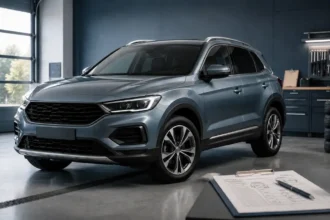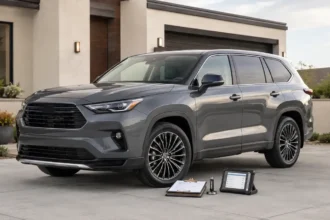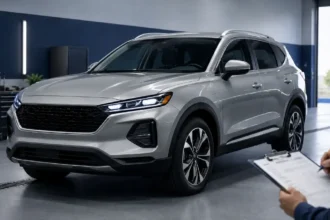


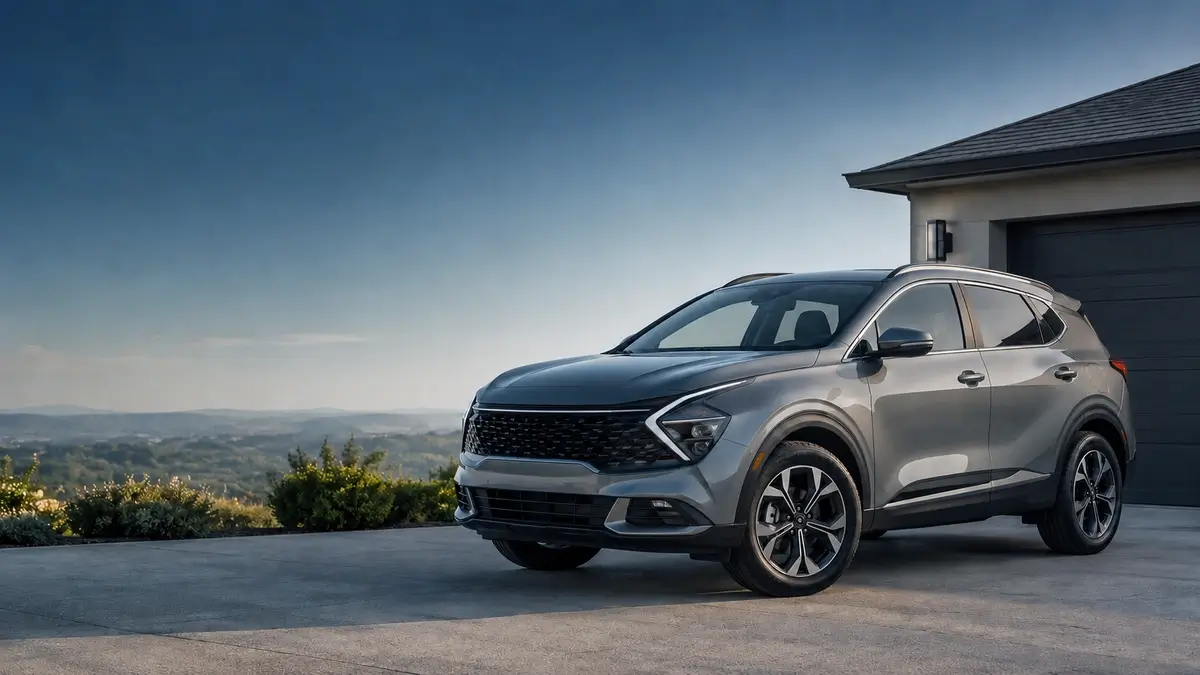
Kia Sportage reliability is good enough to consider, but it is not a blind-buy used SUV. The Sportage makes the most sense when the price is attractive, the maintenance history is clean, the model year is not a known higher-risk pick, and all recall work is verified.
The mistake is buying one only because it looks cheaper than a Toyota RAV4 or Honda CR-V. The Sportage can be a strong value play, but weak service history, unresolved recalls, or a poor inspection can turn that value into repair risk.
- Shortlist it if you want a roomy compact SUV and the vehicle has records, clean inspection results, and verified recall completion.
- Be cautious if you are shopping older, high-mileage, poorly documented, or problem-year examples.
- Skip it if the seller cannot prove maintenance, the check-engine light is on, or open recalls are unresolved.
- Compare first if you want the lowest-risk used compact SUV and can afford a CR-V, RAV4, or CX-5.
- Fastest safe default: shop the cleanest later-year Sportage you can afford, then verify the VIN before negotiating.
- What goes wrong if you pick badly: one engine, electrical, recall, or neglected-maintenance issue can wipe out the savings.
Quick Verdict: Is the Kia Sportage Reliable?
The Kia Sportage is a reasonable used compact SUV when the individual vehicle checks out. It should not be treated like a Toyota or Honda default pick where buyers often tolerate a higher price for a lower-risk reputation.
The Sportage’s best case is value. You may get more features, newer model years, or lower asking prices than some Japanese rivals. That advantage matters only if the vehicle has a clean record.
The weaker case is risk tolerance. If you do not want to investigate model-year history, recall status, engine behavior, transmission feel, and service records, the Sportage is not the easiest SUV to buy safely.
| Buyer type | Sportage verdict | Why it matters |
|---|---|---|
| Value-focused compact SUV buyer | Buy candidate | A clean Sportage can offer strong space and features for the money. |
| Risk-averse buyer | Compare first | A CR-V, RAV4, or CX-5 may be safer if your budget allows it. |
| High-mileage bargain hunter | Caution | Cheap Sportages can hide deferred maintenance or unresolved recall work. |
| Buyer considering older problem-prone years | Use the years guide first | Model-year selection can matter more than the badge. |
| Buyer with no service records | Skip or negotiate hard | Missing maintenance proof raises the real ownership-risk ceiling. |
A good Sportage is not the same thing as any Sportage. Treat the exact vehicle as the decision, not the model name.
Kia Sportage Reliability by Used-Buyer Type
A used Kia Sportage fits buyers who want compact SUV practicality without paying full Toyota or Honda money. It is not the strongest fit for buyers who want the lowest possible ownership-risk path.
The best Sportage buyer is patient. They will compare several examples, check the VIN, read the service history, and walk away from weak records.
The weakest Sportage buyer is rushing. If you are buying the first cheap one you see, the Sportage loses much of its value advantage.
Choose a used Sportage if:
- The price leaves room for inspection and near-term maintenance.
- The seller can show regular oil changes and service records.
- The VIN shows no unrepaired recall issue through the NHTSA recall lookup.
- The engine starts cleanly and runs without abnormal noise.
- The transmission shifts smoothly during a proper test drive.
- The vehicle passes a pre-purchase inspection.
Compare before buying if:
- You are deciding between Sportage and a higher-priced CR-V or RAV4.
- You plan to keep the SUV deep into high mileage.
- You cannot verify maintenance history.
- You are looking at a model year already flagged for extra caution.
- You need maximum resale confidence.
For Hyundai-Kia cross-shoppers, the Kia Sportage vs Hyundai Tucson comparison is the closest next step. For buyers weighing reliability reputation against Honda pricing, read the Kia Sportage vs Honda CR-V comparison before deciding.
Reliability by Year and Generation: What Changes the Risk?
Kia Sportage reliability by year matters because the ownership story changes across generations. A clean later example is a different decision from an older, high-mileage SUV with weak records.
Do not use this section as a full year-by-year verdict. That job belongs to the dedicated Kia Sportage Years to Avoid and Best Years to Buy guide.
Use this as the quick risk filter before you inspect a listing.
NHTSA Ownership-Risk Signal by Kia Sportage Generation
| Model years / generation | Owner complaints | Recall rows / investigations | Manufacturer communications | Used-buyer check |
|---|---|---|---|---|
| 1995-2002 – Gen 1 | 1,385 total / about 173 per model-year | 27 recall rows / 33 investigations | 85 | Very old examples are condition-first buys. Treat age, parts availability, rust, records, and inspection results as the real decision. |
| 2003-2004 – source-year review | 4 total | 0 recall rows / 0 investigations | 6 | Retain only as source coverage context. Do not use this as a normal Sportage shopping band. |
| 2005-2010 – Gen 2 | 454 total / about 76 per model-year | 14 recall rows / 3 investigations | 153 | Older budget examples need service-history proof, fluid checks, suspension checks, and VIN recall verification. |
| 2011-2016 – Gen 3 | 1,349 total / about 225 per model-year | 21 recall rows / 18 investigations | 949 | Highest per-year owner-complaint signal in the NHTSA records. Demand engine-service proof, recall completion, and a clean inspection. |
| 2017-2022 – Gen 4 | 856 total / about 143 per model-year | 14 recall rows / 9 investigations | 591 | More balanced than Gen 3, but still verify recall status, tow-hitch-related issues where relevant, and higher-mileage condition. |
| 2023-2026 – Gen 5 | 464 total / about 116 per model-year | 12 recall rows / 0 investigations | 206 | Includes newer Sportage gas, hybrid, and plug-in hybrid records in the NHTSA records. Lower age means the data is still developing, not proven safer. |
Table note: Owner complaints are raw NHTSA owner reports, not defect rates or reliability scores. Recall rows are model-year recall records, not unique campaign counts. Manufacturer communications are service-document records, not proof that every vehicle has the issue. Newer model years have had less time to collect reports, so lower counts do not automatically prove better reliability.
The older the Sportage, the more proof you should demand. Mileage alone is not enough. A higher-mileage SUV with strong service records can be safer than a lower-mileage one with gaps.
For 2023-newer models, the opposite problem exists. Lower complaint counts can partly reflect vehicle age. A newer model has not had as much time to reveal long-term ownership patterns.
What IIHS Adds to the Used-Buy Decision
The NHTSA data above describes owner reports and official actions. IIHS crash tests answer a different question: how specific Sportage versions performed in defined safety tests. Use this as a safety filter alongside the reliability evidence, not as a reliability score.
| Model years | Selected IIHS evidence | Used-buyer takeaway |
|---|---|---|
| 2005–2010 | 2010 original moderate overlap: A; original side: A; roof strength: P | The mixed results are worth knowing when evaluating an older example; good condition does not change the underlying crash-test result. |
| 2011–2016 | 2011 driver-side small overlap: P; original moderate overlap: G; roof strength: G. Side-test applicability changes within this generation. | Do not judge this whole generation from the Good ratings alone. Check the exact model year because individual test applicability differs. |
| 2017–2022 | Driver- and passenger-side small overlap: G; updated side: M; headlight ratings varied by equipment | Exact year and equipment still matter even when the main frontal ratings are Good. |
| 2023–2026 | Small overlap: G; 2024–2026 updated side: G; 2024 headlights: A; 2024 vehicle-to-vehicle front crash prevention 2.0: M; 2026 updated moderate overlap: G for vehicles built after May 2025 | Recent results are useful, but model year, equipment, and build date still need to match the vehicle you are buying. |
Table Note: G = Good, A = Acceptable, M = Marginal, P = Poor. IIHS test designs and rating criteria changed over time, so original and updated tests should not be merged into one score. Ratings apply only to the stated model-year, equipment, and build-date scopes. A test or model year not shown here should not be interpreted as a poor result. IIHS evidence measures safety performance, not reliability.
Common Kia Sportage Problems to Check Before Buying
Kia Sportage common problems should be handled as inspection triggers, not scare content. You are not trying to diagnose every possible failure online. You are trying to avoid buying someone else’s unresolved problem.
Before buying, focus on problems that affect cost, safety, or walk-away risk.
The NHTSA owner-complaint data also shows why the inspection should not focus on only one system.
NHTSA Reported Problem Themes to Inspect Before Buying
| NHTSA reported theme | Complaint count / share | Affected scope | Buyer inspection trigger |
|---|---|---|---|
| Reported engine issues | 1,640 / 36.3% | 1995-2026; across all Sportage generations | Cold start, abnormal noise, oil condition, leaks, smoke, stored codes, and service-record gaps. |
| Airbag / seatbelt / structural safety reports | 495 / 11.0% | 1995-2026; across all Sportage generations | Airbag lights, prior crash repair, seatbelt function, body structure, water intrusion, and safety-system warnings. |
| Reported brake-performance issues | 441 / 9.8% | 1997-2026; across all Sportage generations | Brake warning lights, pedal feel, ABS behavior, vibration, stopping confidence, and repair records. |
| Electrical / infotainment / software reports | 436 / 9.7% | 1995-2026; across all Sportage generations | Warning lights, battery drain, screen faults, sensor issues, charging behavior, and intermittent electronics. |
| Reported fuel-system issues | 320 / 7.1% | 1995-2026; across all Sportage generations | Fuel smell, leaks, hard starting, hesitation, recall history, and repair paperwork. |
| Powertrain / transmission reports | 234 / 5.2% | 1995-2025; across Gen 1 through Gen 5 | Delayed shifts, slipping, harsh engagement, vibration, AWD behavior, and fluid-service history. |
Table note: These are reported NHTSA owner-complaint themes, not confirmed defect rates. Use them as inspection triggers before buying a specific used Sportage.
Buyer takeaways from this snapshot:
- Older examples need stronger engine-condition proof before purchase.
- Newer complaints shift more toward electrical, screen, sensor, or warning-light concerns.
- Brake feel, warning lights, and safety-system behavior should be checked carefully.
- A proper test drive still matters across generations.
Used Kia Sportage Inspection Checklist
| Check area | What to look for | Why it matters |
| Engine behavior | Rough idle, knocking, oil leaks, warning lights, poor service records | Engine issues are expensive and can erase the value case. |
| Transmission feel | Delayed shifts, slipping, harsh engagement, vibration | A cheap SUV is not cheap if the drivetrain is weak. |
| Electrical systems | Warning lights, dead screens, battery drain, sensor faults | Electrical issues can be hard to trace and annoying to own. |
| Brakes and safety systems | Brake warning lights, weak brake assist, abnormal pedal feel | These are safety and repair-priority concerns. |
| Cooling and fluid condition | Leaks, low fluids, burnt smells, dirty oil | Neglect often appears here first. |
| Recall status | Any unrepaired recall shown by VIN | Open recalls must be resolved before treating the SUV as safe to buy. |
| Tires and suspension | Uneven tire wear, clunks, poor alignment | These can reveal hard use or neglected repairs. |
A clean inspection does not guarantee future reliability. It does reduce the chance that you buy a known problem.
Do not rely on forum comments alone. Owner discussions are useful for spotting concern patterns, but official recalls, inspection results, and service records should control the decision.
Engine, Transmission, and Recall Concerns
Engine, transmission, and recall concerns are the highest-risk part of a used Sportage purchase. This is where broad reliability talk becomes too weak.
A seller saying “it drives fine” is not enough. You need the VIN, service records, and a cold-start inspection.
With a Sportage, that VIN matters because the engine, model year, and configuration can change which risks and coverage questions apply to the vehicle. Run the Sportage’s VIN through CarMerit and compare the returned vehicle details with the seller’s listing and paperwork before you evaluate its engine history. Then use service records, official recall and campaign checks, and the cold-start inspection to judge the SUV itself.
Engine concerns
Treat engine condition as a hard gate. Listen for abnormal noise at startup, watch for smoke, scan for codes, and check oil condition.
For older Sportage examples, demand stronger proof. Maintenance gaps matter more as mileage rises.
Walk away if the seller refuses a pre-purchase inspection. That is especially true if the price is unusually low.
Before you price the worst-case engine risk, check coverage eligibility. Some higher-risk engine years have manufacturer or settlement programs that can materially change a qualifying owner’s out-of-pocket exposure.
If a Sportage’s engine history is making the deal hard to price, check CarMerit’s Manufacturer Special Coverage Lookup to see which Kia warranty-extension or settlement records overlap that model year before you treat the potential repair as entirely your responsibility.
| Sportage Scope | Verified Coverage Context | What to verify before relying on it |
|---|---|---|
| 2011–2014 with qualifying 2.0L Turbo GDI or 2.4L GDI engines | Kia WTY007 extended qualifying short-block coverage to 10 years/120,000 miles from the Date of First Service for the described connecting-rod-wear condition. | VIN, engine, original in-service date, mileage, maintenance history, and exact failure eligibility |
| 2011–2013 Sportages with the qualifying 2.0L Turbo GDI engine | Kia’s KSDS product-improvement program included lifetime engine long-block coverage after qualifying campaign completion for specified connecting-rod-bearing-related damage. See the official manufacturer communication. | VIN, engine, campaign completion, KSDS status, and the exact covered failure |
| 2011–2018 and certain 2019 Sportages with qualifying genuine Theta II 2.0L or 2.4L GDI engines | The Kia Engine Settlement provides a lifetime powertrain-warranty benefit for qualifying vehicles and covered engine damage. | VIN/class eligibility, qualifying engine, KSDS completion, and settlement terms |
| 2011–2013 Sportages with qualifying Theta II 2.4L MPI engines | Kia Engine Litigation II provides up to 15 years/150,000 miles of qualifying coverage for specified connecting-rod-bearing-related engine damage. | VIN/class eligibility, mileage, KSDS requirements, applicable exceptions, and the exact covered condition |
Table Note: These programs can overlap, but their coverage periods and benefits should not be added together. Model year alone does not establish eligibility. VIN, engine, Date of First Service or original retail-delivery date, mileage, ownership/class status, KSDS or campaign completion, maintenance requirements, recall history, and the exact failure can control coverage. Verify the VIN with Kia or the applicable program administrator before treating any coverage as available. These programs do not mean every listed Sportage will experience an engine failure.
Transmission concerns
The transmission should shift smoothly under light and moderate acceleration. Test it from a stop, during steady cruising, and during a highway merge if possible.
Harsh shifts, hesitation, slipping, vibration, or warning lights are not “normal used car stuff.” They are negotiation or walk-away signals.
Recall concerns
A recall is not the same as a reliability complaint. It is an official safety action, and it must be checked by VIN.
NHTSA’s recall lookup can show whether a specific vehicle has an unrepaired recall. NHTSA also notes that VIN and license-plate results may not show recalls that have already been repaired, some very recent recalls, certain older recalls, or non-safety campaigns.
That means the buyer should do three things:
- Run the VIN through the NHTSA recall lookup.
- Ask the seller for dealer recall-completion paperwork.
- Call a Kia dealer with the VIN if anything looks unclear.
Some Sportage recall history deserves extra attention. NHTSA issued a 2021 consumer alert covering select Sportage and Cadenza vehicles due to an engine-compartment fire risk tied to the hydraulic electronic control unit. NHTSA also issued a 2023 alert covering many Kia and Hyundai vehicles, including 2010–2013 Sportage models, for ABS-module fire risk.
Use those official recall alerts as a reason to verify, not as a reason to reject every Sportage. A repaired vehicle is a different risk than one with open recall work.
Kia Sportage Maintenance Cost and Cost to Own
The Kia Sportage cost to own can be attractive, but only if you avoid neglected examples. Lower purchase price does not automatically mean lower ownership cost.
A model-wide repair average is too blunt to price the risk of one used Sportage. The cost that matters is the work the exact SUV needs now. Use the pre-purchase inspection to identify active problems, overdue work, or deferred repairs, then price those items locally before treating a lower asking price as savings.
This matters most on older or higher-mileage examples. One engine, drivetrain, electrical, or deferred-maintenance problem can outweigh years of smaller routine costs.
| Cost area | Sportage ownership reality | Buyer takeaway |
| Purchase price | The Sportage can be a value play when the exact vehicle is meaningfully cheaper than a comparable alternative. | Compare similar model years, mileage, condition, and equipment. A discount matters only if the history and inspection are clean. |
| Maintenance | Service burden depends on the exact model year, powertrain, mileage, and what previous owners actually completed. | Use service records and the exact owner’s manual rather than assuming one maintenance pattern applies to every Sportage. |
| Repairs | Repair exposure depends on the condition of the individual vehicle and the work it needs, not a model-wide average. | Price the issues found during the inspection before deciding whether the asking price still makes sense. |
| Fuel | Varies by year, drivetrain, and hybrid status | Use FuelEconomy.gov for the exact year and configuration. |
| Insurance | Usually depends more on driver, ZIP code, and trim than reputation alone | Quote your exact VIN before buying. |
| Depreciation and resale | Resale varies with model year, mileage, trim, condition, vehicle history, and the market when you sell. | Do not assume a resale advantage or penalty from the badge alone. Compare current like-for-like vehicles when resale matters to the decision. |
| Inspection and catch-up work | Often the hidden cost on used examples | Budget for a pre-purchase inspection and immediate maintenance. |
EPA Fuel-Economy Checkpoints That Can Change the Ownership Case
Fuel economy is one running-cost input, not a reliability score. The useful comparison is the exact configuration because engine, drivetrain, and powertrain can materially change the official rating. These are selected EPA/FuelEconomy.gov checkpoints rather than a complete specification table.
| Model year / configuration | EPA combined rating | Why it matters |
|---|---|---|
| 2011 2.4L automatic FWD / 4WD | 25 / 23 mpg | Even within one model year, drivetrain changes the running-cost picture. |
| 2017 gasoline configurations | 21–26 mpg | The official configurations include different engines, drivetrains, and efficiency variants, so one MPG number should not be assigned to every 2017 Sportage. |
| 2022 gasoline configurations | 21–26 mpg | Engine and drivetrain still create a meaningful spread among late fourth-generation examples. |
| 2023–2025 2.5L gas FWD / AWD | 28 / 25 mpg | FWD and AWD do not carry the same official combined rating. |
| 2023–2025 Hybrid FWD / AWD | 43 / 38 mpg | The drivetrain choice is material when estimating fuel use. |
| 2023–2025 Plug-in Hybrid | 35 mpg charge-sustaining / 84 MPGe charge-depleting | MPG and MPGe describe different operating modes and should not be merged. |
| 2026 2.5L gas FWD / AWD | 28 / 26 mpg | The exact drivetrain still matters when comparing listings. |
| 2026 Hybrid FWD / AWD | 42 / 35 mpg | FWD and AWD differ enough to affect fuel-cost planning. |
| 2026 Plug-in Hybrid | 36 mpg charge-sustaining / 83 MPGe charge-depleting | Use the correct metric for gasoline-running versus electric-running operation. |
Table Note: EPA figures above are official combined label values for the stated configurations. The 21–26 mpg entries are configuration ranges, not model-year averages. MPG and MPGe are different metrics. Real-world fuel economy varies with driving, weather, speed, traffic, cargo, and vehicle condition. The 2024–2025 X-Pro AWD is rated at 26 mpg combined, while the 2026 X-Pro AWD is rated at 24 mpg combined, reinforcing the need to check the exact configuration. Current annual fuel-cost figures are intentionally not shown without a current official fuel-price snapshot.
The Sportage makes the strongest financial case when it is priced below stronger-reputation rivals and does not need major catch-up work.
It makes a weak financial case when the seller uses “Kia value” to distract from records, warning lights, worn tires, deferred maintenance, or unresolved recalls.
How Long Can a Kia Sportage Last?
A Kia Sportage can last a long time when it has been maintained well, but mileage promises are not useful. A specific Sportage’s future depends on the exact year, engine condition, service history, climate, driving style, and prior repairs.
The safe question is not “How many miles can a Sportage last?” The safer question is “Does this Sportage have enough proof to justify the mileage?”
A higher-mileage Sportage can still be worth considering if:
- It has regular service records.
- The engine is quiet and clean on cold start.
- The transmission shifts correctly.
- Recalls are complete.
- The price reflects mileage and condition.
- A mechanic finds no major hidden issue.
Avoid high mileage if:
- Service records are missing.
- Oil-change history is unclear.
- Warning lights are active.
- The seller avoids inspection.
- The vehicle has accident history plus poor repairs.
- The asking price leaves no room for maintenance.
Do not buy a Sportage on reputation alone. Buy it on proof.
Kia Sportage vs Similar Used Compact SUVs
A used Kia Sportage is often a value-first alternative to the more reputation-heavy compact SUVs. That can work, but it is not always the smarter move.
Compare before committing if your budget allows a cleaner rival.
Choose the Sportage over a Tucson if the exact Sportage is cleaner, priced better, and has stronger maintenance proof. If both are similar, the Hyundai Tucson reliability page can help you compare ownership risk across the shared Hyundai-Kia space.
Choose the Sportage over a CR-V only if the value gap is meaningful. The Used Honda CR-V Reliability and Cost to Own Guide explains why many buyers still pay more for Honda’s used-SUV reputation.
Choose the Sportage over a RAV4 only if the Toyota premium is too high or the Sportage is much cleaner. The Toyota RAV4 Reliability and Cost to Own guide gives the stronger low-risk baseline.
Choose the Sportage over a CX-5 if you want more value or space for the money. The Mazda CX-5 Reliability and Cost to Own guide is useful if you care more about driving feel and long-term ownership confidence.
For a broader shortlist, start with Best Used Compact SUVs to Buy. If reliability is the top priority, also compare against Most Reliable Used Cars to Buy.
Should You Buy a Used Kia Sportage?
You should buy a used Kia Sportage if the price is attractive and the vehicle passes the proof test. That means clean service records, no unresolved recall issue, no major inspection concern, and no obvious engine or transmission red flags.
You should only consider it if the year is higher-risk or the mileage is high. In that case, the price needs to compensate for the added uncertainty.
You should skip it if records are missing, recall status is unclear, warning lights are active, or the seller blocks inspection.
You should compare first if you can afford a cleaner CR-V, RAV4, CX-5, or Tucson. The Sportage is strongest as a smart value pick when it is cleaner or meaningfully cheaper than those rivals. It is weaker as the no-research, lowest-risk default.
The practical verdict is simple: buy the clean Sportage, not the cheap Sportage.
Frequently Asked Questions
Is the Kia Sportage reliable as a used SUV?
Yes, the Kia Sportage can be reliable enough to buy used, but condition matters heavily. Treat it as a good candidate only after checking model year, service history, recall status, engine behavior, transmission feel, and inspection results.
Is the Kia Sportage expensive to maintain?
Not automatically. A model-wide annual average cannot tell you what one used Sportage will cost. Build the budget around the exact vehicle’s service history, current condition, pre-purchase inspection, and any work it needs now. If the inspection finds repairs or overdue maintenance, price those items before deciding whether the lower purchase price is real value.
What are the most common Kia Sportage problems to check before buying?
Start with engine behavior, transmission shifting, electrical warning lights, brake issues, open recalls, tire wear, and service-record gaps. These are the areas most likely to change the used-buy decision.
Does the Kia Sportage have engine problems?
Some Sportage years and vehicles deserve engine-related caution, but do not treat every Sportage as defective. Use service records, cold-start behavior, scan results, recall history, and a mechanic’s inspection before deciding.
Does the Kia Sportage have transmission problems?
Transmission concerns should be checked during the test drive. Delayed shifting, slipping, harsh engagement, vibration, or warning lights should trigger a deeper inspection or a walk-away decision.
Are Kia Sportage recalls a major buying concern?
They can be. Recalls do not automatically make a vehicle a bad buy, but unrepaired recalls are a serious red flag. Always verify recall status by VIN through NHTSA and confirm completion with a Kia dealer when needed.
What Kia Sportage years need extra caution?
Older third-generation models and some early fourth-generation examples need careful screening. Use the dedicated Kia Sportage years-to-avoid guide before making a year-specific decision.
How long can a Kia Sportage last?
A Sportage can last well when maintained properly, but there is no safe universal mileage promise. Service history, engine condition, recall completion, rust, prior use, and inspection results matter more than a generic lifespan number.
Should I buy a used Kia Sportage or compare it with a Mazda CX-5?
Compare first if reliability confidence, resale value, and driving feel matter more than getting the lowest purchase price. The Sportage can still be the better value if it is cleaner and meaningfully cheaper.
Is a used Kia Sportage better than a Hyundai Tucson?
It depends on the exact year, condition, price, and service history. The Sportage and Tucson often compete closely, so the cleaner vehicle with better records is usually the safer used buy.
Is the Kia Sportage a better used buy than a Honda CR-V?
Usually not for the most risk-averse buyer. The Sportage may be the better value if it is much cheaper and cleaner, but the CR-V remains the safer default for many used-SUV shoppers.
What should I check before buying a used Kia Sportage?
Check the VIN for recalls, request service records, inspect the engine and transmission, scan for codes, review tires and brakes, confirm no warning lights, and pay for a pre-purchase inspection before closing the deal.