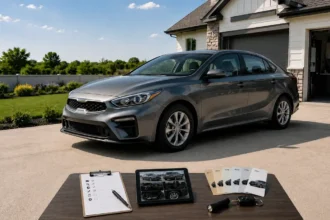


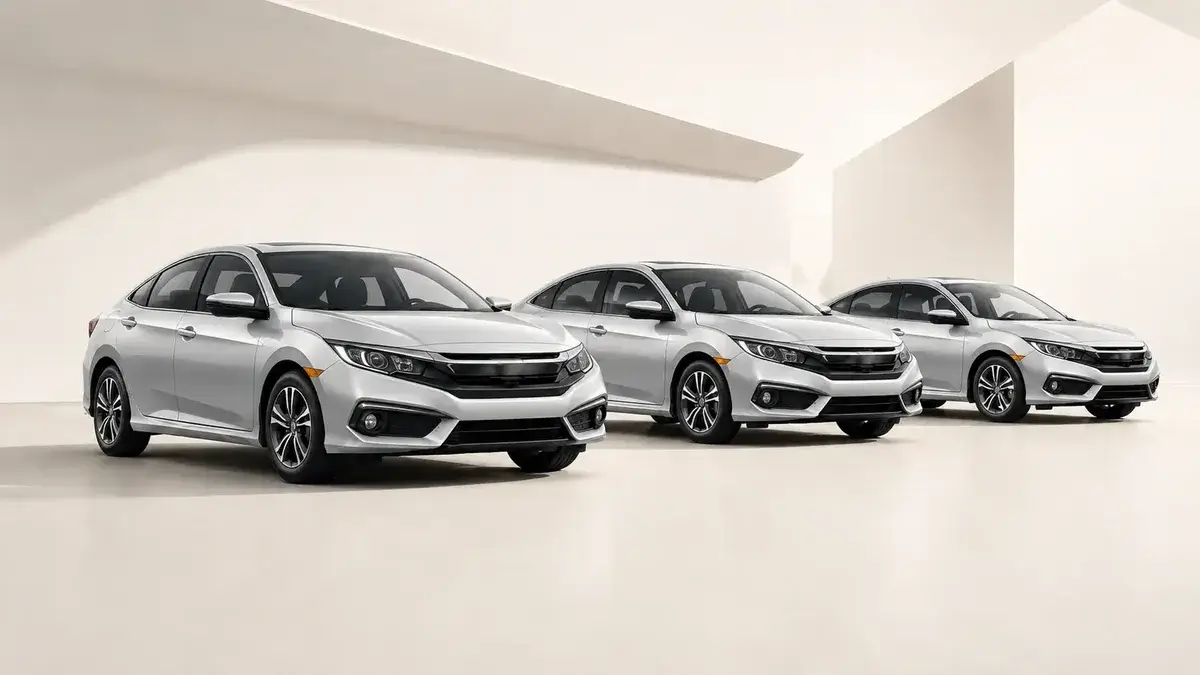
The best years for Honda Civic are not automatically the newest ones and not automatically the cheapest ones. For many U.S. used-car buyers, the smarter move is to target the year bands that balance reliability, value, and lower ownership risk, then rule out the years that ask for more trust than the discount is worth.
This guide is built for mainstream used buyers who want a dependable Civic, not an enthusiast project and not the cheapest listing on the market no matter what shape it is in. The goal is simple: give you a usable shortlist, a clean caution list, and a faster way to avoid the wrong buy.
One reason best Civic year advice often clashes is simple. Some sources talk about generation reputation. Others focus on model-year risk. Others are really talking about used-market value. Those are not the same thing, so the right answer is a shortlist with boundaries, not one magic year.
- Choose 2013 to 2015 if you want the safest all-around starting point.
- Choose 2009 to 2011 if budget matters more than age and you can inspect carefully.
- Choose 2019 to 2021 if you want a newer Civic and can justify the extra cost.
- Treat 2001, 2006 to 2008, 2016, and 2022 as caution years, not easy blind buys.
- The biggest mistake is trusting the model year so much that you stop checking condition and service history.
Pick wrong, and the usual result is simple: you save money up front, then lose it through repair risk, weak upkeep, or paying more for a newer car that does not improve the ownership outcome enough. The fastest safe default is to start with 2013 to 2015, then move older or newer only if your budget or priorities clearly push you there.
CarMerit reliability tool
Check selected Civic years – NHTSA snapshot data
Pick a model year to see Honda Civic complaint, recall, investigation, and manufacturer-communication counts from the article’s NHTSA snapshot, plus CarMerit’s used-buy verdict for that year band.
Owner complaints
…
NHTSA, CarMerit snapshot
Recall records
…
NHTSA, CarMerit snapshot
Investigations
…
NHTSA, CarMerit snapshot
Manufacturer communications
…
NHTSA, CarMerit snapshot
Most-reported problem areas
Complaint counts and manufacturer communications are raw NHTSA records, not defect rates or reliability scores. Older model years have had more time to collect reports, while newer years can look lower because the record is still young. Verdicts come from CarMerit’s article guidance. Data source: NHTSA.gov. Always verify VIN recall status, Honda recall status, service records, transmission behavior, engine condition, oil level, warning lights, suspension feel, steering feel, brake feel, tires, accident history, rust, and independent inspection results before buying. For newer or more complex trims, confirm the exact engine, transmission, body style, and service history before treating the year as a safe buy.
Best Honda Civic Years to Buy Used at a Glance
Start here if you want the fastest shortlist. Most buyers do not need every Civic year treated equally. They need a practical starting point, plus warning signs that stop them from wasting time on riskier listings.
These year bands are best treated as strong used-buy starting points based on the current evidence mix, not as universal guarantees. A clean car outside the shortlist can still beat a neglected car inside it.
| Year band | Buy status | Best for | Why it makes sense | What to verify first |
|---|---|---|---|---|
| 2013 to 2015 | Best overall starting point | Most mainstream used buyers | Strong balance of maturity, value, and lower-drama ownership | Service history, warning lights, transmission behavior, accident history |
| 2009 to 2011 | Best budget older pick | Buyers who want value first | Can be a strong older Civic value sweet spot if maintained well | Age-related wear, suspension feel, maintenance records, drivetrain condition |
| 2019 to 2021 | Best safer newer pick | Buyers who want newer tech and fresher feel | Cleaner newer option if you can justify the premium | Price discipline, configuration, service history, overall condition |
| 2001, 2006 to 2008, 2016, 2022 | High-caution years | Informed buyers only | These years usually ask for more scrutiny than most shoppers want to do | Full records, pricing discount, clean inspection, no ignored warning signs |
For many buyers, the shortlist should start with 2013 to 2015, not because those years are perfect, but because they usually ask you to accept fewer bad trade-offs than older bargain years or earlier redesign years.
If your budget is tighter, 2009 to 2011 still deserves attention. If your budget is stronger and you want a fresher Civic, 2019 to 2021 is usually the cleaner newer path.
After narrowing the Civic years worth shopping, compare the Civic against Hyundai’s value alternative before buying. The Hyundai Elantra vs Honda Civic guide explains when the Civic is still the safer choice and when a newer Elantra may be the better deal.
A Civic can be a strong under-$20,000 pick, especially when the year, mileage, and service history line up. If you are comparing Civic against Corolla, Mazda3, Camry, and used SUVs, use our best used cars under $20,000 shortlist.
After narrowing the best Civic years, the next question is whether the Civic is still worth its used-market premium. Our Kia Forte vs Honda Civic comparison explains when paying more for the Civic makes sense and when the Forte’s lower price is the better value play.
Honda Civic Years to Avoid and Why
Use this section to separate true value from false confidence.
A caution year is not always an automatic no. It becomes a problem when buyers treat it like a safe default anyway. That is the real mistake.
The years below deserve more skepticism because they make it easier for a cheap listing or a newer-looking listing to hide extra risk.
2001
The problem here is mostly age-related downside, not just badge reputation.
At this age, deferred maintenance, worn components, mixed ownership history, and stacked small repairs matter more than the Civic name itself. Even if the asking price looks attractive, the age-related downside can erase that win fast.
2006 to 2008
These years usually need more scrutiny than their price suggests.
They often tempt buyers because they still look affordable without feeling ancient. The risk is not that every example is bad. The risk is that these years usually demand more inspection discipline than the average buyer wants to do, and that alone pushes them out of the safest-default category.
2016
This is the caution year most likely to fool buyers who want something newer.
A 2016 Civic can look like the perfect middle ground because it feels fresher than older cars while still seeming reachable on price. The issue is redesign-era uncertainty. If you are paying for newer, you usually want more than newer styling. You want cleaner ownership confidence too.
When a caution year can still work
A caution year only becomes acceptable when the records, condition, and price all line up.
That means:
- the maintenance history is strong
- the condition is honest
- the price clearly compensates for the extra risk
If one of those breaks, the case usually falls apart.
Example: a cheap 2016 Civic only makes sense if it is genuinely clean and well-kept. If the records are thin or the transmission behavior feels questionable, it is usually smarter to either step back to a late 9th-gen Civic or move forward to a better-kept later car.
How This Shortlist Is Ranked
Read this part if you want to understand why these year bands rose to the top.
The point is not to crown one Civic year for everyone. It is to rank year bands by how well they balance reliability, value, and low-drama used ownership for mainstream buyers.
A Civic year moves up the list when it does three things well: it avoids the riskier pockets, keeps ownership trade-offs manageable, and still makes financial sense used.
Reliability and problem-year weighting
Years that sit closer to concern pockets or more conditional year bands get downgraded. Year bands that feel more settled move up.
Model-year choice narrows the search, but it does not prove the exact car is safe. After using this year shortlist, check the Honda Civic reliability guide to judge setup, service history, ownership-risk details, and whether the specific Civic still deserves trust.
That matters because a broad Civic reliability reputation is not enough when you are buying a specific used model year.
Value-for-money weighting
More reliable and better value are not always the same answer.
A newer Civic can earn its premium, but not always. That is why the used Honda Civic value sweet spot matters. A year band that costs less but still delivers calmer ownership can beat a newer year that mainly wins on appearance.
Long-life and ownership-risk weighting
A Civic can last a long time, but that only helps you if the exact car has been maintained well enough to get there without draining you on the way.
That is why a clean older Civic can outrank a rougher newer one.
Buyer-fit weighting
The right Civic changes with the buyer.
The best Civic for commuters is not automatically the same as the best Civic for a buyer who wants a fresher interior, stronger resale flexibility, or fewer age-related annoyances.
Methodology and assumptions
- U.S. used-market basis
- Mainstream non-Si used buying focus
- Heavier weight on ownership risk, value, and blind-buy safety than on enthusiast appeal
- Model years and configurations are discussed directionally where exact trim-by-trim differences vary
- These shortlist bands are starting points based on the current evidence mix, not universal guarantees
- Date checked: April 16, 2026
- Not included: local deal-by-deal pricing, salvage-title exceptions, project-car logic, or custom builds
Best Honda Civic Years by Budget and Buyer Type
Come here when the right Civic year depends more on your budget than on abstract rankings.
This is where many Civic year guides stay too soft. They give broad advice, but they do not force a real match between buyer type and year band. That is the part that matters most.
Budget changes the answer. Risk tolerance changes the answer. So does how long you plan to keep the car.
| Buyer type | Best year band | Why it fits | Main trade-off | Who should skip it |
|---|---|---|---|---|
| Low-budget commuter | 2009 to 2011 | Stronger older value play if condition is clear | More age-related wear and more inspection pressure | Buyers who want the easiest ownership start |
| Buyer who wants old-school simplicity | 2009 to 2011 | Older used Civic logic can still work if upkeep is clear | You are leaning harder on condition than age advantage | Buyers who do not want age-related repair risk |
| Safest default buyer | 2013 to 2015 | Best overall balance for most shoppers | Not the newest interior or feature set | Buyers who strongly care about a fresher cabin |
| Newer-tech buyer | 2019 to 2021 | Cleaner newer path if you want a fresher feel and can pay more | Higher used purchase cost | Buyers on a tight budget |
| Long-term keeper | 2013 to 2015 or 2019 to 2021 | Strong blend of ownership calm and usable value | Answer depends on how much upfront spend you accept | Buyers chasing the cheapest listing first |
If you want the simplest answer, buy inside the 2013 to 2015 band first. If budget is the main limiter, look hard at 2009 to 2011. If you want the newer answer, move toward 2019 to 2021 and shop more selectively.
Which Civic Generations Make the Most Sense Used
This is where you decide whether an older sweet spot or a newer generation fits your real buying logic.
Generation shifts matter because they reshape the trade-off. Older Civics can feel simpler and cheaper to buy. Newer Civics can feel fresher and easier to live with day to day. Neither side wins automatically.
The better question is which generation gives you the right mix of age, price, and ownership risk.
8th-gen simplicity and watchouts
Late 8th-gen Civics still matter because they can be a real value answer when budget matters most.
They appeal to buyers who are comfortable evaluating condition and do not need a newer interior to feel satisfied. The trade-off is obvious. At this age, condition starts carrying more of the decision than the year alone.
9th-gen safest-value logic
For many used buyers, the 9th-gen Civic is the cleanest middle ground.
It is not as old as the late 8th-gen cars, and it avoids some of the pay-more-because-newer pressure that shows up when buyers jump too fast into newer redesign-era cars. That is why 2013 to 2015 remains the safest default recommendation.
10th-gen newer-tech trade-offs
The 10th-gen Civic makes more sense when the fresher design and feature set actually matter to you.
It becomes a weaker choice when the price jump is large and the extra money does not buy you enough calm ownership to justify it.
Why older Civics can feel more dependable than newer ones
Some buyers trust older Civics more because simpler used cars can feel easier to understand and easier to own over time.
That logic is not always wrong. But it only works when the older car is genuinely well-kept. A neglected older Civic is not safer just because it is mechanically simpler on paper.
Reliability by Year: What Holds Up in Real Ownership
This part separates Civic reputation from the ownership reality you actually inherit.
A 10-year-old Civic can still be a smart buy. A 20-year-old Civic can still be running. Neither fact proves that the exact car in front of you is the right buy.
What matters more is whether the year band is strong, whether the exact car was maintained well, and whether the configuration adds avoidable risk.
The table works best as a reality check, not as a promise.
Honda Civic NHTSA Complaint and Recall Snapshot by Year
Scope: Honda Civic Gas, 2001-2026.
| Model year | Complaints | Recalls | Top complaint area | Why it matters |
|---|---|---|---|---|
| 2001 (Gen 7) | 1,079 | 27 | Powertrain / transmission: 381 | Largest Gen 7 complaint count in the article scope, led by transmission reports. |
| 2002 (Gen 7) | 705 | 24 | Airbags / seatbelts / structure: 271 | High early-Gen 7 complaint pool with restraint and structure reports leading. |
| 2003 (Gen 7) | 550 | 24 | Airbags / seatbelts / structure: 176 | Similar Gen 7 pattern, with restraint reports ahead of transmission and electrical. |
| 2004 (Gen 7) | 385 | 15 | Airbags / seatbelts / structure: 158 | Lower than 2002-2003, but restraint and structure remains the lead category. |
| 2005 (Gen 7) | 362 | 15 | Airbags / seatbelts / structure: 161 | Final Gen 7 year still shows restraint and structure as the largest complaint bucket. |
| 2006 (Gen 8) | 1,461 | 17 | Engine: 357 | Largest 2001-2026 complaint count; engine, restraint and suspension reports dominate. |
| 2007 (Gen 8) | 1,275 | 10 | Suspension / wheels: 283 | Very large complaint pool led by suspension, engine and restraint reports. |
| 2008 (Gen 8) | 985 | 7 | Airbags / seatbelts / structure: 265 | High volume continues, with restraint and engine reports prominent. |
| 2009 (Gen 8) | 425 | 8 | Airbags / seatbelts / structure: 141 | Complaint volume drops from earlier Gen 8 years, with restraint reports still leading. |
| 2010 (Gen 8) | 411 | 8 | Airbags / seatbelts / structure: 136 | Similar to 2009, with braking and visibility also visible in the top three. |
| 2011 (Gen 8) | 170 | 9 | Airbags / seatbelts / structure: 65 | Lower complaint volume among Gen 8 years, led by restraint reports. |
| 2012 (Gen 9) | 471 | 4 | Airbags / seatbelts / structure: 164 | First Gen 9 year shows a larger complaint pool than later 2013-2015 rows. |
| 2013 (Gen 9) | 324 | 0 | Airbags / seatbelts / structure: 135 | No recall rows in the NHTSA records, but complaints still cluster around restraint reports. |
| 2014 (Gen 9) | 295 | 2 | Powertrain / transmission: 91 | Transmission leads this year, making drivetrain behavior an important evidence signal. |
| 2015 (Gen 9) | 390 | 1 | Powertrain / transmission: 162 | Transmission is the largest complaint category despite only one recall row. |
| 2016 (Gen 10) | 1,058 | 5 | Steering: 402 | Redesign-year complaints are steering-heavy, with unknown/other and brake reports next. |
| 2017 (Gen 10) | 578 | 6 | Steering: 149 | Steering remains the lead category, while electrical appears in the top three. |
| 2018 (Gen 10) | 713 | 6 | Steering: 273 | Steering and fuel-system reports account for much of the complaint concentration. |
| 2019 (Gen 10) | 419 | 4 | Fuel system: 138 | Fuel-system reports lead this later Gen 10 row ahead of steering. |
| 2020 (Gen 10) | 219 | 5 | Airbags / seatbelts / structure: 34 | Smaller complaint pool, with restraint and transmission categories close together. |
| 2021 (Gen 10) | 146 | 4 | Steering: 53 | Lowest Gen 10 complaint count in the NHTSA records, still led by steering reports. |
| 2022 (Gen 11) | 952 | 4 | Steering: 776 | Large Gen 11 complaint pool is overwhelmingly steering-related. |
| 2023 (Gen 11) | 319 | 5 | Steering: 243 | Steering remains the dominant Gen 11 complaint category. |
| 2024 (Gen 11) | 131 | 3 | Steering: 64 | Complaint volume is lower than 2022-2023, with steering still leading. |
| 2025 (Gen 11) | 84 | 2 | Steering: 24 | Early data is smaller, with steering and driver-assist reports most visible. |
| 2026 (Gen 11) | 22 | 1 | Unknown / other: 5 | Very early data year; small complaint counts can shift quickly. |
Table note: NHTSA complaints are raw owner-filed reports, not defect rates or sales-adjusted reliability scores. Newer years have had less time to accumulate reports.
Honda Civic NHTSA Investigations and Manufacturer Communications by Year
Scope: Honda Civic Gas, 2001-2026.
| Model year | Investigations | Manufacturer communications | Why it matters |
|---|---|---|---|
| 2001 (Gen 7) | 4 | 413 | Highest manufacturer communication count in the article scope, with four investigation rows. |
| 2002 (Gen 7) | 4 | 304 | Both formal investigations and service-communication volume are high for this Gen 7 row. |
| 2003 (Gen 7) | 7 | 315 | Highest investigation count in the 2001-2026 slice, plus high communication volume. |
| 2004 (Gen 7) | 4 | 249 | Formal action remains elevated, but below 2002-2003 communications. |
| 2005 (Gen 7) | 5 | 167 | Gen 7 closes with multiple investigations and a lower communication count than earlier years. |
| 2006 (Gen 8) | 1 | 106 | Official-action volume drops from Gen 7, but communications remain above 100. |
| 2007 (Gen 8) | 1 | 89 | Single investigation row with moderate communication volume for the early Gen 8 period. |
| 2008 (Gen 8) | 1 | 78 | Official-action count is lower than 2006-2007 while complaints remain high. |
| 2009 (Gen 8) | 1 | 68 | One investigation and fewer communications than earlier Gen 8 years. |
| 2010 (Gen 8) | 1 | 54 | Low official-action count relative to the larger 2006-2008 rows. |
| 2011 (Gen 8) | 1 | 51 | Final Gen 8 row has the lowest communication count in that generation slice. |
| 2012 (Gen 9) | 3 | 80 | Gen 9 starts with three investigation rows and moderate communications. |
| 2013 (Gen 9) | 3 | 76 | Same investigation count as 2012, with slightly lower communication volume. |
| 2014 (Gen 9) | 3 | 114 | Communications rise above the earlier Gen 9 rows. |
| 2015 (Gen 9) | 3 | 74 | Investigation count stays steady while communication volume drops again. |
| 2016 (Gen 10) | 0 | 312 | No investigation rows, but manufacturer communications are high in the redesign year. |
| 2017 (Gen 10) | 0 | 265 | No investigations, with a still-high communication count after redesign. |
| 2018 (Gen 10) | 0 | 241 | No investigation rows, but service-communication volume stays substantial. |
| 2019 (Gen 10) | 0 | 208 | Communications remain high even as complaint volume is lower than 2016-2018. |
| 2020 (Gen 10) | 0 | 176 | No investigations, with fewer communications than earlier Gen 10 rows. |
| 2021 (Gen 10) | 0 | 83 | Lowest Gen 10 communication count in this NHTSA data slice. |
| 2022 (Gen 11) | 2 | 118 | Gen 11 starts with two investigation rows and triple-digit communications. |
| 2023 (Gen 11) | 2 | 103 | Official-action profile is similar to 2022, but complaint volume is lower. |
| 2024 (Gen 11) | 1 | 91 | One investigation row and moderate communication volume. |
| 2025 (Gen 11) | 0 | 83 | No investigation rows yet, with early communication volume still present. |
| 2026 (Gen 11) | 0 | 22 | Very early year; official-action counts are still immature. |
Table note: Manufacturer communications are service-information records, not recalls. Investigations and communications help show where NHTSA or manufacturer documentation exists, but they are not buyer verdicts by themselves.
| Year band | Reliability outlook | What to verify | Not best for |
|---|---|---|---|
| 2009 to 2011 | Can still be solid if upkeep is clear | Suspension wear, service records, drivetrain behavior, age-related repairs | Buyers who want the lowest possible ownership uncertainty |
| 2013 to 2015 | Strongest all-around starting point for many buyers | Clean maintenance record, warning lights, accident history | Buyers who mainly want the newest feel |
| 2016 to 2018 | More conditional than default-safe | Full records, configuration-specific caution, transmission behavior | Buyers who want a low-thought, low-risk buy |
| 2019 to 2021 | Cleaner newer pick than earlier redesign-era examples | Price discipline, powertrain upkeep, general condition | Buyers who cannot justify the extra upfront spend |
For many buyers, the practical answer is this: late 9th-gen Civics usually give the calmest balance, late 8th-gen cars can still work if budget matters, and newer Civics make sense only when the premium stays reasonable and the records are clean.
Strong reliability pockets
The year bands that usually make the cleanest used-buy case are 2013 to 2015, then 2009 to 2011, then 2019 to 2021 for buyers who want newer.
That does not make every example inside those bands good. It just makes them better starting points.
How reliable 2016 to 2019 Civics are in context
This range should be handled selectively, not treated as one easy answer.
Early redesign caution matters, and later cars in the range usually make a cleaner case than the earliest ones. The buyer takeaway is simple: if you want a newer Civic, do not shop 2016 to 2019 by age alone. Shop it by records, condition, and configuration first.
When condition matters more than model year
Condition starts beating year when the service records are strong, the drivetrain feels healthy, and the car shows consistent upkeep instead of random patchwork repairs.
That is why a boring, well-kept 2014 often makes more sense than a flashier 2016 with gaps in history and weak transmission behavior.
How long a well-bought Civic can realistically last
A Civic can last a very long time, but the useful buying question is smaller: will this specific car give you low-drama ownership from today forward?
That answer depends on upkeep, not badge faith.
Trims, Engines, and Transmissions to Target or Skip
Use this section to keep a good Civic year from turning into the wrong used Civic.
A good year can still become the wrong buy if you choose the wrong setup. That is why the best used Civic trim is usually not the cheapest stripped car and not automatically the loaded car either.
For most buyers, the better move is to stay practical. Buy the features you will really use. Do not pay for trim prestige while giving up condition to get it.
Best-value trims
For most used buyers, the best-value trim is usually the mid-range setup that gives you useful comfort and usability upgrades without pushing the price too high.
Base trims can still work if the discount is real. Loaded trims only make sense when the extra equipment genuinely matters to your daily use.
1.5T vs 2.0L used-buy notes
Where this engine choice appears in your shortlist, the simpler mainstream setup is usually the safer answer if your goal is lower-drama ownership.
The more complex option can still make sense if you care enough about the extra feel or performance to accept more scrutiny and you have stronger records to support it.
CVT, automatic, and manual watchouts
For mainstream commuters, the transmission question is less about labels and more about current behavior and maintenance history.
Smooth behavior, clean records, and no warning signs matter more than a seller saying it drives fine.
Sedan, coupe, and hatchback notes where relevant
Body style changes usefulness more than reliability.
Buy the one that fits your real needs. Do not pay extra for the body style that looks more interesting if the condition, price, and upkeep story are weaker.
Quick buyer rules
- Pick the higher trim only if the extra features matter to you every week.
- Pick the simpler mainstream engine or configuration first if your priority is calmer ownership.
- Step into the more complex option only if the records are stronger and the extra benefit is real to you.
- Walk away if the transmission feels rough, the seller cannot explain maintenance, or the car only makes sense through excuses.
What to Check Before Buying Any Used Honda Civic
Use this checklist to separate the right year from the right car.
This is where buyers usually make the real mistake. They find the right year band, then buy the wrong car inside that band. The fix is simple. Use year guidance first, then let condition decide the shortlist.
Service history and recalls
Look for believable maintenance records, not just a clean listing description.
If the seller cannot show basic upkeep, that car immediately deserves less trust. If recall or safety-history questions come up on the exact car you are viewing, verify them before you buy.
Drivetrain, transmission, and warning-light checks
Pay attention to how the car starts, idles, shifts, and responds under normal driving.
A good used Civic should not need excuses here. If the seller shrugs off hesitation, warning lights, or rough behavior, treat that as a walk-away signal.
Airbag, suspension, brakes, and accident-history checks
Older Civics often reveal their real condition through suspension feel, brake wear, steering feel, and signs of weak body repair.
A cheap Civic with weak tires, sloppy suspension, or vague history is usually not a bargain.
Fast filter
- Are the service records clear?
- Does the transmission behavior feel normal?
- Does the car look cared for instead of managed just enough to sell?
If the answer is weak on two or more, keep shopping.
Is It Better to Pay More for a Newer Civic?
Come here when you are stuck between an older value pick and a newer-feeling car.
Sometimes paying more is the smart move. Sometimes it only feels safer because the car is newer. The difference comes down to what you are actually getting back for the money.
When newer is worth paying for
A newer Civic makes sense when you plan to keep it for years, care about a fresher interior, want newer safety or tech feel, and have enough budget left after purchase to still buy carefully.
This usually matters most when you want fewer age-related annoyances from day one.
When an older, simpler Civic is the smarter buy
An older Civic is often the better move when the service history is strong, the condition is honest, and the price gap to the newer car is hard to justify.
That is why late 8th-gen and late 9th-gen cars still matter. They can beat a newer Civic that mainly wins on age and dashboard appeal.
Where the premium stops making sense
The premium stops making sense when you are stretching just to say you bought newer, or when the extra spend forces you to accept weaker condition, weaker history, or delayed maintenance after purchase.
Prices vary by year, trim, mileage, condition, and location. Verify local listings before buying.
Once you know the safer Civic years, compare it against Corolla and Mazda3 in our used compact car shortlist before choosing the final car.
After choosing the safer Civic years, compare it against Corolla, Camry, Mazda3, and other reliable options. Our Most Reliable Used Cars guide gives you the bigger shortlist.
Final Shortlist: Best Overall, Best Budget, Best Newer Pick
Leave this section with the shortest usable answer.
Best overall used-buy pick: 2013 to 2015
This is the safest starting point for many buyers because it gives a strong balance of maturity, value, and lower-drama ownership.
Trade-off: you give up the fresher cabin feel of a newer Civic.
Skip it if: you strongly value newer styling and features enough to pay more.
Best budget-friendly pick: 2009 to 2011
This is the stronger older-value play if the car is clean, the service history is strong, and you accept that age matters more here.
Trade-off: the upside depends much more on condition and inspection quality.
Skip it if: you want the easiest possible used-car ownership start.
Best newer used-buy pick: 2019 to 2021
This is the cleaner newer path if you want a more modern Civic and can justify the premium.
Trade-off: it is easy to overpay if you shop by age instead of value.
Skip it if: keeping the purchase price under control matters more than getting a fresher-feeling car.
Blind-buy caution years: 2001, 2006 to 2008, 2016, and 2022
These are not automatic no-buy years. They are weaker defaults for mainstream shoppers and deserve more proof before you move forward.
If you want the simple answer, start with 2013 to 2015. If you need the value answer, look hard at 2009 to 2011. If you want the newer answer and the budget supports it, move toward 2019 to 2021. That is the cleanest way to use the best years for honda civic without turning the search into guesswork.
After settling on a strong Civic model year, compare it directly against its closest driving-focused rival in Mazda 3 vs Honda Civic, and weigh it against the other benchmark compact sedan using our best years for Toyota Corolla guide.
Frequently Asked Questions
What are the best Honda Civic years to buy used?
For many mainstream used buyers, 2013 to 2015 is the safest all-around starting point. 2009 to 2011 is the stronger budget play if condition is good, and 2019 to 2021 is the cleaner newer pick if you want fresher tech and can justify the higher price.
What Honda Civic years should I avoid?
The safer approach is to treat 2001, 2006 to 2008, 2016, and 2022 as caution years rather than blind-buy years. That does not mean every example is bad. It means the records, condition, and price need to be stronger before the car makes sense.
What is the most reliable Honda Civic year?
There is rarely one perfect year for everyone. For many buyers, the better question is which year band gives the safest default starting point. Here, that is 2013 to 2015 because it balances maturity, value, and lower ownership drama better than older bargain years or earlier redesign years. The practical takeaway is simple: start there first unless your budget or priorities clearly point elsewhere.
Can a Honda Civic last 20 years?
It can, but that should never be treated like a guarantee. A Civic only reaches that kind of lifespan when maintenance stays consistent and the car avoids years of neglect or poor repairs. For buyers, the important question is not can it, but will this one.
Is a 10-year-old Honda Civic still reliable?
It can be, especially if it comes from a stronger year band and has believable service history. A 10-year-old Civic is usually a smarter buy when the transmission behaves normally, the records are clear, and the seller can show basic upkeep without excuses.
Why do some buyers trust older Civics more than newer ones?
Usually because older Civics can feel simpler and more predictable, especially for buyers who care more about dependable commuting than newer features. That logic can be valid, but only when the older car has been maintained well enough to deserve that trust.
How reliable are the 2016 to 2019 Honda Civics?
They should not be treated as one simple group. Early redesign caution matters, and later cars in that range usually make a cleaner case than the earliest ones. The buyer takeaway is this: if you want a newer Civic, shop 2016 to 2019 selectively and let records, condition, and setup decide whether the car makes sense.
Are Honda Civic CVTs and automatics reliable long term?
They can be, but long-term confidence depends more on maintenance and present-day behavior than on a simple yes-or-no label. On a used Civic, smooth operation, good records, and no warning signs matter more than the transmission name alone.
Which Honda Civic trim is best for used buyers?
For most buyers, the best used Civic trim is the mid-range setup that gives you useful features without pushing the price too close to loaded-car money. The wrong move is paying extra for features you do not really need while giving up condition to get them.
Does mileage matter more than model year on a used Civic?
Not by itself. A stronger year with weak upkeep can still be a bad buy, and a weaker year with unusually strong history can still be workable. The better approach is to start with a stronger year band, then let mileage, condition, and maintenance decide the real shortlist.