

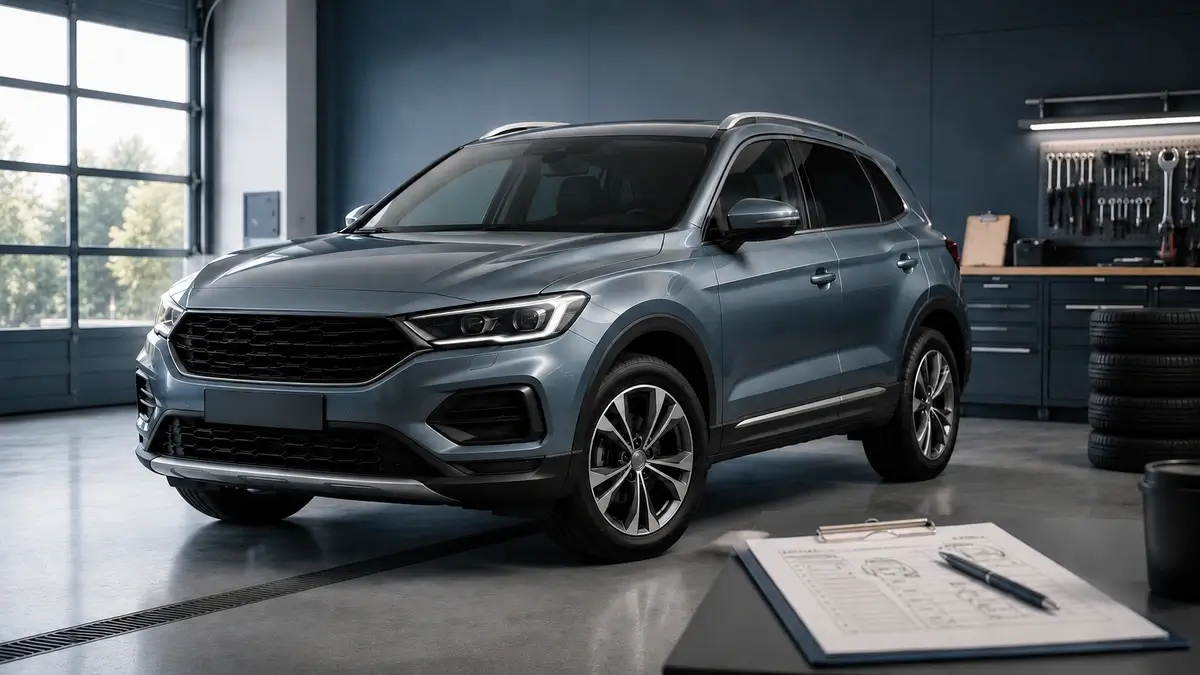
Subaru Crosstrek reliability is generally a strength, but it is not a blind-buy guarantee. The Crosstrek is a smart used small SUV when the service records are solid, the tires match, the CVT feels normal, recalls are checked, and the price fits mileage and condition.
The safe answer is simple: shortlist a used Crosstrek if you want standard AWD, hatchback-like size, useful ground clearance, and reasonable ownership costs. Be more cautious if records are thin, tires are mismatched, the CVT feels rough, or the seller avoids inspection questions.
- Choose a used Crosstrek if you want a small SUV with standard AWD and daily usability.
- Be cautious with high-mileage examples unless maintenance is well documented.
- Skip neglected cars, mismatched tires, unresolved recalls, warning lights, or rough CVT behavior.
- Compare it against the Mazda CX-30 or Honda HR-V if you do not truly need Subaru’s AWD setup.
What goes wrong if you pick wrong: you can turn a generally dependable small SUV into an expensive ownership mistake by buying a neglected example.
Fastest safe default: buy the cleanest, best-documented Crosstrek you can afford, not the cheapest one.
Quick Verdict: Is the Subaru Crosstrek Reliable Enough to Buy Used?
Yes, the Subaru Crosstrek is reliable enough to buy used for the right buyer. This is not the lowest-maintenance small SUV for everyone, but it is a strong choice for buyers who value AWD traction, simple practicality, and long-term usefulness.
The Crosstrek’s case is strongest when you can verify maintenance and avoid obvious warning signs. A clean vehicle history report helps, but it does not replace service records, a recall check, a tire inspection, a road test, and a pre-purchase inspection.
A used Crosstrek makes less sense if you want the lowest possible tire cost, the quickest acceleration, or the simplest ownership path. Subaru’s AWD setup gives the Crosstrek much of its appeal, but it also makes tire condition and maintenance discipline more important.
| Buyer question | Used-buying verdict | Why it matters |
|---|---|---|
| Is the Crosstrek generally reliable? | Yes, with condition checks | Broad reliability signals do not replace car-specific inspection |
| Is it cheap to own? | Depends on the specific car | Fuel economy, tires, mileage, service history, condition, and local repair costs can materially change ownership cost |
| Is the CVT a deal-breaker? | No, but it must be tested | Smooth operation matters more than forum fear |
| Does AWD help? | Yes, for traction-focused buyers | It is valuable in snow, rain, dirt roads, and rougher commutes |
| What is the biggest buying risk? | Neglect | A poorly maintained Crosstrek can erase the model’s reliability advantage |
If your main question is which exact model years to avoid, read the dedicated Subaru Crosstrek years to avoid guide after this reliability overview. This page focuses on ownership risk, cost to own, and inspection logic.
Subaru Crosstrek Reliability Snapshot
The Crosstrek has a positive reliability profile, but the practical takeaway is not “buy any Crosstrek.” The stronger takeaway is that the model can be a low-risk used small SUV when condition and maintenance support the purchase.
Model-wide ratings and cost averages are not enough to judge one used Crosstrek. For the car you are actually considering, service records, matching tires, normal CVT behavior, VIN recall status, warning lights or stored codes, and a pre-purchase inspection are more useful buying evidence.
The Crosstrek’s practical strengths are straightforward:
- It gives buyers standard AWD without moving into a larger SUV.
- It has a practical size for commuting, parking, and light outdoor use.
- Its used-buying case is strongest when maintenance history and current condition support the purchase.
Reliability confidence drops when you see:
- Poor or missing maintenance records.
- Mismatched or uneven tires.
- Warning lights or stored diagnostic codes.
- Unclear CVT service history on higher-mileage cars.
- Suspension noise, wheel-bearing noise, or vibration during the road test.
- Open recalls or incomplete service campaigns.
Brand reputation gets the Crosstrek onto the shortlist. Service history decides whether a specific car belongs in your driveway.
Subaru Crosstrek Reliability by Year: What Used Buyers Should Watch
Subaru Crosstrek reliability by year matters, but it should not take over this article. Year selection is one layer of the decision. Condition, mileage, service records, tires, recalls, and inspection results still matter.
Subaru Crosstrek NHTSA Generation Evidence Snapshot
| Generation / years | Owner compl. | Unique recall | Mfr. Comms. | Ownership-risk reading |
|---|---|---|---|---|
| Gen 1 – 2012-2017 | 544 | 4 | 1,928 | Older records and age make service history, tire matching, CVT behavior, leaks, and recall status important inspection points. |
| Gen 2 – 2018-2023 | 706 | 10 | 1,949 | Official-action and complaint volume support stricter VIN checks and road-test attention, especially around powertrain, visibility, electrical, and suspension items. |
| Gen 3 – 2024-2026 | 147 | 2 | 258 | Early exposure only. Use the counts for recall and inspection prompts, not long-term reliability proof. |
Table Note: These are raw NHTSA records for U.S.-market gas-model Crosstrek data from 2012-2026, not defect rates or reliability scores. Complaint and communication totals accumulate over time, and investigations are 0 across the listed years.
Older Crosstreks usually need closer inspection because age brings wear. That does not automatically make them bad buys. It means the price must leave room for catch-up maintenance, tires, suspension work, and age-related repairs.
Newer Crosstreks may feel safer because they are newer, but they still need a recall check and inspection. A newer car with poor maintenance or collision history can be worse than an older one with clean records.
IIHS Safety Context That Matters When Comparing Used Years
Safety is separate from reliability, but it can still affect a used-year decision. IIHS changed and strengthened some test protocols over time, so an earlier-test G should not be treated as directly interchangeable with a result from a newer updated test.
| Model year | Earlier-test results shown | Updated-test results shown | Headlights | Buyer takeaway |
|---|---|---|---|---|
| 2018 | Moderate overlap: G; side: G | Updated side: P; updated moderate overlap not displayed | G / A / M / P depending on trim or option | Trim, equipment, and test family matter; one headline rating does not tell the whole story. |
| 2022 | Moderate overlap: G; side: G | Updated moderate overlap: P; updated side: P | G / P depending on trim or option | Earlier G results coexist with P results in the updated tests, so the test family must stay visible. |
| 2024 | Moderate overlap: G | Updated moderate overlap: M; updated side: A | G | Newer test-era results are still mixed, so model year alone is not a complete safety comparison. |
Table Note: G = Good, A = Acceptable, M = Marginal, P = Poor. IIHS test families and criteria changed over time, so these results should not be blended into one cross-era safety score or used as a reliability score. The 2019–2023 Crosstrek Plug-In Hybrid has separate IIHS vehicle pages and is not represented by this base-Crosstrek table.
| Used Crosstrek group | Reliability takeaway | What to check before buying |
| Older XV Crosstrek years | Buy only with strong records | Maintenance history, tire matching, suspension noise, fluid leaks, recall status |
| Mid-cycle used years | Often worth considering if clean | CVT road-test feel, brake history, tire condition, service intervals |
| Newer used Crosstreks | Stronger age advantage, still not automatic | Warranty status, recall completion, accident history, electronic features |
| High-mileage examples | Condition matters more than reputation | Records, PPI, tires, AWD behavior, CVT behavior, cooling system, leaks |
Do not use the year alone as a shortcut. The better rule is this: the right year with poor care is still risky.
If you are comparing Crosstrek years directly, read the full Subaru Crosstrek years to avoid and best years to buy guide. Keep this page focused on reliability, ownership cost, and used-buying checks.
Common Subaru Crosstrek Problems to Check Before Buying
Searches for Subaru Crosstrek common problems often lead to owner forums, complaint pages, and problem lists. Those can reveal buyer concerns, but they should not be treated as proof that every Crosstrek has the same issue.
The useful move is to turn problem areas into inspection steps. You are not trying to diagnose the entire model line. You are deciding whether one used Crosstrek is safe to buy.
Subaru Crosstrek Common Owner-Reported Problem Areas
| Owner-reported problem area | Complaint count | Generation | Inspection trigger |
|---|---|---|---|
| Visibility / wipers | 331 | Gen 2 | Check windshield, glass, wiper operation, visibility issues, and related camera or sensor function. |
| Electrical | 201 | Gen 2 | Check warning lights, battery or charging symptoms, infotainment function, and electronic features. |
| Engine | 151 | Gen 1 | Check oil-level history, cold-start behavior, leaks, overheating symptoms, and repair records. |
| Powertrain / Transmission | 111 | Gen 1 | Road-test the CVT for shudder, hesitation, whining, slipping feel, and warning lights. |
| Airbags / seatbelts / structure | 77 | Gen 1 | Check airbag lights, seatbelt function, crash repair quality, and history-report consistency. |
| Brakes | 56 | Gen 1 | Check brake feel, warning lights, brake-light switch recall status, and service records. |
| Steering | 55 | Gen 1 | Check steering assist, noises, wandering, vibration, and alignment symptoms. |
| Suspension / wheels | 35 | Gen 1 | Check wheel-bearing noise, clunks, uneven tire wear, alignment, and tire matching. |
Table note: Complaint counts are owner-filed NHTSA records grouped by the primary reported component, not confirmed defect rates. “Unknown / other” records are excluded from this reader table because they do not create a specific inspection trigger.
Pay closest attention to issues that change the purchase decision. A weak infotainment screen may be annoying. Rough CVT behavior, unresolved recalls, mismatched tires, or clear suspension noise can become much more expensive.
| Area to check | Risk level | What to look for | Used-buying action |
| CVT behavior | High if symptoms appear | Shuddering, slipping feel, delayed engagement, whining, warning lights | Walk away unless a specialist inspection clears it |
| AWD and tires | Medium to high | Mismatched brands, uneven tread, different tire sizes, vibration | Budget for tires or skip if drivetrain symptoms appear |
| Suspension and wheel bearings | Medium | Humming, clunks, uneven tire wear, poor alignment | Use inspection findings to negotiate or walk away |
| Electrical and infotainment items | Low to medium | Screen issues, camera faults, warning lights, driver-assist warnings | Verify function before purchase |
| Brake and recall-related items | High if unresolved | Open recall, warning lights, poor braking feel | Check NHTSA and Subaru recall status before buying |
| Oil or fluid leaks | Medium to high | Wet engine areas, transmission leaks, coolant smell | Require inspection and repair estimate |
The wrong response to problem research is panic. The right response is a tighter inspection.
Subaru Crosstrek Maintenance Cost and Cost to Own
Subaru Crosstrek ownership cost depends heavily on the specific car. Standard AWD makes tire condition and matching especially important, while mileage, service history, current condition, and deferred work found during inspection can change what you spend after purchase.
No single model-wide repair-cost figure can predict what one used Crosstrek will cost. Before buying, use service records and the pre-purchase inspection to identify catch-up work, then get written local estimates for anything expensive.
EPA Fuel Economy Differences That Can Change Running Cost
Fuel economy is one ownership-cost variable you can compare objectively, but the useful comparison is configuration-to-configuration rather than a model-year average. EPA/FuelEconomy.gov records show several Crosstrek differences that can matter when choosing a used example.
| Model year and configuration | City | Highway | Combined | Buyer-useful difference |
|---|---|---|---|---|
| 2018 2.0L manual AWD | 23 | 29 | 25 | Four mpg lower combined than the same-year automatic. |
| 2018 2.0L automatic AWD | 27 | 33 | 29 | The transmission choice materially changes fuel economy in this model year. |
| 2021 2.0L automatic AWD | 28 | 33 | 30 | One mpg higher combined than the same-year 2.5L automatic. |
| 2021 2.5L automatic AWD | 27 | 34 | 29 | The larger engine carries only a modest combined-MPG difference in this matched comparison. |
| 2024 2.5L automatic AWD | 26 | 33 | 29 | Useful same-year baseline for the Wilderness configuration. |
| 2024 Wilderness 2.5L automatic AWD | 25 | 29 | 27 | Two mpg lower combined than the same-year non-Wilderness 2.5L configuration. |
The plug-in-hybrid Crosstrek needs separate treatment. For 2023, EPA records show 35 combined MPG in charge-sustaining operation and 90 combined MPGe in charge-depleting operation. MPG and MPGe are different metrics and should not be merged or compared as though they were the same unit.
Table Note: EPA city/highway/combined estimates are shown in MPG unless MPGe is explicitly stated. These selected rows show buyer-relevant configuration differences, not the full Crosstrek database. Actual fuel economy varies with driving, weather, vehicle condition, and other factors. Fuel economy is one running-cost input, not a total ownership-cost or reliability score.
| Cost area | Why it matters | Buyer rule |
| Routine maintenance | Oil, filters, inspections, and tire rotations protect long-term reliability | Avoid cars with long gaps in service history |
| Tires | AWD ownership makes tire condition more important | Inspect all four tires as a set |
| 30,000-mile and 60,000-mile services | Bigger mileage services can affect your first-year cost | Ask for proof or budget for catch-up service |
| CVT and drivetrain checks | Problems can be expensive if ignored | Test-drive carefully and get a PPI |
| Suspension and wheel bearings | Wear can show up as noise or uneven tire wear | Negotiate only when repair cost is clear |
| Recalls and service campaigns | Open recalls can affect safety and ownership confidence | Check by VIN before purchase |
Manufacturer Coverage Checks That Can Change Repair Exposure
Generic factory-warranty details are less useful here than a few special Subaru coverage programs that can materially change the cost of a qualifying repair. Do not assume model year alone proves eligibility or that coverage remains today.
For a quick model-year screen, use CarMerit’s Manufacturer Special Coverage Lookup to see which manufacturer-issued warranty extensions or special coverage programs may match a Crosstrek before confirming final VIN-specific eligibility with Subaru.
- Specified 2013–2017 and 2019 CVTs: Subaru issued separate programs extending specified CVT coverage from 5 years/60,000 miles to 10 years/100,000 miles, whichever came first. Check the applicable 2013–2015 notice, 2016–2017 notice, or 2019 non-hybrid notice. Exact engine, CVT, VIN, mileage, and original warranty start date matter.
- Certain 2018–2020 Crosstreks: Subaru’s low-pressure fuel-pump program extended coverage for the specified Additional Vehicles population to 15 years with unlimited mileage from the original warranty start date. Exact VIN, production date, and program classification control eligibility.
- Certain 2021 Crosstreks: Subaru’s thermo control valve program extended qualifying coverage to 15 years/150,000 miles, whichever occurs first. Exact VIN and Vehicle Coverage Inquiry are required.
- 2019–2023 Crosstrek PHEV: Subaru’s front exhaust pipe program extended qualifying Federal Emissions defect coverage to 15 years/150,000 miles, whichever occurs first. It applies only to the specified PHEV and emissions-eligibility scope.
These programs are not proof of failure frequency or reliability, and they do not guarantee that a used vehicle is currently covered. Verify the VIN, original warranty start date, mileage, exact component or powertrain, diagnosis requirements, and Subaru Vehicle Coverage Inquiry before relying on any program.
Methodology and assumptions: This article uses U.S. used-car buyer logic, NHTSA complaint and recall evidence already presented on this page, official IIHS safety ratings, EPA/FuelEconomy.gov fuel-economy estimates, Subaru owner materials and manufacturer coverage notices, official recall lookup paths, and inspection-based risk control. IIHS evidence is used only as safety context, EPA estimates remain configuration-specific, and Subaru coverage programs are treated as vehicle-specific eligibility checks—not reliability proof or guaranteed remaining warranty. No model-wide repair-cost figure is treated as a guaranteed cost for a specific vehicle.
This article does not include local used-price ranges, dealer quotes, insurance quotes, financing terms, or tax/title/license costs.
The best ownership-cost move is not chasing the lowest sale price. It is buying the best-maintained Crosstrek at a fair price.
CVT, AWD, Tires, and Long-Term Ownership Risk
The CVT is one of the biggest anxiety points for used Crosstrek shoppers. Do not turn that into an automatic rejection. Treat it as a required inspection item.
On a test drive, the CVT should feel smooth and predictable. It should not shudder, surge, hesitate badly, whine loudly, or trigger warning lights. If the seller says “they all do that,” do not accept the explanation without a qualified inspection.
Subaru owner materials and AWD ownership guidance make tire matching important, so verify that all four tires are the same size, similar in wear, and appropriate for the vehicle. Before buying, inspect the full tire set instead of judging one tire at a time.
A fresh pair on one axle with worn tires on the other axle is a warning sign. It may mean the next owner inherits tire cost, alignment questions, or possible drivetrain concern.
Higher-mileage Crosstreks can still be worth buying, but only under stricter conditions:
- The maintenance history is detailed.
- The CVT behavior is clean.
- Tires match and wear evenly.
- Suspension noise is absent or already priced in.
- Recalls are checked by VIN.
- The seller allows a pre-purchase inspection.
- The price leaves room for age-related repairs.
The PPI becomes non-negotiable when mileage is high, records are thin, tires look uneven, or the road test feels even slightly wrong.
Who Should Buy a Used Subaru Crosstrek?
A used Subaru Crosstrek is a good fit if you want a small SUV that feels manageable in the city but still gives you standard AWD confidence. It works well for commuters, students, light outdoor-use buyers, snow-belt drivers, and shoppers who want hatchback practicality with extra ride height.
It is strongest for buyers who value traction and practicality more than speed. If your roads are wet, snowy, hilly, or poorly maintained, the Crosstrek’s AWD setup can be a real advantage.
You should put the Crosstrek high on your list if:
- You want a small SUV, not a larger compact SUV.
- You want standard AWD without moving into a Subaru Forester.
- You care more about traction than acceleration.
- You are willing to inspect tires and service records carefully.
- You want a practical used vehicle for commuting, errands, weather, and light adventure use.
If you are choosing between small SUVs, compare the Crosstrek with the Mazda CX-30 before committing. The Subaru Crosstrek vs Mazda CX-30 comparison is the better next page if you are weighing Subaru AWD against Mazda’s more premium feel.
Who Should Skip a Used Subaru Crosstrek?
Skip the Crosstrek if you want the lowest-maintenance ownership path and do not need AWD. A front-wheel-drive alternative may be simpler and cheaper to own if your driving conditions are mild.
Also skip it if you want strong acceleration. Many Crosstrek shoppers accept modest power because the car fits their weather, utility, and size needs. If that trade-off bothers you on the test drive, it will probably bother you after purchase.
Be cautious or walk away if:
- The seller has no service records.
- The tires are mismatched or unevenly worn.
- The CVT feels rough during low-speed driving or highway merging.
- There are unresolved warning lights.
- A recall check shows incomplete work.
- The car has accident history that affects alignment, suspension, or drivetrain confidence.
- The seller refuses a pre-purchase inspection.
If you like the Crosstrek’s size but want a different ownership profile, compare it against Honda’s small SUV route. The Subaru Crosstrek vs Honda HR-V comparison can help you decide whether Subaru’s AWD advantage is worth the extra inspection discipline.
Used Subaru Crosstrek Inspection Checklist
A used Subaru Crosstrek inspection checklist should be more specific than a normal used-car walkaround. The Crosstrek’s AWD setup, tire sensitivity, CVT concerns, and outdoor-use appeal create extra buying checks.
Start with the paperwork. Use Subaru’s vehicle resources page to check owner materials for the exact model year. Then use Subaru’s vehicle recall page and the NHTSA recall lookup to check for open safety recalls.
Before applying the Crosstrek’s AWD, tire, and CVT checks to a specific listing, confirm that you are researching the right vehicle. Run the Crosstrek’s VIN through CarMerit and compare the returned vehicle details with the seller’s description and paperwork. Once they match, use the checklist below to judge tire consistency, drivetrain behavior, maintenance history, recall status, and the individual car’s condition.
| Check | What to verify | Why it matters |
| VIN recall lookup | Open recalls and completion status | Recall status can affect safety and buyer confidence |
| Service records | Oil changes, inspections, mileage services, tire rotations | Records show whether the car was maintained, not just cleaned |
| Tire set | Same size, similar wear, no mismatch, no uneven wear | AWD systems are less forgiving of tire mismatch |
| Road test | Smooth CVT behavior, no warning lights, no harsh vibration | Driveability issues can point to expensive repairs |
| Suspension | Clunks, humming, wandering, uneven tire wear | Outdoor use and age can expose wear |
| Fluid leaks | Engine, transmission, coolant, differential areas | Leaks change the ownership-cost picture |
| Electronics | Infotainment, backup camera, EyeSight if equipped, warning lights | Small faults can become negotiation points |
| Vehicle history | Accidents, title status, mileage consistency | A clean report supports but does not replace inspection |
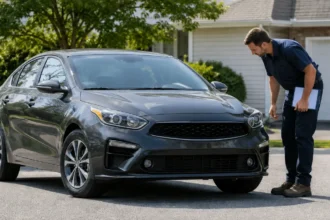
| Pre-purchase inspection | Independent mechanic review | Best final filter before money changes hands |
Do not skip the PPI just because the seller seems honest. The inspection is not about distrust. It is about finding expensive problems before you own them.
Final Recommendation
The Subaru Crosstrek is a smart used small SUV if you want standard AWD, manageable size, useful practicality, and reasonable ownership costs. The best examples are clean, well documented, recall-checked, and mechanically smooth.
Do not buy one only because Subaru has a strong reputation. Subaru Crosstrek reliability depends heavily on the exact car’s service history, tire condition, CVT behavior, mileage, and inspection results.
Buy a used Crosstrek if:
- Service records are available.
- All four tires match properly and wear evenly.
- The CVT feels smooth on a full road test.
- Recalls are checked by VIN.
- There are no unresolved warning lights.
- The price leaves room for normal maintenance.
- A pre-purchase inspection confirms the car is sound.
Skip it if:
- Records are poor or missing.
- Tires are mismatched.
- Transmission behavior feels rough.
- Suspension noise appears without a repair estimate.
- Accident history affects confidence.
- Open recalls are not addressed.
- The seller pushes back against inspection.
For broader shopping, use the Best Used Small SUVs guide if you are still building a shortlist. Use Most Reliable Used Cars if reliability is your top filter across multiple vehicle types.
If you want a more premium-feeling small SUV, compare the Crosstrek with Mazda’s option and read the Mazda CX-30 reliability and cost to own guide before choosing.
Frequently Asked Questions
Are Subaru Crosstreks reliable?
Yes, Subaru Crosstreks are generally reliable enough to consider used, but condition matters. The safest buys have service records, clean recall status, matching tires, normal CVT behavior, and a clean inspection.
Is the Subaru Crosstrek expensive to maintain?
There is no reliable one-number answer for every used Crosstrek. Ownership cost changes with model year, mileage, condition, service history, tires, fuel economy, local labor rates, and any deferred work found during inspection.
Use the car’s records and a pre-purchase inspection to identify likely near-term work, then get local estimates for anything expensive.
What are the most common Subaru Crosstrek problems?
Used buyers should check CVT behavior, tire matching, suspension noise, wheel-bearing noise, brake and recall status, electronics, fluid leaks, and service history. Treat owner complaints as inspection prompts, not automatic proof that every Crosstrek has the issue.
Which Subaru Crosstrek years are most reliable?
The most reliable used Crosstrek for you is the cleanest, best-maintained example in your budget. Year matters, but service records, mileage, recall completion, tire condition, and inspection results matter just as much.
Which Subaru Crosstrek years should used buyers avoid?
That is a model-year decision, so use the dedicated Crosstrek years guide. For this reliability article, the better rule is to avoid poorly documented, neglected, accident-damaged, or mechanically questionable examples from any year.
How long do Subaru Crosstreks last?
A well-maintained Crosstrek can be a long-term used vehicle, but mileage alone does not prove condition. A high-mileage example needs records, a clean road test, matching tires, no warning lights, and a strong pre-purchase inspection.
Does the Subaru Crosstrek CVT have problems?
Some used buyers worry about the CVT, but the safe approach is inspection, not panic. Test for smooth engagement, no shuddering, no warning lights, no unusual whining, and no delayed response. Walk away if symptoms appear and the seller cannot document repairs.
Is a high-mileage Subaru Crosstrek worth buying?
A high-mileage Crosstrek can be worth buying if the price is fair and records are strong. It becomes risky when maintenance is unclear, tires are mismatched, the CVT feels rough, suspension noises appear, or the seller refuses inspection.
What should I check before buying a used Subaru Crosstrek?
Check service records, VIN recall status, tire matching, CVT behavior, warning lights, suspension noise, fluid leaks, accident history, and electronics. Then get a pre-purchase inspection before committing.
Is the Subaru Crosstrek better than the Mazda CX-30 for reliability?
Not automatically. The Crosstrek is stronger if you value standard AWD and outdoor-friendly practicality. The Mazda CX-30 may fit better if you want a nicer cabin and sharper road feel. Compare the two directly before buying.