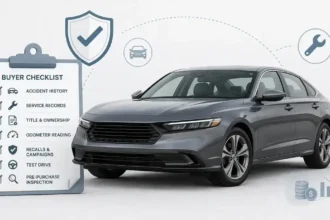


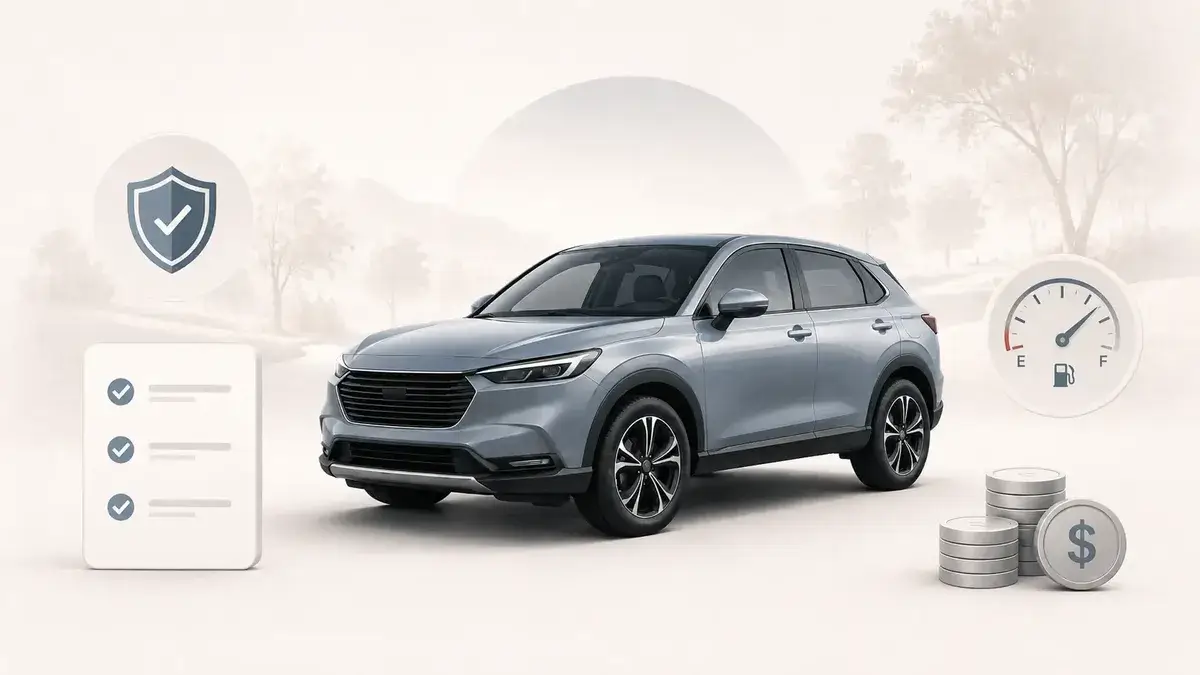
Honda HRV reliability is strong enough to keep the HR-V on a used compact SUV shortlist, but only if the specific vehicle has clean maintenance records, no unresolved recall issues, and a price that reflects its age, mileage, and condition.
The HR-V is not the roomiest, quickest, or most refined small SUV. Its case is simpler: predictable ownership, useful fuel economy, easy city driving, and generally manageable maintenance costs.
That makes it a good fit for commuters, small households, and buyers who want a practical used SUV without moving up to a larger Honda CR-V. Do not buy one on Honda reputation alone. A used HR-V still needs clean service records, smooth CVT behavior, clear recall status, and a proper pre-purchase inspection.
Is the Honda HR-V Reliable Enough to Buy Used?
Yes, the Honda HR-V is reliable enough to buy used, but it is not an automatic yes.
The better answer depends on the exact year, mileage, maintenance history, drivetrain, and asking price. A clean HR-V with complete records can be a smart low-drama used buy. A neglected one with vague service history, odd transmission behavior, or unresolved recalls should not get a pass just because it wears a Honda badge.
The HR-V works best when you buy the right example, not just the right model.
| Buyer Type | Honda HR-V Fit |
|---|---|
| City commuter | Strong fit because it is compact, easy to park, and usually fuel-conscious. |
| Small household | Good fit if cargo and rear-seat needs are modest. |
| Budget-focused used buyer | Good fit if maintenance records are strong and the price is fair. |
| Highway-heavy driver | Mixed fit because power and refinement are not its strongest points. |
| Cargo-focused family | Weak fit compared with larger options like the Honda CR-V. |
| Risk-averse buyer | Good only with records, clean inspection, and recall verification. |
| Performance-focused buyer | Poor fit because the HR-V is tuned for practicality, not speed. |
Honda HR-V Reliability Snapshot by Generation
Used HR-V shopping gets clearer when you split the model into older and newer groups.
Older HR-Vs have more real-world history, but they are also more exposed to age, mileage, deferred maintenance, tire and brake wear, and prior-owner treatment. Newer HR-Vs have less age-related wear, but long-term reliability data is naturally thinner because they have had less time on the road.
The 2023 redesign matters because Honda described the redesigned HR-V as having a larger, more responsive engine, a significantly stronger structure, and a new independent rear suspension. That does not automatically make every newer HR-V a better used buy. It means the ownership questions change.
NHTSA Generation Evidence Snapshot for Honda HR-V
| Generation / years | NHTSA complaints | Recall rows | Investigations | Manufacturer communications |
|---|---|---|---|---|
| Gen 1 / 2016-2022 | 936 | 24 | 5 | 525 |
| Gen 2 / 2023-2026 | 833 | 8 | 2 | 103 |
Table Note: These are raw NHTSA records for the 2016-2026 gas Honda HR-V, not sales-adjusted defect rates or reliability scores. Gen 1 has more years of road exposure, while Gen 2 is newer and still building long-term ownership history.
| Ownership Factor | 2016–2022 Honda HR-V | 2023+ Honda HR-V |
|---|---|---|
| Main buyer concern | Age, mileage, prior maintenance, and older used-car wear. | Newer platform, fewer long-term data points, and higher purchase price. |
| Reliability read | More real-world ownership history, but condition varies widely. | Promising, but still developing as mileage accumulates. |
| Cost risk | Tires, brakes, fluids, suspension wear, and CVT service history. | Depreciation, insurance, newer repair costs, and recall checks. |
| Buyer advantage | Lower purchase price and more used-market choice. | Newer design, updated chassis, and later safety or tech package. |
| Buyer caution | Do not buy without records and inspection. | Do not overpay just because it is newer. |
IIHS Safety Differences That Matter to Used Buyers
IIHS ratings do not measure reliability or predict what will happen in every crash, but they can reveal meaningful safety differences between HR-V generations, build periods, and headlight configurations.
| HR-V years | Material IIHS results | What it means for a used buyer |
|---|---|---|
| 2016–2018 | Acceptable in the driver-side small-overlap test and Good in the original moderate-overlap test. The original side rating was Acceptable for 2016–2017 models built before April 2017 and Good for 2017–2022 models built after March 2017. Headlights were Poor. | Check the build date on early 2017 examples. Buyers who drive frequently at night should also evaluate actual headlight performance instead of assuming every trim performs alike. |
| 2019–2020 | Good driver- and passenger-side small-overlap ratings. The updated side rating applying to 2017–2022 models was Poor. Headlight ratings varied by trim, from Acceptable on the Touring configuration to Marginal or Poor on other configurations. | These years improved small-overlap protection, but trim-specific headlights and the tougher updated side test remain relevant comparison points. |
| 2021–2022 | Good driver- and passenger-side small-overlap ratings, but Poor in both the updated moderate-overlap and updated side tests. Headlight performance still varied by trim. | Strong results in older test modes do not erase weaknesses revealed by newer IIHS tests. Compare the exact trim and do not treat one Good rating as an overall safety verdict. |
| 2023–2026 | Good in the driver- and passenger-side small-overlap, updated moderate-overlap, and updated side tests. Headlights were Acceptable across trims. | The redesigned generation has the clearest IIHS advantage for buyers who prioritize newer crash-test performance and more consistent headlight results. |
Table Note: IIHS uses Good, Acceptable, Marginal, and Poor ratings. Test procedures and award criteria changed over time, so results from different test generations should not be blended into an overall score or used as a reliability rating.
Honda HR-V Cost to Own: What Used Buyers Should Budget
The Honda HR-V cost to own is not just repair bills.
A buyer should think in buckets: maintenance, repairs, fuel, insurance, depreciation, tires, brakes, and inspection risk. The HR-V usually looks reasonable in these areas, but the exact cost depends on mileage, location, shop labor rates, insurance profile, trim, drivetrain, and previous maintenance.
A single national annual or 10-year cost estimate is not a dependable budget for a specific used HR-V. Mileage, location, labor rates, insurance, drivetrain, current wear, previous maintenance, and the intended ownership period can change the result substantially.
Build the purchase budget around the actual vehicle instead: identify immediate tire, brake, battery, fluid, and diagnostic needs; verify service and recall history; and obtain written estimates for anything found during the inspection. A higher-priced HR-V with clean records and no catch-up work can be cheaper to own than a discounted example with unresolved needs.
| Cost Area | Honda HR-V Ownership Reality |
|---|---|
| Routine maintenance | Usually manageable if oil changes, filters, fluids, brakes, and tires are kept current. |
| Repairs | Do not assume a generic repair-cost average applies to the listing. Diagnose warning signs and price any known repair needs before purchase. |
| Fuel | Generally a strength, especially for city and commuter buyers. |
| Insurance | Depends on state, driver profile, coverage level, and model year. |
| Depreciation | Newer HR-Vs carry more depreciation exposure than older used examples. |
| Tires and brakes | Easy to underestimate during used-car shopping. |
| Inspection risk | A cheap listing can become expensive if it needs immediate catch-up maintenance. |
Honda HR-V MPG by Year and Drivetrain
Official EPA FuelEconomy.gov data shows that fuel economy varies enough by generation, drivetrain, and transmission to affect the ownership decision.
The main breakpoint is the 2023 redesign. Compared with 2022, the 2023 HR-V fell from 30 to 28 mpg combined with front-wheel drive and from 28–29 to 27 mpg combined with all-wheel drive. Among 2016–2018 front-wheel-drive models, the automatic is rated 3 mpg higher combined than the manual. EPA also lists two automatic AWD configurations for 2019–2022, so buyers should match the exact vehicle rather than assume one figure applies to every AWD example.
2WD / Front-Wheel-Drive Configurations
| Model year | Configuration | City MPG | Highway MPG | Combined MPG |
|---|---|---|---|---|
| 2016 | FWD automatic | 28 | 34 | 31 |
| 2016 | FWD 6-speed manual | 25 | 33 | 28 |
| 2017 | FWD automatic | 28 | 34 | 31 |
| 2017 | FWD 6-speed manual | 25 | 33 | 28 |
| 2018 | FWD automatic | 28 | 34 | 31 |
| 2018 | FWD 6-speed manual | 25 | 33 | 28 |
| 2019 | FWD automatic | 28 | 34 | 30 |
| 2020 | FWD automatic | 28 | 34 | 30 |
| 2021 | FWD automatic | 28 | 34 | 30 |
| 2022 | FWD automatic | 28 | 34 | 30 |
| 2023 | FWD automatic | 26 | 32 | 28 |
| 2024 | FWD automatic | 26 | 32 | 28 |
| 2025 | FWD automatic | 26 | 32 | 28 |
| 2026 | FWD automatic | 26 | 32 | 28 |
4WD / All-Wheel-Drive Configurations
| Model year | Configuration | City MPG | Highway MPG | Combined MPG |
|---|---|---|---|---|
| 2016 | AWD automatic | 27 | 32 | 29 |
| 2017 | AWD automatic | 27 | 31 | 29 |
| 2018 | AWD automatic | 27 | 31 | 29 |
| 2019 | AWD automatic, AV-S7 EPA configuration | 26 | 31 | 28 |
| 2019 | AWD automatic, variable-ratio EPA configuration | 27 | 31 | 29 |
| 2020 | AWD automatic, AV-S7 EPA configuration | 26 | 31 | 28 |
| 2020 | AWD automatic, variable-ratio EPA configuration | 27 | 31 | 29 |
| 2021 | AWD automatic, AV-S7 EPA configuration | 26 | 31 | 28 |
| 2021 | AWD automatic, variable-ratio EPA configuration | 27 | 31 | 29 |
| 2022 | AWD automatic, AV-S7 EPA configuration | 26 | 31 | 28 |
| 2022 | AWD automatic, variable-ratio EPA configuration | 27 | 31 | 29 |
| 2023 | AWD automatic | 25 | 30 | 27 |
| 2024 | AWD automatic | 25 | 30 | 27 |
| 2025 | AWD automatic | 25 | 30 | 27 |
| 2026 | AWD automatic | 25 | 30 | 27 |
Table Note: All figures are official EPA city/highway/combined MPG estimates for regular gasoline. EPA used 2WD/4WD terminology for 2016 and FWD/AWD for later years; the table uses FWD/AWD consistently for clarity. The 2016 figures are EPA’s revised historical estimates under its 2017 calculation update. Two listed AWD configurations can share a model year, so verify the exact vehicle through its window sticker or VIN-specific EPA listing. EPA estimates are comparison tools, not guaranteed real-world mileage or complete ownership-cost projections.
Common Honda HR-V Problems to Check Before Buying
The goal is not to scare you away from the HR-V. The goal is to separate normal used-car wear from problems that should change the buying decision.
NHTSA complaint components and recall themes add visibility and wiper function, electrical items, restraint-related checks, steering feel, powertrain behavior, fuel-system recalls, and braking performance to the inspection list. Owner forums and search results can still surface CVT, battery, suspension, and noise concerns, but those should be treated as clues to verify through records, inspection results, recall checks, and credible repair references.
NHTSA Reported Problem Areas to Use as Inspection Triggers
| Problem area | Complaint count | Affected years | Generation | Used-buyer check |
|---|---|---|---|---|
| Visibility / wipers | 407 | 2016-2019, 2022-2026 | Gen 1, Gen 2 | Check windshield condition, wiper operation, visibility complaints, rear-camera function, and defroster behavior. |
| Electrical | 227 | 2016-2026 | Gen 1, Gen 2 | Test battery behavior, warning lights, infotainment, locks, windows, cameras, and accessories. |
| Airbags / seatbelts / structure | 160 | 2016-2026 | Gen 1, Gen 2 | Verify recall completion and inspect warning lights, seatbelt function, and prior accident history. |
| Steering | 145 | 2016-2017, 2019, 2021-2025 | Gen 1, Gen 2 | On the test drive, check for sticky steering, uneven effort, pull, warning lights, and completed steering recalls. |
| Powertrain / transmission | 139 | 2016-2022, 2024-2026 | Gen 1, Gen 2 | Test CVT response at low speed, city speed, and highway speed; ask for fluid-service records. |
| Fuel system | 129 | 2016-2020, 2022-2025 | Gen 1, Gen 2 | Verify fuel-pump recall status where applicable and watch for stall, hesitation, or hard-start symptoms. |
| Brakes | 81 | 2016-2025 | Gen 1, Gen 2 | Test braking feel, inspect pads/rotors, and confirm brake-related recall work where applicable. |
Table note: Complaint counts are owner-filed NHTSA records by primary component. They are inspection triggers, not proof that every HR-V has the issue or that the issue is confirmed on a specific listing.
For any used HR-V, start with a VIN recall check. NHTSA lets buyers search recalls by VIN, license plate, or year, make, and model. Honda Owners also provides VIN-specific recall information.
Honda HR-V Recall Themes That Need VIN Verification
| Recall theme | Affected HR-V years | Campaign numbers | Recall rows | Used-buyer VIN check |
|---|---|---|---|---|
| Camera system / back-over prevention | 2019-2022 | 23V046000, 24V384000 | 8 | Confirm the rear camera works and verify software remedy completion by VIN. |
| Fuel pump / fuel delivery | 2018-2020, 2023 | 20V314000, 21V215000, 23V858000 | 7 | Confirm fuel-pump recall completion, especially on listings with hesitation or stall history. |
| Airbag deployment / restraint | 2019-2022 | 24V064000, 26V332000 | 6 | Verify completed seat-weight sensor / restraint-related recall work before purchase. |
| Brake caliper / braking performance | 2016, 2018, 2019 | 18V777000 | 3 | Check brake service history and confirm any applicable recall repair was completed. |
| Steering gearbox / sticky steering | 2023-2025 | 24V744000 | 3 | Verify recall completion and test for sticky or uneven steering effort. |
| Seat belt / seat fastener recalls | 2023-2024 | 23V782000, 24V859000, 26V054000 | 4 | Confirm restraint and driver-seat recall completion by VIN, not by seller reassurance. |
Table note: Recall rows are campaign-year appearances in the NHTSA data. One campaign can affect multiple model years. Open-recall status and remedy completion still need VIN-level verification before buying.
Honda HR-V Maintenance Cost and Schedule Reality
The HR-V is not usually a high-maintenance vehicle, but “low maintenance” does not mean “maintenance optional.”
Honda uses a Maintenance Minder system on the HR-V. In Honda’s 2024 HR-V owner information, Maintenance Minder messages appear when engine oil life is less than 15%, and the messages notify the driver when to change the engine oil or bring the vehicle in for indicated maintenance.
That matters for used buyers because service history may not follow a simple mileage interval. You want proof that the previous owner responded to maintenance reminders, not just a seller saying “it was maintained.”
| Maintenance Item | Buyer Decision Impact |
|---|---|
| Oil and filter history | Basic reliability filter. Missing records weaken the case. |
| CVT fluid history | Important on higher-mileage examples or any HR-V with odd drive behavior. |
| Brake service | Common used-car cost that can hit immediately after purchase. |
| Tires | Uneven wear may point to alignment or suspension issues. |
| Battery | Weak battery or electrical symptoms deserve attention before purchase. |
| Recall completion | Must be checked by VIN, not assumed. |
| Inspection report | Strongest protection against surprise ownership cost. |
Honda HR-V Repair Cost Risk
The available evidence does not support one model-wide repair-cost promise for every used HR-V. The more useful question is whether the specific vehicle has symptoms, deferred work, missing records, or immediate wear that can change the ownership budget.
Do not let a generic online average override the vehicle in front of you. A clean inspection, documented service history, completed recall work, and written estimates for identified problems provide more decision value than an unsupported annual or 10-year repair figure.
Repair risk rises when the HR-V is older, higher-mileage, missing records, showing transmission symptoms, or priced suspiciously below similar listings. A low purchase price is not a win if the vehicle immediately needs tires, brakes, fluids, battery, suspension work, or diagnostic labor.
Use this rule: if the seller cannot prove maintenance and the test drive raises questions, the discount needs to be large enough to cover the risk. Otherwise, walk away.
| Repair-Risk Signal | How Serious It Is | Buyer Action |
|---|---|---|
| Clean records and smooth drive | Low concern | Continue with inspection and price check. |
| Missing service records | Medium concern | Require inspection and negotiate harder. |
| CVT hesitation, shudder, or whining | High concern | Get a specialist inspection or skip. |
| Open recall | Medium to high concern | Verify the repair path before buying. |
| Suspension clunks or uneven tire wear | Medium concern | Estimate repair cost before making an offer. |
| Dashboard warning lights | High concern | Do not buy without diagnosis. |
| Seller avoids inspection | High concern | Walk away. |
Honda Coverage Checks That Can Change a Repair Decision
Two Honda coverage extensions are relevant enough to check when shopping older HR-Vs. They are not blanket warranties: model year, trim, mileage, original purchase date, symptoms, diagnostic results, and VIN eligibility control whether coverage applies.
If an older HR-V has transmission or keyless-start symptoms, check its model year in CarMerit’s Manufacturer Special Coverage Lookup before treating the issue as a normal out-of-pocket repair; then confirm the exact VIN, diagnosis, and current Honda eligibility.
| Issue | Potentially affected HR-Vs | Official coverage terms | Used-buyer action |
|---|---|---|---|
| CVT premature drive-belt deterioration | 2016–2020 HR-Vs with a CVT, all trims | Honda extended qualifying CVT coverage to 7 years from the original purchase date or 150,000 miles, whichever came first. The official process includes PCM software, inspection, diagnosis, and VIN eligibility requirements. | Review the Honda CVT warranty-extension bulletin, ask a Honda dealer to check the VIN, and verify whether the required update or inspection was completed. |
| Keyless-start system error with DTC B12C5 | 2016–2018 EX and EX-L | Honda extended qualifying engine start/stop switch coverage to 9 years from the original purchase date or 125,000 miles, whichever came first. | If the vehicle has intermittent starting or a keyless-start warning, review the Honda keyless-start warranty-extension bulletin and request a VIN eligibility check before approving a repair or purchase. |
Table Note: Many vehicles may already be outside the applicable time or mileage limit. These extensions do not prove that every affected-year HR-V has a defect, and model-year inclusion alone does not establish coverage. Current Honda VIN records, diagnosis, and the official bulletin terms control eligibility.
Best and Riskiest Honda HR-V Years for Reliability
This is not a full year-by-year buy/avoid guide, but year logic still matters.
For used HR-V shoppers, the safer approach is to separate “more promising” from “needs more checking.” A newer HR-V may have less age-related wear, but a higher price. An older HR-V may be cheaper, but records and condition matter more.
Model-year claims should be handled carefully. Do not rely on one generic avoid-years list. Use recall checks, complaint patterns, maintenance records, mileage, and inspection results together.
| Year Group | Used-Buyer Read |
|---|---|
| 2016–2022 | More long-term ownership data, but condition varies heavily by mileage and maintenance. |
| 2023+ | Newer design with less age-related wear, but higher pricing and thinner long-term data. |
| Higher-mileage examples | Records and inspection matter more than model-year reputation. |
| Very cheap listings | Treat as risk until proven otherwise. |
| Clean one-owner examples | Stronger candidates if service records and recall status check out. |
Honda HR-V Reliability Compared With Key Alternatives
The HR-V should not be judged in isolation.
A used HR-V buyer may also consider a Toyota Corolla Cross, Honda CR-V, Mazda CX-30, Toyota C-HR, or another small SUV. The better choice depends on space, ownership cost, reliability confidence, driving feel, and price.
Use alternatives as pressure tests. If another vehicle solves your biggest HR-V concern better, it deserves a closer look.
| Alternative | Choose It Instead If… |
|---|---|
| Toyota Corolla Cross | You want a newer Toyota small-SUV option and find one with cleaner records, better pricing, or stronger buyer confidence. |
| Honda CR-V | Space matters more than small-SUV maneuverability, and you want more cargo room and rear-seat practicality. |
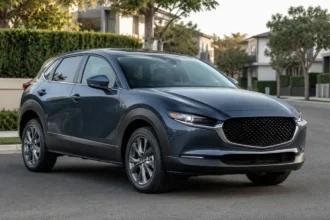
| Mazda CX-30 | Cabin feel and driving enjoyment matter more than maximum practicality. |
| Toyota C-HR | You prioritize city use and styling, and you can accept weaker cargo and visibility practicality. |
| Another used compact SUV | You find a cleaner vehicle with better records, lower miles, and stronger inspection results. |
Used Honda HR-V Buyer Checklist
This is where the decision becomes practical.
A used Honda HR-V can look good on paper and still be the wrong car if the individual listing is weak. Reliability research tells you what to watch. The inspection tells you whether this specific vehicle deserves your money.
Before you start working through the checklist, confirm that the HR-V in front of you matches the vehicle described in the listing. Run the HR-V’s VIN through CarMerit and compare the returned vehicle details with the seller’s paperwork and advertised configuration. If something does not line up, clear that up before you put weight on CVT behavior, maintenance history, recall status, or the inspection itself.
Bring this checklist to the listing, or use it before paying for a pre-purchase inspection.
| Check Item | What to Look For |
|---|---|
| VIN recall check | Run the VIN through NHTSA or Honda before buying. |
| Service records | Look for oil changes, fluid service, brake work, tire rotations, and completed recalls. |
| CVT behavior | Watch for shudder, hesitation, whining, slipping feel, or delayed response. |
| Dashboard lights | Any warning light needs diagnosis before purchase. |
| Electronics | Test camera, infotainment, locks, windows, lights, and driver-assistance features if equipped. |
| Suspension | Listen for clunks, rattles, and uneven tire noise. |
| Tires and brakes | Check remaining life because these can create immediate post-purchase cost. |
| Fluid leaks | Inspect under the vehicle and around the engine bay. |
| Test drive | Drive in city traffic, on rough pavement, and at highway speed. |
| Inspection | Pay for a pre-purchase inspection unless the car is certified and still well documented. |
If you are comparing HR-V against other low-risk small SUVs, use our used small SUV shortlist before committing to one listing.
For shoppers still comparing alternatives, Subaru Crosstrek vs Honda HR-V is the more direct decision page. Use it if you want to know whether the HR-V’s simpler daily ownership is worth choosing over the Crosstrek’s AWD-focused capability.
The HR-V can work for smaller families, but it should not be treated like a full-size family SUV. Use our used small-family car guide to compare it against the Corolla Cross, CR-V, RAV4, CX-5, Camry, and Accord.
The HR-V is one of the more realistic small SUVs under $20,000 when records and CVT behavior are clean. For a broader budget shortlist, compare it in our best used cars under $20,000 guide.
Final Verdict: Who Should Buy the Honda HR-V?
The Honda HR-V is worth shortlisting if you want a small used SUV with manageable ownership costs, decent fuel economy, easy daily usability, and practical Honda-style dependability.
It is not the right pick if you need strong acceleration, generous cargo space, or a used vehicle you can buy casually without records. The HR-V’s best case depends on the individual example.
Buy it if the price is fair, records are clean, the CVT feels smooth, the recall check is clear, and the inspection does not reveal hidden repair costs.
Skip it if the seller cannot document maintenance, the test drive feels off, the car has unresolved warning signs, or a larger compact SUV better matches your space needs.
Honda HRV reliability is good enough to matter, but the best used-car decision is still made at the listing level. Buy the right HR-V, not just the idea of an HR-V.
The HR-V works best for buyers who want a small, city-friendly SUV with manageable ownership risk. For a broader reliability shortlist across small SUVs, compact cars, sedans, and larger SUVs, see our Most Reliable Used Cars guide.
Frequently Asked Questions
Is the Honda HR-V reliable?
Yes, the Honda HR-V is generally a reliable used compact SUV, but reliability depends on the exact year, mileage, maintenance history, and inspection results. Treat honda hrv reliability as a strong starting point, not a reason to skip due diligence.
How much does a Honda HR-V cost to maintain?
There is no single dependable maintenance-cost figure for every used HR-V. Your budget should reflect the vehicle’s mileage, location, service history, current tire and brake condition, drivetrain, inspection findings, and any overdue work. Get written estimates for immediate needs before comparing the purchase price with other listings.
Is the Honda HR-V expensive to repair?
Not necessarily, but repair cost depends more on the specific vehicle and the diagnosed problem than on a generic model-wide average. Missing records, CVT symptoms, warning lights, deferred maintenance, or unresolved wear can make a cheap HR-V expensive quickly. Price identified repairs before buying rather than relying on an unsupported average.
What are the most common Honda HR-V problems to check?
Focus on CVT behavior, electrical issues, visibility and wiper function, steering feel, fuel-system recall status, brake performance, suspension noise, dashboard warning lights, recall status, and service history. Do not treat forum complaints as proof, but do use them as reminders of what to inspect.
Does the Honda HR-V have CVT transmission problems?
CVT concerns deserve a careful test drive, but they should not be treated as proof that every HR-V transmission will fail. Watch for shuddering, hesitation, whining, warning lights, or delayed response, and ask for documented fluid-service and diagnostic history.
Honda also issued a warranty-extension bulletin for premature CVT drive-belt deterioration covering qualifying 2016–2020 CVT-equipped HR-Vs for 7 years from the original purchase date or 150,000 miles, whichever came first. Coverage is VIN-, time-, mileage-, inspection-, and diagnosis-dependent, so confirm the specific vehicle’s status with Honda rather than assuming that its model year is covered.
Which Honda HR-V years should used buyers avoid?
Do not rely on one generic avoid-years list. Older HR-Vs need more age and mileage scrutiny, while newer models need recall and price checks. The safest approach is to compare the specific model year against recall records, complaint patterns, service history, and inspection results.
How long can a Honda HR-V last?
A well-maintained HR-V can be a long-term used vehicle, but exact mileage claims should be treated carefully. Service history, driving conditions, fluid maintenance, and prior-owner behavior matter more than a broad mileage promise.
Is a used Honda HR-V better than a Toyota Corolla Cross?
Not automatically. The HR-V may be the better buy if the specific listing is cleaner, cheaper, better maintained, and easier to verify. The Corolla Cross may appeal more if you want a Toyota small-SUV option and find a strong used example at a fair price.
Is the Honda HR-V good for commuters?
Yes, the HR-V is a good commuter SUV for buyers who want compact size, easy parking, practical fuel economy, and manageable ownership costs. It is less ideal if your commute requires strong highway passing power or more cabin refinement.
Is a certified pre-owned Honda HR-V worth it?
A certified pre-owned HR-V can be worth paying more for if it includes stronger inspection standards, warranty coverage, clean records, and recall completion. It is not automatically worth it if the price premium is too high compared with a clean non-CPO example.