

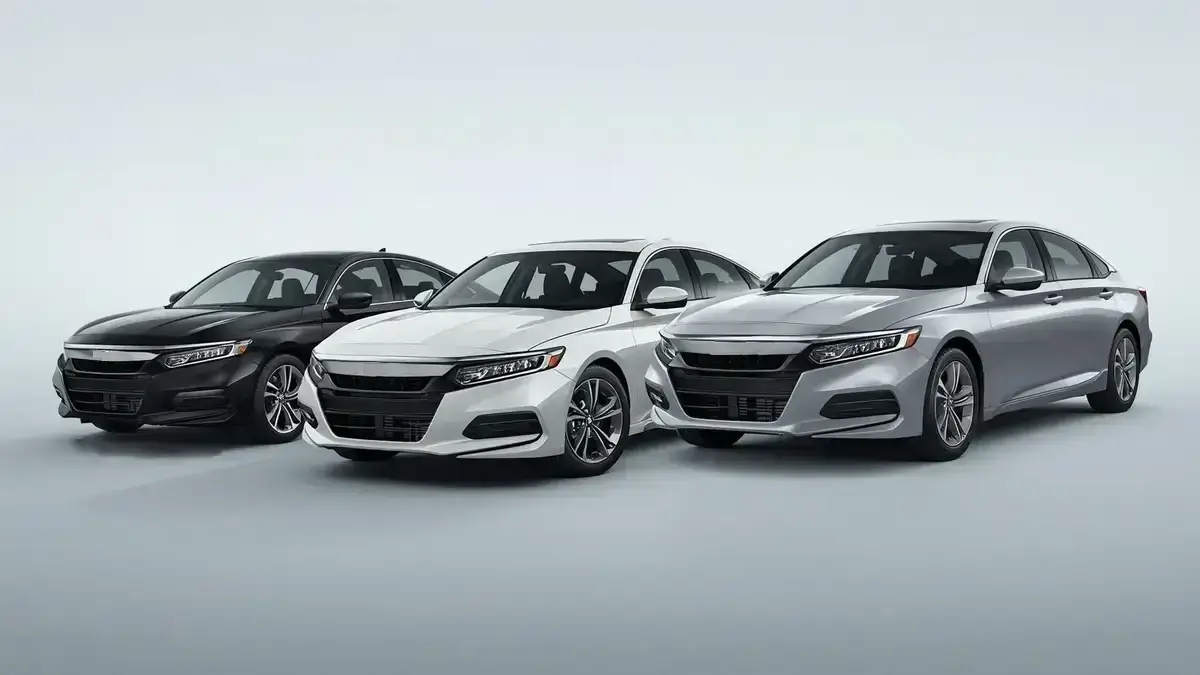
The Honda Accord is still one of the safer used midsize-sedan bets in the U.S. market, but that reputation does not apply evenly across every model year. A few Accord year bands carry enough repeat risk that most buyers are better off skipping them and moving to cleaner nearby years instead. For a fuller ownership-risk view, compare this year-by-year advice with our Honda Accord reliability and cost-to-own guide. In this research set, the clearest caution bands cluster around 1998-2005, 2008-2010, and 2013-2014.
That does not mean every car from those years is automatically a disaster. It means the used-buy case becomes harder to defend once you compare those years with the stronger replacement lanes just outside them. This page is built to stop one specific mistake: assuming the cheapest Accord is still the smartest Accord simply because the nameplate is strong.
For a mainstream used-car buyer, the goal is simple: cut the riskiest year bands out first, then choose among the cleaner value lanes.
- Skip this car if the seller wants you to ignore weak service history, suspicious transmission behavior, or obvious oil-use concerns.
- Shortlist this car if it sits outside the main caution bands and the records support the story.
- Pay more for a newer Accord if lower ownership drama matters more to you than squeezing every last dollar out of the purchase.
- Do not assume a higher trim is safer because extra equipment can also mean more electronics and more things to verify.
- Fast safest default: buy the cleanest Accord just outside the worst problem years, not the absolute cheapest one.
CarMerit reliability tool
Check any Accord year – NHTSA-backed snapshot
Pick a model year to see Honda Accord complaint, recall, investigation, and manufacturer-communication counts from the article’s NHTSA snapshot, plus CarMerit’s used-buy verdict for that year band.
Owner complaints
…
NHTSA, CarMerit snapshot
Recall records
…
NHTSA, CarMerit snapshot
Investigations
…
NHTSA, CarMerit snapshot
Manufacturer communications
…
NHTSA, CarMerit snapshot
Most-reported problem areas
Complaint counts and manufacturer communications are raw NHTSA records, not defect rates or reliability scores. Older model years have had more time to collect reports, so lower counts on newer years do not prove better reliability. Verdicts combine this data with CarMerit’s article research. Data source: NHTSA.gov. Always verify service history, recall history, test-drive behavior, and condition before buying.
Honda Accord Years to Avoid at a Glance
Most buyers do not need a giant ranked list. They need clean boundaries: which years usually deserve a hard skip, which ones deserve caution, and where the safer replacement lanes begin. That is the purpose of this section.
For most mainstream used buyers, these are the clearest takeaways from the research set:
| Year band | Practical verdict | Why it belongs there | Better move |
|---|---|---|---|
| 1998-2002 | Usually skip | Old-generation automatic transmission reputation plus age-related downside stack | Move to 2006-2007 or much later |
| 2003-2005 | Usually skip | Early seventh-generation transmission risk still hangs over them | Move to 2006-2007 |
| 2008-2010 | High caution, often skip | Excessive oil consumption, premature brake wear, and a messier ownership story | Move to 2011-2012 |
| 2013-2014 | High caution | Early ninth-generation electrical and starting complaints | Move to 2015-2017 |
| Some 2018-2019 examples | Inspect carefully | Narrower later-tech and trim-dependent complaints, not the same type of risk as the older failure-heavy years | Compare closely with 2020-2021 |
| 2006-2007 | Strong lower-budget shortlist | Better late seventh-generation years than the ones around them | Good value lane |
| 2011-2012 | Strong value shortlist | Cleaner buy case than 2008-2010 for many used shoppers | Best value lane |
| 2015-2017 | Strong safest-default shortlist | Best all-around mainstream used-buy lane in this research set | Best broad recommendation |
| 2020-2021 | Strong newer-used shortlist | Better lane for buyers who want newer safety and infotainment | Best for newer-tech buyers |
The key distinction is that the older caution bands are treated more defensively because the underlying ownership risk looks heavier. The later-model caution band is narrower. It belongs in an inspect carefully bucket, not in the same blanket rule-out bucket as the older problem years.
Condition still matters, but it does not automatically erase a weak model-year pattern. A clean-looking risky-year Accord can still be the wrong buy if the records and test drive do not support it.
Best Honda Accord Years to Buy Instead
A years-to-avoid page should leave the reader with smarter targets, not just a longer list of warnings. In this research set, the strongest replacement lanes are 2006-2007, 2011-2012, 2015-2017, and then 2020-2021 for buyers who care enough about newer safety and infotainment to pay for them.
These replacement lanes solve different problems. 2006-2007 is the better answer for a buyer tempted by 2003-2005. 2011-2012 is the cleaner value answer for someone looking at 2008-2010. 2015-2017 is the strongest broad recommendation for buyers who want a dependable mainstream daily driver with less decision drama. 2020-2021 makes the most sense when newer safety systems and infotainment features materially improve the ownership case for you.
The main trap is paying newer-car money without getting enough newer-car benefit. A later Accord is only the smarter buy if the added safety, tech, condition, and ownership confidence actually matter for how you drive and what you value.
| Buyer situation | Better target years | Why |
|---|---|---|
| Budget is tight, but you still want an Accord | 2006-2007 | Better older lane than 2003-2005 |
| You want the best value balance | 2011-2012 | Cleaner value case than 2008-2010 |
| You want the safest broad mainstream choice | 2015-2017 | Strongest all-around daily-driver lane |
| You want newer safety and infotainment | 2020-2021 | Better fit when later tech genuinely matters |
What IIHS Ratings Add to the Accord Shortlist
Reliability and crash-test evidence answer different questions. These IIHS results do not change the buy-or-avoid verdict by themselves, but they show why model year, equipment, and test era matter when comparing two otherwise clean Accord sedans.
| Accord sedan years | Notable IIHS evidence | Used-buyer check |
|---|---|---|
| 2003-2004 | Good original moderate-overlap rating. The side rating was Poor without optional side airbags; the 2004 configuration with optional curtain and torso airbags was Good. Head restraints and seats were Poor. | Verify the actual side-airbag equipment. Do not assume every 2004 Accord has the same side rating. |
| 2005-2007 | Good original moderate-overlap and side ratings, with side airbags listed as standard. Head restraints and seats remained Poor. | Treat the head-restraint result separately from the model-year ownership verdict. |
| 2008-2011 | Good original moderate-overlap, side, and head-restraint ratings. Roof strength was Acceptable. | Good results in these tests do not erase separate reliability or ownership concerns. |
| 2012 | Good original moderate-overlap, side, roof-strength, and head-restraint ratings. | The Good roof-strength rating is a page-specific improvement over 2008-2011. |
| 2013-2015 | Good ratings in driver- and passenger-side small overlap, original moderate overlap, original side, roof strength, and head restraints. Optional front crash prevention was rated Basic. | The crashworthiness pattern does not make 2013-2014 low-risk ownership years. Keep safety and reliability evidence separate. |
| 2016-2017 | The six core crashworthiness areas above were Good. Optional Collision Mitigation Braking System or Honda Sensing front crash prevention was rated Superior. Headlights were Acceptable on LX, Sport, EX, EX-L, and EX-L V6 trims, but Marginal on Touring. | Confirm that Honda Sensing is actually fitted. A higher trim did not automatically receive the better headlight rating. |
| 2018-2020 | Legacy crashworthiness tests were Good, while the updated side test was Marginal. Standard vehicle-to-vehicle front crash prevention was Superior. Headlights were Acceptable on several mainstream configurations and Marginal on Touring. | Verify the exact trim and equipment. Do not treat the original and updated side tests as the same test. |
| 2021 | Legacy crashworthiness tests were Good, while the updated side test was Marginal. Standard vehicle-to-vehicle and daytime pedestrian front crash prevention were Superior. IIHS displayed Good and Acceptable headlight configurations depending on trim. | This year adds stronger standard crash-prevention evidence, but condition, service history, and the exact configuration still control the purchase. |
Table Note: These results apply to the IIHS Honda Accord 4-door sedan pages and their stated applicability. Good, Acceptable, Marginal, and Poor apply only within the named test. Original and updated tests use different protocols and should not be treated as one continuous rating scale. Missing evidence does not mean a poor rating.
If you are also considering Toyota’s midsize sedan, the best Toyota Camry years to buy used guide gives you a cleaner cross-shop path before you commit to an Accord.
A used Accord can work under $20,000, but you need to be selective with year, engine, mileage, and service history. Compare it with Camry and other budget picks in our best used cars under $20,000 guide.
How This Guide Judges Good and Bad Accord Years
A bad Accord year is not just a year with complaints. It is a year where the repeat problems are serious enough, expensive enough, or common enough that the average used buyer should usually move to a nearby alternative instead. That is the filter used here.
Honda Accord NHTSA Evidence by Model Year, 2003-2026
| Model year | Owner complaints | Recall records | Investigations | Manufacturer communications |
|---|---|---|---|---|
| 2003 | 1,987 | 24 | 5 | 382 |
| 2004 | 1,016 | 22 | 4 | 298 |
| 2005 | 686 | 24 | 5 | 190 |
| 2006 | 430 | 17 | 5 | 105 |
| 2007 | 525 | 10 | 5 | 92 |
| 2008 | 1,519 | 9 | 3 | 106 |
| 2009 | 720 | 11 | 2 | 98 |
| 2010 | 579 | 13 | 1 | 108 |
| 2011 | 295 | 9 | 0 | 72 |
| 2012 | 371 | 8 | 1 | 48 |
| 2013 | 1,414 | 5 | 5 | 154 |
| 2014 | 993 | 5 | 3 | 187 |
| 2015 | 631 | 6 | 3 | 181 |
| 2016 | 588 | 4 | 1 | 167 |
| 2017 | 565 | 3 | 1 | 102 |
| 2018 | 1,890 | 6 | 3 | 325 |
| 2019 | 732 | 6 | 3 | 317 |
| 2020 | 372 | 6 | 2 | 278 |
| 2021 | 253 | 4 | 2 | 164 |
| 2022 | 263 | 4 | 2 | 84 |
| 2023 | 216 | 8 | 1 | 108 |
| 2024 | 204 | 5 | 1 | 88 |
| 2025 | 90 | 2 | 0 | 45 |
| 2026 | 3 | 1 | 0 | 9 |
Table note: Counts are raw NHTSA records, not defect rates or buy/avoid verdicts. Older years have had more time to collect complaints and manufacturer communications, so lower counts on newer years do not prove better reliability.
This guide weighs four things most heavily:
- problem severity
- ownership-cost risk
- whether a nearby year solves the same issue more cleanly
- whether the buyer is only choosing the riskier year because it is cheaper upfront
That last point matters more than many buyers think. A cheaper Accord is not automatically a better value if the discount exists because you are inheriting a weaker ownership story.
Why Certain Accord Years Cause More Trouble
The late-1990s through mid-2000s caution zone is mainly about automatic transmission and drivetrain trouble. That is the hardest old-Accord reputation problem to talk around, which is why most buyers should not start there unless the price, condition, and records are unusually strong.
The 2008-2010 stretch is a different risk stack. In the source set, those years repeatedly pull in excessive oil consumption, premature brake wear, and broader ownership frustration. That is why 2011-2012 is easier to recommend than the years just before it.
The 2013-2014 years are the clearest early ninth-generation trouble spot in this research set. Here the concern shifts toward electrical and starting issues, including V6-related complaint language in the supporting material. That is enough for most mainstream buyers to move to 2015-2017 instead of trying to out-negotiate the risk.
The later-model caution story is narrower. Some 2018-2019 examples deserve careful inspection because later-tech, infotainment, or trim-dependent complaints can matter, but that is not the same type of risk as the older automatic-transmission-heavy years. Treat those cars as condition-sensitive and trim-sensitive, not as automatic skips.
Honda Accord Most-Reported NHTSA Complaint Areas by Generation, 2003-2026
| Generation / years | Total owner complaints | Most-reported complaint area | Second most-reported area | Buyer check |
|---|---|---|---|---|
| 7th gen, 2003-2007 | 4,644 | Powertrain / Transmission: 1,377 | Airbags / Seatbelts / Structure: 1,212 | Check transmission behavior and airbag/structure recall history. |
| 8th gen, 2008-2012 | 3,484 | Brakes: 929 | Airbags / Seatbelts / Structure: 907 | Check brake wear, safety-system records, and engine/oil-use clues. |
| 9th gen, 2013-2017 | 4,191 | Electrical: 1,158 | Steering: 632 | Check electrical behavior, starting behavior, and steering feel. |
| 10th gen, 2018-2022 | 3,510 | Engine: 663 | Fuel system: 534 | Check engine, fuel-system, driver-assist, and electrical functions. |
| 11th gen, 2023-2026 | 513 | Steering: 108 | Electrical: 74 | Check steering feel, electrical functions, and brake behavior. |
Table note: Use this as an inspection guide, not a reliability ranking. Older years have had more time to collect complaints.
Honda Accord Risk by Generation
Generation labels help only when they improve the year-level decision. A “good generation” can still hide a weak launch-year band, and a “bad generation” can still contain the cleanest affordable lane if you stay in the right years.
| Generation | Used-buy read | Best takeaway |
|---|---|---|
| 6th gen, 1998-2002 | Weak mainstream buy | Cheap does not make it smart |
| 7th gen, 2003-2007 | Mixed | 2006-2007 are the years most buyers should target |
| 8th gen, 2008-2012 | Mixed, stronger late | Skip the early trouble years, target 2011-2012 |
| 9th gen, 2013-2017 | Stronger after launch problems | 2015-2017 are the real targets |
| 10th gen, 2018-2022 | Usually stronger, but more price-sensitive | Do not overpay for newer tech without checking condition and feature function |
The practical lesson is simple: do not buy by generation label alone. Buy by where the stronger and weaker year bands sit inside that generation.
Honda Accord Owner-Reported Severity Flags by Generation, 2003-2026
| Generation / years | Crash complaints | Fire complaints | Injury-flag complaints | Death-flag complaints |
|---|---|---|---|---|
| 7th gen, 2003-2007 | 478 | 66 | 346 | 10 |
| 8th gen, 2008-2012 | 225 | 31 | 181 | 6 |
| 9th gen, 2013-2017 | 232 | 40 | 150 | 3 |
| 10th gen, 2018-2022 | 107 | 9 | 70 | 2 |
| 11th gen, 2023-2026 | 24 | 4 | 16 | 0 |
Table note: These are owner-reported NHTSA flags, not safety ratings or verified crash outcomes.
Engines and Trims That Change the Answer
A decent year can still become the wrong used buy if the setup is wrong. This is where broad year roundups usually stay too soft. They name a year, then leave the buyer alone with the harder trim and powertrain decision.
For most shoppers, the safest default is a later, simpler setup rather than the most interesting one. V6 cars can still be smart buys, but they deserve stronger service records and a higher proof standard. The same is true for higher-tech trims. More equipment only helps if it works properly and matters to your real use case.
| Setup | Better for | Main upside | Main caution |
|---|---|---|---|
| Later 4-cylinder mainstream trims | Most commuters | Simpler used-buy story | Less performance appeal |
| V6 models | Buyers who care about stronger power | More character and smoother acceleration | Needs stronger records, especially in riskier years |
| Hybrid trims | Efficiency-first buyers | Better fuel-efficient lane | Verify system condition and do not overpay |
| Upper trims with more tech | Buyers who will actually use the equipment | Better comfort and safety features | More things to verify, depending on trim |
EPA Fuel Economy for the Recommended Accord Lanes
Engine and trim choice can materially change fuel economy within the same recommended year. These EPA estimates show selected automatic, front-wheel-drive sedan configurations rather than one invented average for the entire model year.
| Model year | Exact EPA configuration | City MPG | Highway MPG | Combined MPG |
|---|---|---|---|---|
| 2006-2007 | Accord, 2.4L four-cylinder, 5-speed automatic | 21 | 31 | 25 |
| 2011-2012 | Accord, 2.4L four-cylinder, 5-speed automatic | 22 | 33 | 26 |
| 2015 | Accord, 2.4L four-cylinder, automatic with variable gear ratios | 27 | 35 | 30 |
| 2016-2017 | Accord, 2.4L four-cylinder, automatic with variable gear ratios | 27 | 36 | 30 |
| 2015 | Accord, 3.5L V6, 6-speed automatic | 21 | 34 | 25 |
| 2016-2017 | Accord, 3.5L V6, 6-speed automatic | 21 | 33 | 25 |
| 2015 | Accord Hybrid, 2.0L four-cylinder, automatic with variable gear ratios | 49 | 45 | 47 |
| 2017 | Accord Hybrid, 2.0L four-cylinder, automatic with variable gear ratios | 49 | 47 | 48 |
| 2020 | Accord, 1.5L four-cylinder, automatic with variable gear ratios | 30 | 38 | 33 |
| 2020 | Accord, 2.0L four-cylinder, Automatic (S10) | 23 | 34 | 27 |
| 2020 | Accord 2.0T Sport/Touring, Automatic (S10) | 22 | 32 | 26 |
| 2020 | Accord Hybrid, 2.0L four-cylinder, automatic with variable gear ratios | 48 | 47 | 48 |
| 2021 | Accord, 1.5L four-cylinder, automatic with variable gear ratios | 30 | 38 | 33 |
| 2021 | Accord Sport/Touring, 2.0L four-cylinder, Automatic (S10) | 22 | 32 | 26 |
| 2021 | Accord Hybrid, 2.0L four-cylinder, automatic with variable gear ratios | 48 | 48 | 48 |
| 2021 | Accord Hybrid Sport/Touring, 2.0L four-cylinder, automatic with variable gear ratios | 44 | 41 | 43 |
Table Note: These are EPA/FuelEconomy.gov estimates for the exact configurations shown, not model-year averages or guaranteed real-world mileage. The 2006-2007 figures are EPA’s current revised historical estimates, not original window-sticker values. Manual transmissions and other configurations can differ.
A bad-year loaded trim is still a bad-year loaded trim. A safer-year mid trim is often the better ownership decision than a riskier-year premium trim that only looks stronger in the listing photos.
What to Check Before Buying Any Used Honda Accord
A year chart narrows risk. It does not replace inspection. Start with service records and recall history. Then use the test drive to stress the exact weak points the riskier year bands are known for.
Once the Accord’s model-year risk looks acceptable, verify the exact car before paying for an inspection or leaving a deposit. Run its VIN through the CarMerit VIN Lookup and compare the returned vehicle details with the seller’s listing and paperwork. If something does not match, resolve that discrepancy before putting more weight on service history or mechanical condition.
That means paying attention to transmission response, brake feel, warning lights, infotainment behavior, and whether any trim-dependent features actually work. If the seller is vague on records or wants you to ignore obvious warning signs, that is usually the answer.
| Check | Why it matters | Walk away when… |
|---|---|---|
| Service history | Shows whether the car was maintained or just patched when needed | Records are missing or the story keeps changing |
| Recall history | Confirms whether important fixes were handled | Recall questions stay unanswered |
| Cold start and transmission feel | Helps expose the oldest and riskiest drivability patterns | The car slips, hesitates, thuds, or behaves inconsistently |
| Oil-use clues | Helps catch the “cheap now, expensive later” trap | The seller minimizes obvious oil concerns |
| Brake feel and tire wear | Reveals deferred maintenance or alignment/suspension issues | The car pulls, chatters, or shows uneven wear |
| Infotainment and ADAS features | Later cars bring more electronics to verify | Features you are paying for do not work properly |
Honda Warranty Extensions Worth Checking by VIN
Honda issued several model- and condition-specific warranty extensions that overlap important Accord shopping years. They do not prove that every vehicle is affected, but they give buyers specific repairs and records to verify.
When an Accord falls into one of these higher-attention year bands, CarMerit’s Manufacturer Special Coverage Lookup can help you identify model-year coverage records worth investigating before you decide whether a repair history should change your shortlist.
| Accord scope | Covered component or condition | Published extension term | What to verify |
|---|---|---|---|
| 2008-2011 Accord L4 | Piston rings and pistons for sticking rings resulting in high engine oil consumption | 8 years from the original purchase date or 125,000 miles, whichever came first | VIN and title eligibility, plus documentation of any piston-ring or piston repair |
| 2008-2012 Accord V6 automatic | Repairs related to engine-misfire codes P0301-P0304 | 8 years with unlimited mileage from the original purchase date | VIN eligibility, diagnostic codes, title status, and completed-repair records |
| 2014 Accord Plug-In Hybrid | High-voltage battery-pack deterioration | 12 years from the original purchase date or 200,000 miles, whichever comes first | VIN eligibility, original purchase date, mileage, and Honda’s required diagnosis |
| 2016-2017 Accord and 2017 Accord Hybrid | Daytime-running-light LEDs or the affected headlight lens | 10 years with unlimited mileage from the original purchase date | VIN eligibility, DRL operation, headlight-lens condition, and repair documentation |
| 2018-2020 Accord and 2018-2021 Accord Hybrid | A/C condenser manufacturing or corrosion leak | 10 years from the original purchase date with unlimited mileage | VIN eligibility and the cause of the leak; foreign-object damage was excluded |
| Certain 2018 Marysville-built Accords in specified blue paint colors | Roof-seam paint peeling | 7 years from the original purchase date with no mileage limit | Exact VIN, assembly plant, paint color, factory-paint status, and prior body repairs |
Table Note: These are historical Honda warranty extensions, not recalls, defect rates, or proof that every listed Accord was affected. Do not assume coverage remains. Eligibility depends on the VIN, original purchase or in-service date, mileage where applicable, title status, diagnosis, and Honda’s current written terms.
30-second self-check
- Are the service records strong enough to trust the car’s story?
- Does the test drive feel clean enough that you would take the car on a long trip tomorrow?
- Is the car outside the major problem-year bands?
If 2 or more answers are No, skip it.
Which Accord Fits Which Buyer
The right Accord depends on what kind of price, feature, and ownership trade-off you are willing to accept. One buyer wants the lowest-risk commuter answer. Another wants the best value. Another wants newer safety and infotainment badly enough to pay for them. Those buyers should not all land on the same year band.
If you want the broad safest mainstream recommendation, 2015-2017 is the easiest lane to defend. If value matters most, 2011-2012 usually gives the cleaner trade-off. If your budget is tight, 2006-2007 is the better older lane than 2003-2005. If later safety and infotainment matter a lot to you, 2020-2021 is the better newer-used lane, but only when the price premium fits your use case.
| Buyer type | Better Accord lane | Why it works |
|---|---|---|
| Value-first commuter | 2011-2012 | Better value case than 2008-2010 |
| Lowest-risk mainstream buyer | 2015-2017 | Cleanest broad recommendation |
| Tight-budget buyer | 2006-2007 | Better older lane than 2003-2005 |
| Newer-tech buyer | 2020-2021 | Better fit if Honda Sensing and infotainment upgrades matter |
If you mainly want a low-drama commuter and do not care much about later safety tech, a clean 2016 can easily be the smarter buy than a pricier 2020 that only wins on features you may barely use.
If your real decision is not just “which Accord year,” but whether an Accord beats a Camry for your budget, the Honda Accord vs Toyota Camry comparison is the better next read.
After narrowing the safer Accord years, compare whether a sedan still fits your family better than an SUV. Our best used family cars guide helps you compare the Accord with family SUVs and smaller crossovers.
Final Verdict: Skip These Years, Shortlist These Instead
For most U.S. used buyers, the Honda Accord is still a smart nameplate to shop. The mistake is not buying an Accord. The mistake is buying the wrong years because the asking price looks good enough to hide the warning signs.
The clearest caution bands in this research set are 1998-2005, 2008-2010, and 2013-2014. The strongest replacement lanes are 2006-2007, 2011-2012, 2015-2017, and 2020-2021 when newer safety and infotainment matter enough to justify the extra spend.
The safest default is simple: buy the cleanest Accord just outside the worst problem years, with records you can verify and a test drive that feels right. If the car needs you to ignore transmission behavior, oil use, weak records, or broken features, the answer is usually no.
If the Accord examples near you look risky or overpriced, check the Toyota Camry reliability and ownership-cost guide before settling for a weak Accord listing.
Once you know which Accord years to target or avoid, compare the broader sedan decision in our best used midsize sedans guide. It explains when an Accord makes more sense than a Camry, and when it does not.
Once you know which Accord years need caution, compare the Accord against other low-risk used cars. Our Most Reliable Used Cars guide helps you decide whether Accord, Camry, Corolla, Civic, or an SUV fits better.
Frequently Asked Questions
Which Honda Accord years should most used buyers avoid?
Most buyers should start with three main caution bands: 1998-2005, 2008-2010, and 2013-2014. Those stretches create the hardest used-buy story in this research set, even though the exact problem pattern changes from one band to the next.
Are 2003-2005 Accords all bad, or only certain engines and transmissions?
Not every single car from those years is automatically a disaster, but the burden of proof is too high for most mainstream buyers. That band sits in the weaker early seventh-generation zone, so most shoppers are better off moving to 2006-2007 unless the records, condition, and price are unusually strong.
Are 2008-2010 Accords risky mainly because of oil consumption and brake wear?
Those are two of the biggest reasons they keep landing in the caution bucket. In this research set, those years repeatedly show up with oil-use and premature brake-wear concerns plus broader ownership frustration, which is why 2011-2012 is easier to recommend.
Are 2013 and 2014 Honda Accords bad enough to skip?
For most mainstream used buyers, they belong in a high-caution bucket. The early ninth-generation years show enough electrical and starting-related concern in the source set that moving to 2015-2017 is usually the safer and simpler decision.
Can service records or completed repairs make a risky Accord year worth considering?
Sometimes, but not automatically. Service history can strengthen the case for an individual car, yet it should not erase a known weak-year pattern by itself. A risky year still needs a price and condition advantage big enough to justify the extra uncertainty.
What should I check on a test drive before buying a used Honda Accord?
Pay most attention to cold-start behavior, transmission response, brake feel, steering consistency, warning lights, and whether key infotainment or driver-assist features work as they should. The test drive should confirm the seller’s story, not create new questions.
Does newer safety tech like Honda Sensing make a later Accord worth the extra money?
It can. If newer safety and infotainment features materially improve your ownership case, paying more for a later Accord can make sense. If those features do not matter much to you, a clean 2015-2017 car may still be the stronger value play.
Which safer Accord years should I target instead?
For most buyers, the best replacements are 2006-2007, 2011-2012, 2015-2017, and 2020-2021 depending on budget and feature priorities. The broad safest default is usually 2015-2017, while 2011-2012 often wins the value argument.